
Middle East teams up with Chinese PV firms to drive the green energy transition
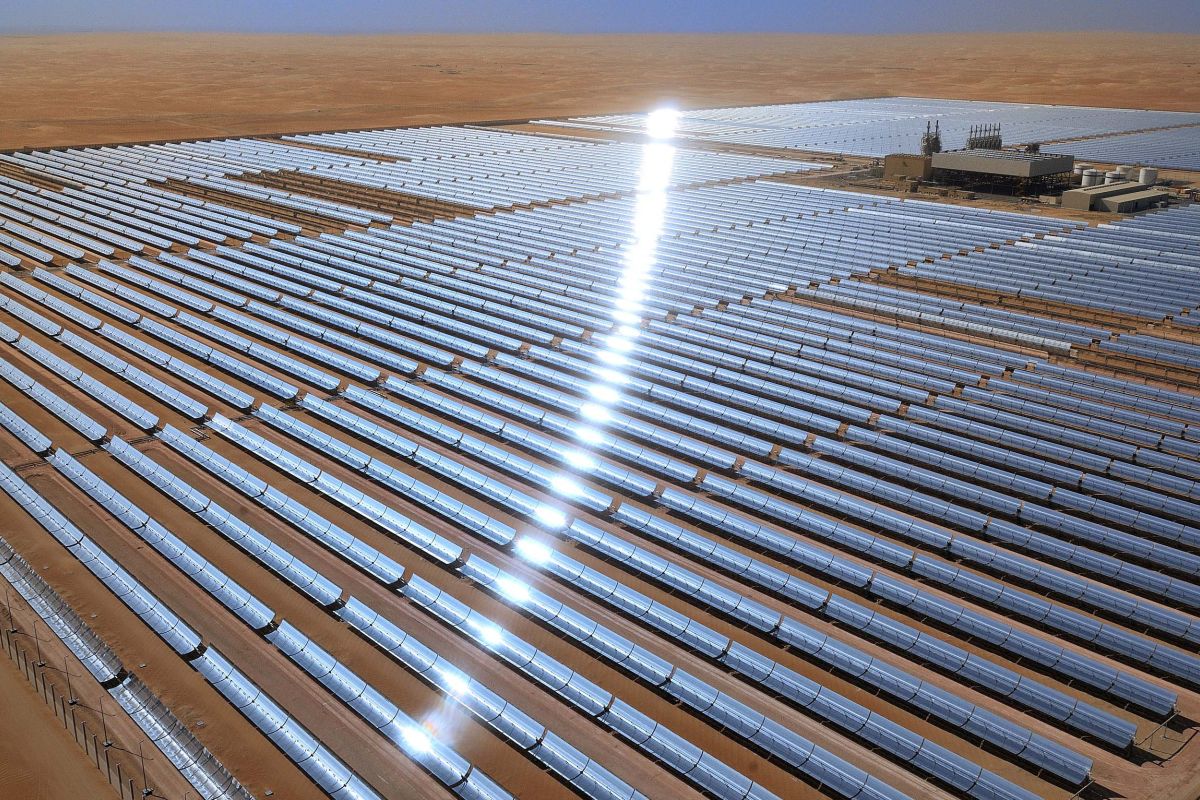
Nanchang, China (ANTARA) - A number of companies from several Middle Eastern countries, such as the United Arab Emirates and Saudi Arabia, have partnered with Chinese PV companies to promote the green energy transition.
Recently, Chinese PV manufacturer JinkoSolar signed a 2 GW module supply agreement with Masdar, an energy company based in the United Arab Emirates, for the Round-The-Clock (RTC) project, a PV project with battery storage.
With an estimated investment of more than 22 billion dirhams (1 dirham = Rp4,816), the initiative is scheduled to begin operations in 2027 and is expected to reduce carbon emissions by around 5.7 million tonnes per year.
The framework agreement is a strategic step in the UAE’s energy transition and helps Abu Dhabi realise its target of meeting 60 percent of its energy needs from renewable and clean sources by 2035, said Ahmed Ali Alshamsi, CEO of Emirates Water and Electricity Company (EWEC), one of the investors in the project.
JinkoSolar, one of China's leading PV manufacturers exporting to almost 200 countries and regions, will supply Tiger Neo modules for the project.
The modules are designed to maintain power output efficiently under low-light conditions, such as dawn and dusk, or during dust-related phenomena, thereby extending the daily effective generation hours.
“The Gulf states are very receptive to advanced, forward-looking technology,” said Qian Jing, Vice President of JinkoSolar.
From 2021 to 2025, JinkoSolar invested more than 22 billion yuan in research and development to continually improve cell efficiency and module power. In 2022, power plants using the company's TOPCon cells achieved affordable electricity costs, at just 1.32 US cents per kilowatt-hour in Abu Dhabi.
Meanwhile, a project in Saudi Arabia, using the company's newer generation TOPCon modules to drive industrial hydrogen production, achieved electricity costs below 1 US cent per kilowatt-hour.
The Solar Outlook Report 2025, published by the Middle East Solar Industry Association, projects that solar energy will contribute a much larger share of the energy mix in the Middle East and North Africa, with capacity exceeding 180 GW by 2030.
China is the world's largest producer of PV products, while the Middle East is among the most promising developing markets for solar development, creating strong momentum for bilateral cooperation, according to the report.
Chinese companies are leveraging the region's abundant sunshine while tailoring technology to local conditions, including solutions to withstand high temperatures and dust storms. For example, JA Solar Technology has introduced nano-coated glass for its PV modules designed for desert environments.
The coating significantly reduces dust accumulation and slows the degradation of light transmission, thereby reducing cleaning costs and improving power generation efficiency.
Behind this green energy collaboration lies support for local industrial transformation. The RTC project, for instance, is designed to serve as the main energy infrastructure for the local AI data centres, supercomputers, and the digital economy.
Chinese companies are also exploring applications such as coordinated development models for agriculture and PV, and seawater desalination in the Middle East, while accelerating plans to build local manufacturing facilities.
“We are committed to exploring broader dimensions of cooperation and hope to jointly promote established Chinese technology and solutions to the wider global third-party market,” said Mohamed Jameel Al Ramahi, CEO of Masdar.
Source: jawawa.id (https://jawawa.id/newsitem/middle-east-teams-up-with-chinese-pv-firms-to-drive-the-green-energy-transition-1779542874)
Originally published by Antara (Indonesian) (https://www.antaranews.com/berita/5576013/timur-tengah-gandeng-perusahaan-pv-china-dorong-transisi-energi-hijau), translated from Indonesian