
Middle East in Turmoil: The World Cries Out, While One Country Quietly Celebrates
The war in the Gulf means oil wealth is no longer enough to save economies.
While Kuwait and Qatar are projected to contract by double digits in 2026, Oman is preparing to record growth of 4.5%. The country is not as wealthy as its neighbours, but has one valuable advantage: most of its coastline lies outside the Strait of Hormuz.
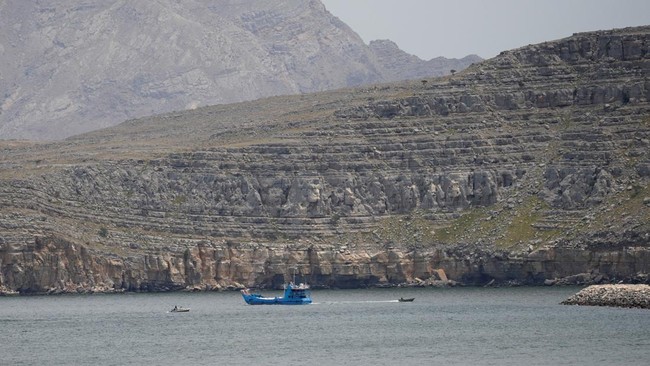
Oman shares the Strait of Hormuz with Iran, but most of its coastline lies beyond the shipping lane. As Iran tightens its control over the strait and disrupts its neighbours’ trade, Oman can still ship oil and gas through its ports facing the Indian Ocean.
International Monetary Fund (IMF) forecasts show a sharp divide across the region. Oman is expected to grow by 4.5%, followed by the United Arab Emirates (UAE) at 0.2%. Saudi Arabia, meanwhile, is projected to contract by 3.3%, Bahrain by 11.3%, Qatar by 14.5% and Kuwait by 16.7%.
Adham Al Said of The Firm, an Omani economic and business consultancy, said the geographical advantage was matched by government preparedness. Oman has reformed its public finances in recent years, turning a fiscal deficit into a surplus and cutting public debt from 68% of gross domestic product (GDP) in 2020 to about 30% in 2026.
The government has also invested in ports and roads. This infrastructure is now providing Gulf countries with alternative routes for bringing in goods. Maritime traffic at Omani ports rose by 28% in the year to August.
Special economic zones connected to ports are expected to accelerate Oman’s economic diversification away from hydrocarbons. Planned projects include green hydrogen, steel and petrochemical production facilities. Oman has significant potential to develop green hydrogen, thanks to abundant sunshine and wind. The country is even planning to build a spaceport for satellite launches.
Oman’s infrastructure offers an alternative trade route
Oman’s position outside several of the Middle East’s strategic maritime chokepoints gives it a distinct advantage. The country is relatively shielded from threats in Bab al-Mandab, the Red Sea shipping route facing attacks from Yemen’s Houthi group.
Saudi Aramco, the world’s largest oil company, is considering building a new pipeline to Oman’s oil terminal at Duqm. The project could strengthen access to oil-export routes that do not depend on the Strait of Hormuz.
Overland connections are also being developed. Hafeet Rail, a freight and passenger line linking Oman’s Sohar port with Abu Dhabi, is expected to begin trials in late 2027.
The line will connect to the UAE rail network and a regional project linking the six member states of the Gulf Cooperation Council (GCC). The wider network is targeted for completion by 2030.
Oman’s neutrality is an asset amid conflict
Oman’s foreign policy has also helped it weather regional turmoil. It maintains good relations with Iran while allowing United States forces to use its ports. The country has no large-scale foreign military bases.
Diplomatic ties with both sides allow Oman to act as a mediator between Washington and Tehran, including in dealings involving the Houthi group.
Neutrality does not mean Oman is entirely safe. The country was also hit by Iranian drones and missiles during this year’s United States and Israeli military campaign, although the impact was less severe than in other Gulf states.
The conflict is beginning to put pressure on Oman’s non-oil sector. Growth in the sector slowed from 3.1% last year to 1.4% in 2026. Tourism revenues have also fallen. Prolonged regional instability could deter foreign investors from entering the country.
Al Said warned that short-term gains from conflict could turn into long-term losses. No country truly benefits if regional tensions continue.
Oman’s neutral stance draws criticism
Oman’s diplomatic position is not always welcomed by its neighbours. The Omani government does not regard Iran as an existential threat to the Gulf region. In Oman’s view, Tehran should be integrated into the region rather than isolated.
Oman has also called for a regional non-aggression pact and a reassessment of Gulf countries’ close ties with the United States.
This approach has drawn criticism from some Gulf states, which believe Oman is too close to Iran and the Houthi group. Elana DeLozier of the Sage Institute for Foreign Affairs, a US non-profit educational organisation, said some countries do not consider Oman’s neutrality to be truly neutral.
Oman’s position on the Strait of Hormuz is another source of tension. Iran wants control of the waterway as well as the right to charge ships passing through it. Gulf Arab states and the United States reject those demands.
Oman previously proposed a voluntary payment scheme for maritime services, such as maintaining navigation aids and handling oil spills. The compromise may not satisfy the parties in dispute.
Ships attempting to pass under Iranian surveillance continue to use Omani waters, with some protection from US military aircraft. Some vessels have still come under attack. Oman often has to deal with the damage left behind.
US President Donald Trump even threatened Oman in August, warning that Washington would attack the country if it obstructed US interests.
Forecast growth of 4.5% makes Oman one of the Gulf region’s strongest economic prospects for 2026. Its geographical position, fiscal reforms and infrastructure development underpin that outlook. But the same conflict also threatens tourism, investment and the country’s political stability.
Source: jawawa.id (https://jawawa.id/newsitem/middle-east-in-turmoil-the-world-cries-out-while-one-country-quietly-celebrates-1795603953)
Originally published by CNBC Indonesia (https://www.cnbcindonesia.com/research/20261125120315-128-788278/timur-tengah-bergejolak-dunia-teriak-satu-negara-ini-diam-diam-pesta), translated from Indonesian