
Middle East Crisis Makes Russia-China Gas Pipeline More Strategic, Potential Value at IDR 326 Trillion
The intensifying conflict in the Middle East has once again elevated the strategic value of the Power of Singapore 2 gas pipeline project, which connects Russia and China. Global energy supply uncertainty, caused by increased risks in shipping lanes including the area around the Strait of Hormuz, has led to land-based pipelines being viewed as a safer alternative to ensure long-term energy security.
Amidst this situation, Russia continues to push for the accelerated construction of Power of Siberia 2, which is designed to flow more than 50 billion cubic metres (bcm) of natural gas annually from gas fields in Western Siberia to China. The project’s potential value is approximately US$20 billion, or around Rp326 trillion.
The project, which has been under negotiation for over two decades, is considered capable of altering the global energy trade map while strengthening the strategic relationship between Moscow and Beijing.
For Russia, the project serves as a vital route to redirect gas exports that previously relied heavily on European markets. For China, energy supply via land routes is seen as a way to mitigate risks regarding energy distribution disruptions that depend on maritime routes.
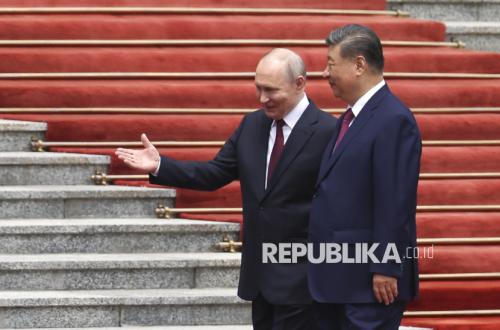
Russian optimism regarding the project strengthened following the meeting between President Vladimir Putin and President Xi Jinping in Beijing on 20 May 2026. Following the meeting, Kremlin Spokesman Dmitry Peskov stated that President Putin assessed that Russia and China essentially share a mutual understanding regarding the key parameters of the Power of Siberia 2 project, although several technical and commercial details still need to be finalised, as reported by various Western news agencies.
Amid rising global geopolitical uncertainty, Russian Foreign Minister Sergei Lavrov also emphasised the importance of strengthening energy cooperation between the two nations. “Russia and China have the ability to distance themselves from such aggressive adventures that damage the global economy and the energy sector,” said Lavrov.
Lavrov’s statement was cited by The Moscow Times in a report regarding Russia-China energy cooperation, including discussions on the Power of Siberia 2 project. However, Lavrov did not specifically name the project in his quote.
Despite the warming political relations between the two countries, the stances of Russia and China regarding the project are not yet fully aligned. Moscow continues to push for the realisation of construction, whereas Beijing is still conducting commercial calculations before providing final approval.
Daniel Sleat, an analyst from the Tony Blair Institute for Global Change, stated that the main obstacles to the project have not yet been overcome.
“Fundamental differences regarding price, financing, and contract terms appear to remain unresolved.”
As quoted by Reuters, Sleat assessed that the failure to reach an agreement on gas prices, financing schemes, and contract terms is the primary factor causing the continued delay in the construction of Power of Siberia 2.
Source: jawawa.id (https://jawawa.id/newsitem/middle-east-crisis-makes-russia-china-gas-pipeline-more-strategic-potential-value-at-idr-326-trillion-1782449561)
Originally published by Republika (https://news.republika.co.id/berita/th81v6451/krisis-teluk-sulap-pipa-gas-rusiachina-jadi-makin-strategis-potensinya-rp326-triliun), translated from Indonesian