
Middle East Alumni Urged to Strengthen Collaboration and Avoid Polarisation
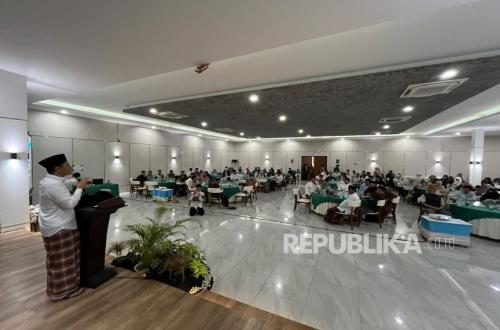
KH Imam Jazuli, Rais Syuriyah of the Nahdlatul Ulama Executive Board (PBNU) and head of Bina Insan Mulia Islamic boarding school in Cirebon, has called on Middle East alumni to strengthen cooperation, build synergies and collaboration, and put brotherhood first despite differences in ideology, political choices or organisational affiliation.
He delivered the message at a gala dinner and gathering of Middle East alumni from Region III Cirebon, which includes Cirebon, Kuningan, Indramayu and Majalengka.
The event, organised by the Imam Jazuli Foundation, was held at Bandar Djakarta Restaurant on 27 October 2026. It was attended by 148 alumni from various countries, including Egypt, Yemen, Sudan, Morocco, Tunisia, Lebanon, India and Saudi Arabia.
In his address, the PBNU Rais said the Imam Jazuli Foundation was committed to serving as a platform for empowering and advocating for Middle East alumni through practical programmes. The alumni’s considerable potential, he said, should be brought together and managed collaboratively to deliver wider benefits to society.
He also stressed the importance of placing ukhuwah Islamiyah, or Muslim brotherhood, above group interests (hizbiyyah). Differences in religious views, organisational affiliations and political choices, he said, should not prevent alumni from working together.
“It is time for Middle East alumni to cooperate, build synergies and work hand in hand to achieve success together. We are strong when united and weak when divided; let us build collaboration and avoid polarisation,” Imam Jazuli said.
He urged alumni to avoid unproductive disputes, both on social media and in everyday life. The freedom to choose a political stance, he said, must be accompanied by good manners and respect for differences, and should not be used as a reason to belittle others.
Imam Jazuli, commonly known as Kiai Imjaz, also addressed debates over lineage, saying they could deepen divisions among Muslims if not approached wisely. He urged alumni to redirect their attention to the plight of the Muslim community, which needs collective support and advocacy.
“Do not spend your energy on unproductive debates over lineage. Focus on the plight of the community, which we need to defend and fight for,” he said.
Building an alumni database
To improve coordination, Imam Jazuli asked representatives of alumni from different countries to complete a full membership census within two weeks. The database is expected to provide a foundation for building communications networks, mapping alumni capabilities and designing measurable empowerment programmes.
According to Imam Jazuli, collaborative efforts among alumni should be based on accurate data so that programmes can be tailored to available needs and potential.
The Imam Jazuli Foundation plans to facilitate a follow-up meeting within the next month. The agenda will focus on strengthening ties, empowerment and developing practical steps to deepen cooperation among Middle East alumni.
Imam Jazuli said he hoped the initiative would ensure the alumni network did not remain a series of ceremonial gatherings, but grew into a collaborative force capable of making a tangible contribution to the Muslim community and society.
The cleric and businessman, known as a figure in the transformation of Islamic boarding schools, also expressed hope that the effort would receive Allah’s blessing and lead to shared success in this life and the hereafter.
“May Allah bless our good intentions so that we may attain happiness together, fiddunya wal akhirat,” said the Al-Azhar University alumnus.