
Middle Class Under Pressure: Labour Bill Urged to Safeguard Job Creation
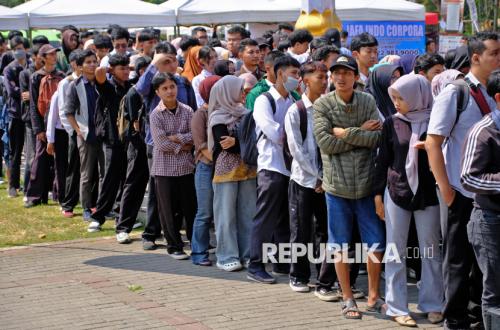
The declining capacity of the economy to create jobs has become a major challenge in maintaining the resilience of Indonesia’s middle class. This condition is reflected in the weakening elasticity of employment opportunities following the Covid-19 pandemic and the persistently high rate of layoffs (PHK).
C. Heru Widianto, an Expert Mediator for Industrial Relations at the Ministry of Manpower, stated that Indonesia’s employment elasticity has continued to decline compared to previous periods. In 2016, employment elasticity was recorded at approximately 0.4, meaning every one per cent of economic growth could create jobs for about 300,000 people. However, since the 2000s, this rate has dropped to around 0.16–0.27, meaning every one per cent of economic growth now only creates between 170,000 and 190,000 jobs.
According to Heru, the weakening of job creation is inseparable from the pressure faced by several labour-intensive industries that have traditionally been major employers, including the textile industry. This situation has persisted after the Covid-19 pandemic, with layoff figures in the processing and manufacturing sectors failing to return to pre-pandemic levels.
Heru noted that before the pandemic, the average number of layoffs was around 20,000 workers per year. Post-pandemic, this average increased to over 50,000 workers per year. Meanwhile, throughout 2024, the number of layoffs has already approached 40,000 workers. “This is what we must carefully observe when drafting the Labour Law. It is always related to employment elasticity,” he said.
Pressure on the labour market is also impacting the structure of the middle class. Based on data provided by Heru, the middle-class population currently stands at approximately 46.7 million people, down from 57.33 million in 2019. This decline indicates a group of people experiencing a drop in income and expenditure, either due to job loss or a shift from formal to informal employment.
In this context, the drafting of the Labour Protection Bill needs to consider a balance between worker protection and the sustainability of business activities. Labour policies are deemed necessary to provide certain protections while maintaining the business sector’s ability to create jobs. The challenge of job creation is becoming increasingly complex as businesses face pressure from global economic conditions. For instance, the rise in global oil prices to over US$100 per barrel has the potential to increase production costs and place additional pressure on enterprises.
Heru assessed that Indonesia cannot rely solely on the growth of entrepreneurship to absorb the additional working-age population, as the growth in the number of entrepreneurs is not yet proportional to the size of the workforce requiring jobs. At the same time, Indonesia’s labour structure is still dominated by informal workers, accounting for nearly 56 per cent, while formal workers make up approximately 44 per cent.
Bob Azam, Chairman of the Labour Division of the Indonesian Employers Association (Apindo), stated that the availability of jobs is a vital part of worker protection. Without employment, workers risk losing various rights inherent in formal employment relationships, such as leave, holiday allowances, and other labour benefits.
“Therefore, Apindo encourages the ‘flexicurity’ concept, which adopts flexibility for businesses while still protecting workers,” said Bob. He argued that overly strict labour regulations could potentially drive more workers into the informal sector. Consequently, various employment schemes such as contracts, outsourcing, and internships should remain part of the pathway into the formal sector with adequate protection.
He also assessed that wage policies need to consider the characteristics and productivity of each sector. Strengthening bipartite dialogue between companies and workers is seen as necessary so that wage determination can account for business conditions and labour productivity. “There is no such thing as ‘one size fits all’ regulation,” Bob added.
Striking a balance between worker protection and business flexibility remains a crucial aspect of the discussions regarding the Labour Protection Bill. Ultimately, the policy must ensure that worker protections proceed in tandem with the business sector’s ability to maintain and create employment.
Source: jawawa.id (https://jawawa.id/newsitem/middle-class-under-pressure-labour-bill-urged-to-safeguard-job-creation-1790423689)
Originally published by Republika (https://news.republika.co.id/berita/tlyyco522/kelas-menengah-tertekan-ruu-ketenagakerjaan-dituntut-jaga-lapangan-kerja), translated from Indonesian