
Microbes Devour the Gut Wall
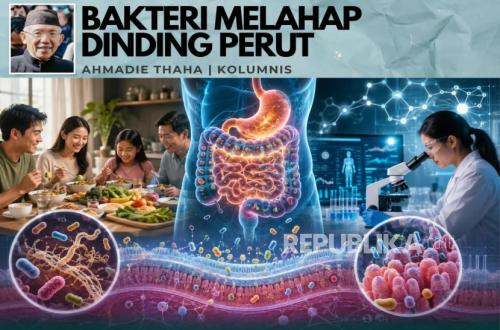
Imagine a densely populated village inhabited by thousands of families. Every morning, a logistics truck visits the village bringing supplies of rice, vegetables, fruit, nuts, and various fresh foodstuffs. The villagers live peacefully because food is always abundantly available on the table.
Then one day, the logistics truck passes through less and less frequently. The villagers do not immediately starve to death. They rummage through leftover food. Once those leftovers are gone, they hunt for other sources. As the situation worsens, they begin dismantling the walls and wooden beams of their own homes to use as firewood.
That is roughly the real picture scientists have found among the trillions of microbes inhabiting the human gut when the external food supply suddenly becomes scarce. Of course, gut microbes do not carry axes or saws. But they possess formidable metabolic capabilities.
It is this God-given capability that makes the story increasingly fascinating. Imagine, according to research findings, when fibre and food materials that are difficult for humans to digest become scarcer, some gut bacteria can switch to devouring proteins derived from our own body tissues.
These scientific findings emerged from in-depth research by Jenna E. AbuSalim, Joshua D. Rabinowitz, and their colleagues at Princeton University and the Ludwig Institute for Cancer Research. The results were published in the journal Proceedings of the National Academy of Sciences (PNAS) on 11 August 2026.
The study, titled ‘Digestion-resistant proteins support the healthy metabolite profiles associated with plant-based diets’ (the online version of which was published on 27 July 2026), changes our perspective on the function of fibre. Until now, nutritionists have praised fibre for its effectiveness in promoting bowel movements.
Fibre has even been said to provide a longer feeling of fullness and support metabolic health. However, AbuSalim’s research proves another vital function that is no less crucial: fibre provides the main food supply for gut microbes so that they do not need to hunt for food sources from our own body walls.
Within the large intestine lives a vast microbial community. They are not passive stowaways. They devour various food remnants that escape the human digestive process. In return, they produce various active compounds that influence the entire health system of our bodies.
The relationship between humans and gut microbes is in fact highly precise. We supply them with food. They process it in their digestive factory. The processed products then influence the function of our body organs. However, disaster can occur when the menu reaching the large intestine changes drastically.
The human body does possess a remarkable ability to digest food. However, the system is not perfect. Some food components, especially coarse fibre and specific plant proteins, fail to be completely digested in the small intestine. These residual materials ultimately slide towards the large intestine.
There, gut microbes get their turn to devour the meal. In the PNAS research, AbuSalim and Rabinowitz paid special attention to a type of plant protein that is resistant to human digestive enzymes (digestion-resistant proteins).
In an official release from the Ludwig Institute, AbuSalim referred to this group as ‘proteins imitating fiber’ or Prif. Simply put, these are proteins that we fail to absorb, so they continue sliding along and become the main menu for gut microbes.
And the presence of such proteins turns out to play a very vital role. The researchers found that fibre and digestion-resistant proteins work hand in hand to direct microbial metabolism. The combination of both encourages microbes to produce more healthy compounds and suppress harmful radicals.
This is where the storyline becomes even more exciting. The researchers did not merely count the types of bacteria inhabiting the gut, but meticulously tracked where the food materials swallowed by the bacteria came from. To do this, they utilised a sophisticated technique called stable isotope tracing.
Source: jawawa.id (https://jawawa.id/newsitem/microbes-devour-the-gut-wall-1787381462)
Originally published by Republika (https://analisis.republika.co.id/berita/tk5p6p415/mikroba-melahap-dinding-perut), translated from Indonesian