
MI5's First Espionage Alert: Hundreds of Academics Linked to China-Related Research
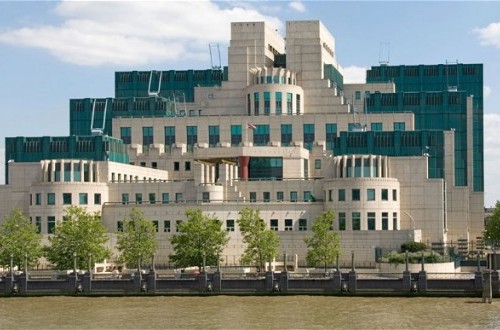
The UK’s domestic security service, MI5, has taken an unusual step by issuing an open espionage alert to British universities and the academic community. The warning states that more than 100 academics with links to the UK have contributed to research projects funded through a Chinese institution that has very strong ties to the Ministry of State Security (MSS), China’s civilian and security intelligence agency.
The alert, titled ‘Security Service Espionage Alert’, was published on Wednesday, 30 September 2026. The target of the warning is very specific: the China General Technology Research Institute (CGTRI), also known as the China Academy of General Technology (CAGT), rather than all Chinese research institutions or all forms of UK-China academic cooperation.
MI5 stated it has identified that the CGTRI possesses very strong links to the MSS. Furthermore, the security agency assesses that the primary objective of the CGTRI is to fund academic research that directly enhances the technical capabilities of the MSS for espionage activities.
In the alert, MI5 stated that over 100 academics associated with the UK have contributed to projects funded by the MSS through the CGTRI. This formulation is significant because MI5 did not claim that all these academics were aware of the funding links to the Chinese intelligence agency.
In fact, MI5 explicitly acknowledged that in several cases, academics may not have known that the CGTRI was the funding source for the Chinese research projects they participated in. The agency also noted that many institutions and individuals likely established relationships with the CGTRI in good faith, as the institution’s links to the MSS are said to have been disguised.
Consequently, the MI5 warning should not be read as an accusation that more than 100 British scientists are intentionally assisting Chinese intelligence. The official MI5 document also does not name the academics or universities involved.
The research fields highlighted explain why the British security agency has intervened. According to MI5, the UK-linked academics have contributed to CGTRI-funded projects in artificial intelligence (AI), cybersecurity, covert communication systems, and steganography—the technique of hiding information within data, files, or other mediums.
Such technologies are characterised by dual-use capabilities. A piece of research may have legitimate civilian and academic benefits, but the same knowledge can also be utilised for intelligence gathering, secret communications, large-scale data processing, or the enhancement of cyber operations.
MI5 stated that the identified activities support the MSS’s espionage capabilities and are therefore deemed a threat to UK national security. The concern is not merely about universities receiving foreign funding, but the possibility that expertise, technology, and strategic research results from the UK academic system could be exploited to strengthen the capabilities of a foreign intelligence agency.
Such concerns were previously raised by the National Protective Security Authority (NPSA), a protective security agency that is part of MI5. The NPSA has warned that foreign states may target universities to obtain research data, intellectual property, technical knowledge, and technology that could potentially be used for economic, military, or security interests.
The open nature of the academic world presents one of the primary challenges. International cooperation can provide legitimate access to researchers, computer networks, data, laboratories, and sensitive projects, meaning strategic information does not always have to be obtained through hacking or conventional espionage operations.
Therefore, the threat feared by MI5 does not always take the form of a secret agent stealing documents from a laboratory. In the modern research landscape, strategically valuable technology can be transferred through scientific collaboration, joint funding, publications, conferences, researcher exchange programmes, or projects where the ultimate source of funding is non-transparent.
Reports from The Guardian indicate that this warning is driving new scrutiny within British universities regarding the vetting mechanisms for partners and research funding sources. The British media also highlighted MI5’s decision to issue a public alert to prompt universities to immediately review their involvement with the CGTRI.
Meanwhile, The Independent reported the alert as the first self-initiated warning of its kind issued by MI5. The publication also emphasised a key element of the warning: the possibility that some academics were unaware of the ultimate funding source of the research projects they were involved in.
Why did MI5 issue this warning? The answer lies directly in MI5’s mandate as the UK’s Security Service. The agency is tasked with protecting the UK from national security threats, including espionage and foreign state activities occurring within the country.
Foreign threats now target more than just governments or defence institutions. Universities, technology companies, research centres, and startups are also strategic assets because they hold the knowledge, intellectual property, and new technologies that can accelerate a nation’s economic, security, or military capabilities.
Source: jawawa.id (https://jawawa.id/newsitem/mi5s-first-espionage-alert-hundreds-of-academics-linked-to-china-related-research-1790880664)
Originally published by Republika (https://news.republika.co.id/berita/tm8gj4451/alert-spionase-pertama-mi5-ratusan-akademisi-terseret-riset-terkait-china), translated from Indonesian