
MHU Livestock Farm Creates Income Streams for Kutai Kartanegara Residents
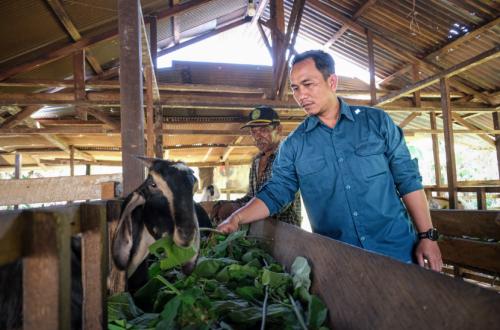
A goat farm developed by the community in Tudungan Hamlet, Jembayan Tengah Village, Kutai Kartanegara, East Kalimantan, has become a source of additional income for residents, most of whom work as horticultural farmers. By the end of 2024, 326 goats had been sold at prices ranging from Rp2.5 million to Rp8 million per head.
The farm was developed through the MHU Goat Village Programme in partnership with the Lestari Livestock Group. This programme received the CSR & PDB (Sustainable Village Development) Awards 2026, organised by the Ministry of Villages and Development of Disadvantaged Regions (Kemendes PDT) alongside the Indonesian Social Sustainability Forum (ISSF).
The Goat Village programme began in late 2018 with the construction of pens and the distribution of 12 goats. In early 2019, the farm’s capacity was expanded through additional housing and the distribution of 28 more goats.
The economic benefits of the farm extend beyond livestock sales. Manure is utilised as organic fertiliser for horticultural land used to grow spring onions, chillies, tomatoes, and various other vegetables.
On a 0.5-hectare plot, the use of manure has reportedly reduced the need for urea fertiliser from approximately 100 kilograms to just 25 kilograms, meaning chemical fertiliser usage can be decreased by up to 75 per cent.
The use of manure also reaches residents outside the Lestari Livestock Group. Local villagers can collect manure for free, with at least 50 sacks utilised for gardens and agricultural land every year.
President Director of MHU, Kemal Djamil Siregar, stated that the farm was developed through a collaboration between the company and the community to leverage local economic potential. According to Kemal, the success of empowerment is not solely determined by the aid provided to the community.
“For MHU, the success of community empowerment programmes is measured not just by the assistance provided, but by the community’s ability to develop their existing potential independently and sustainably. The Goat Village demonstrates how livestock farming can serve as a source of income while simultaneously supporting community agricultural activities,” Kemal said on Friday (2/10/2026).
The management of the farm involves the local community. Nyoman, the Chairman of the Lestari Livestock Group, coordinates group members in both livestock activities and the utilisation of goat manure as organic fertiliser.
MHU has also constructed a Goat Manure-Based Composting House in Tudungan Hamlet to enhance the processing of livestock waste. This facility is used to process manure into organic fertiliser for use in local agricultural activities.
Future development of the Goat Village will focus on strengthening institutions and local leadership regeneration. These efforts are expected to ensure the sustainability of the farm while expanding economic benefits for communities surrounding MHU’s operational areas.
The Goat Village programme received the CSR & PDB Awards 2026 on 28 September 2026 at the Kemendes PDT Building, Jakarta. The award was presented in recognition of community-based livestock development aimed at supporting the economic independence of residents living near mining areas.
Source: jawawa.id (https://jawawa.id/newsitem/mhu-livestock-farm-creates-income-streams-for-kutai-kartanegara-residents-1790959913)
Originally published by Republika (https://esgnow.republika.co.id/berita/tmaaax416/peternakan-mhu-buka-sumber-penghasilan-warga-kutai-kartanegara), translated from Indonesian