
MGBKI Files 'Amicus Curiae' with Constitutional Court Over Specialist Medical Education Dualism
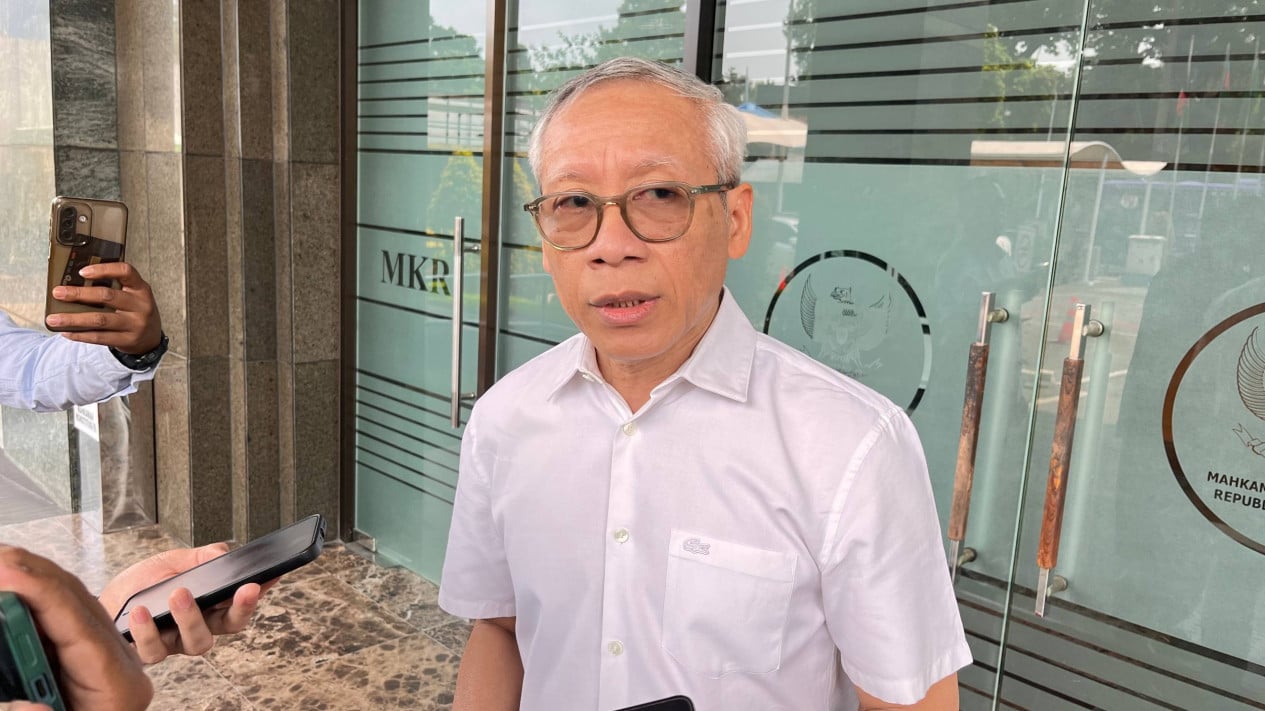
The Indonesian Council of Medical Professors (MGBKI) has officially filed to act as Amicus Curiae to the Constitutional Court of the Republic of Indonesia. This move pertains to the judicial review of Case Number 143/PUU-XXIII/2025, which questions the constitutionality of Article 187 paragraph (4) and Article 209 paragraph (2) of Law Number 17 of 2023 concerning Health against the 1945 Constitution.
In its submission, MGBKI highlights the potential dangers of dual authority in the management of specialist and sub-specialist medical education, where hospitals are designated as primary providers on an equal footing with universities.
Through this Amicus Curiae document, MGBKI provides an analysis stating that professional education for specialist and sub-specialist doctors is part of the university-based higher education regime. While hospitals play a vital role as teaching hospitals or clinical education venues, this role does not inherently make a hospital a higher education institution.
“The fact that residents spend most of their time in hospitals does not change the institutional nature of education. Much like a laboratory is not a university even though many students conduct research there, a hospital is not a higher education institution simply because students learn extensively within it,” said the Secretary-General of MGBKI, Theddeus Octavianus Hari Prasetyono, to reporters at the Constitutional Court Building in Central Jakarta on Wednesday, 16 September 2026.
He assessed that designating hospitals as the “primary provider” could lead to serious issues. First, it violates the unity of the national education system as mandated by Article 31 paragraph (3) of the 1945 Constitution. Second, it creates legal uncertainty regarding curricula, graduation standards, and the status of students, which contradicts Article 28D paragraph (1) of the 1945 Constitution.
Third, there is a potential for conflict of interest; if primary authority is held by hospitals, there are concerns that hospital service needs may override the academic rights of residents. Fourth, it threatens patient safety. “The quality of education under dual standards will directly impact the quality of graduates, which ultimately jeopardises patient safety in the future.”
Furthermore, he stated full support for the government’s efforts to accelerate the production and equitable distribution of specialist doctors. However, he emphasised that such acceleration must be conducted through the proper methods. The solution, according to MGBKI, is to increase the capacity of universities, expand the network of teaching hospitals, provide affirmative action, and strengthen the Academic Health System (AHS).
Source: jawawa.id (https://jawawa.id/newsitem/mgbki-files-amicus-curiae-with-constitutional-court-over-specialist-medical-education-dualism-1789545659)
Originally published by VIVA.co.id (https://www.viva.co.id/berita/nasional/1928986-soroti-dualisme-pendidikan-spesialis-mgbki-ajukan-amicus-curiae-ke-mk), translated from Indonesian