
Metro Police Chief Issues Critical Directives for Student Protest Security, Orders Field Narrative Documentation
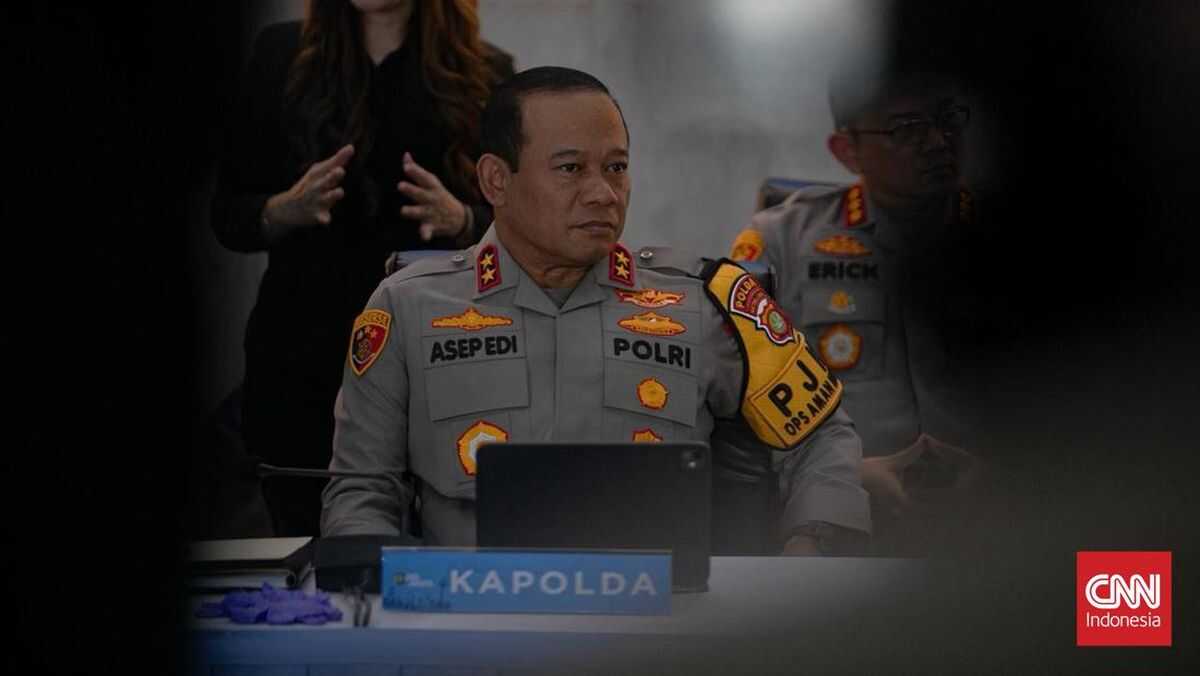
The Metro Jakarta Police Chief (Kapolda Metro Jaya) Irjen Pol Asep Edi Suheri issued 18 critical directives to police personnel during a troop briefing at Police Headquarters (Mabes Polri) in South Jakarta on Friday, 27 February, regarding the management of a student mass protest.
The directives were addressed to intelligence units, detectives, and other security personnel. The police chief specifically requested intelligence officers to document all narratives on the ground, including both movements and written materials.
“There are 18 directives that must be adhered to by all personnel regarding the implementation of services for the protest being conducted,” said Asep during the briefing at Mabes Polri on Friday, as reported by Antara.
The first directive stated that security and management of the protest must remain safe, orderly, and controlled, with no incitement of riots or damage to public facilities.
The second directive instructed personnel not to be easily provoked emotionally, maintain self-control, and carry out duties with humanism, patience, and measured responses.
The third directive required intelligence personnel to study in detail the mass gathering points, public facilities being used, and vehicles being employed. “I request that you document all narratives on the ground, both movements and writings, and report immediately to leadership through the command chain. Detection and documentation are the keys to prevention,” Asep stated.
For detective personnel (the fourth directive), if participants carry dangerous items, secure them immediately without acting independently. Officers should move in teams, remain within their units, and avoid becoming separated from their groups.
The fifth directive addressed Samapta and Dalmas units to follow every instruction from leadership, avoid easy provocation, maintain formation, and ensure all actions remain orderly and measured.
The sixth directive stated that should crowd-pushing become necessary due to field dynamics, it must be conducted according to procedure.
The seventh directive required police personnel inside Mabes Polri to remain within the perimeter, with strict perimeter and boundary discipline as part of facility security and personnel safety.
The eighth directive ordered stricter checking of equipment completeness, especially special equipment (alsus), during briefing.
The ninth directive required all personnel to adhere to internal police regulations, including guidelines on use of force, mass control, and riot management.
The tenth directive stated that all field actions must follow unified command, with no independent initiatives without instruction. Officers from unit commanders to senior officers must ensure the command chain functions properly.
The eleventh directive instructed personnel facing crowds not to display arrogance or aggression.
The twelfth directive prohibited police units from becoming trapped in locations or “killing zones”.
The thirteenth directive specified that troop movements, riot response, and use of tear gas would only occur under Asep’s direct command.
The fourteenth directive required commanding officers to prioritise persuasive measures.
The fifteenth directive mandated immediate reporting of any field developments to prevent situations from escalating, requiring fast, clear, and factual reporting.
The sixteenth directive emphasised holding firmly to the principle of “Protecting Jakarta”, particularly protecting residents. Citizen safety is the top priority.
The seventeenth directive called for demonstration of professionalism and institutional integrity, proving that the police can manage protest actions effectively.
The eighteenth and final directive emphasised unity of command and purpose for public security, rejecting sectoral ego and unauthorised actions outside the command structure, with only the responsibility of serving as Bhayangkara (the police’s motto).
The Student Executive Board of Universitas Indonesia (BEM UI) planned to hold a protest at Police Headquarters on Friday, 27 February. The action was organised in solidarity and support regarding the assault and killing of Arianto Tawakal, a 14-year-old student, allegedly committed by a Brimob member, Bripda Mesias Siahaya, from the Maluku Regional Police.
BEM UI member Hafidz Hernanda stated that the protest had five key demands. “First, demanding the imposition of the severest criminal punishment for the police killer and all officials responsible for repressive actions,” he told reporters.
Second, BEM UI demanded the removal of National Police Chief Jenderal Listyo Sigit Prabowo and Maluku Police Chief Irjen Dadang Hartanto from their positions.
Additionally, BEM UI demanded the release of all political detainees who had been criminalised, enforcement of limits on police authority, and the withdrawal of police from civil positions. “We also demand concrete results from Structural, Cultural, and Instrumental Police Reforms from the Commission for Acceleration of Police Reform,” he added.
To secure the action, Metro Jakarta Police deployed 3,992 personnel. “A total of 3,992 personnel were deployed, comprising 3,093 from Metro Jakarta Police strengthened by personnel from district police offices,” said Metro Jakarta Police Public Relations Chief Kombes Pol Budi Hermanto in a statement in Jakarta on Friday.
He emphasised that the police would employ a humanitarian approach whilst respecting human rights. Metro Jakarta Police also prepared traffic engineering and traffic diversion on a situational basis according to developments on the ground. This was done to prevent congestion that could disrupt residents’ activities, particularly during the Ramadhan period. The public was advised to adjust their travel routes should traffic diversions occur on several roads.