
Meta Reveals How Online Gambling Syndicates Evade Detection on Instagram
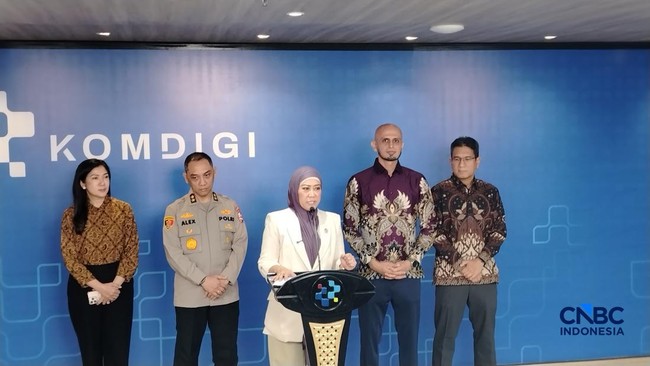
Meta has revealed the cunning tactics employed by online gambling syndicates to evade detection on its platforms, following a summons by Indonesia’s Minister of Communication and Digital (Komdigi), Meutya Hafid. The minister announced the establishment of a joint team with platforms to tackle the issue of online gambling, which has recently manifested as a surge in spam comments.
Director of Public Policy for Southeast Asia at Meta, Sarim Aziz, explained that perpetrators are using seemingly harmless keywords to avoid automated detection systems. They also frequently insert links to external gambling sites within the comment sections of unrelated posts to lure users. ‘They are starting to use benign keywords to avoid detection. And sometimes they use the comment sections to direct people to third-party gambling sites,’ Sarim stated.
Sarim emphasized that the fight against online gambling is a continuous battle and a cross-border problem that no single entity can solve alone. ‘This is where the industry, companies like Meta, law enforcement, and Komdigi must work together to disrupt the behaviour of these malicious actors,’ he said. Meta confirmed it has already taken down 61 million pieces of gambling-related content in the first half of 2026.
Minister Meutya Hafid noted that the modus operandi of using spam comments has surged by 128 percent in the first six months of 2026. Komdigi’s data shows the problem is widespread across major social media platforms, with TikTok accounting for 35 percent of gambling comment spam, followed by Facebook at 28 percent, Instagram at 22 percent, YouTube at 10 percent, and X at 5 percent. The joint team will also include the National Police, the Financial Transaction Reports and Analysis Centre (PPATK), the Financial Services Authority (OJK), and the National Cyber and Crypto Agency (BSSN).