
Mester Market Traders Struggle, Their Fate Since the Pandemic
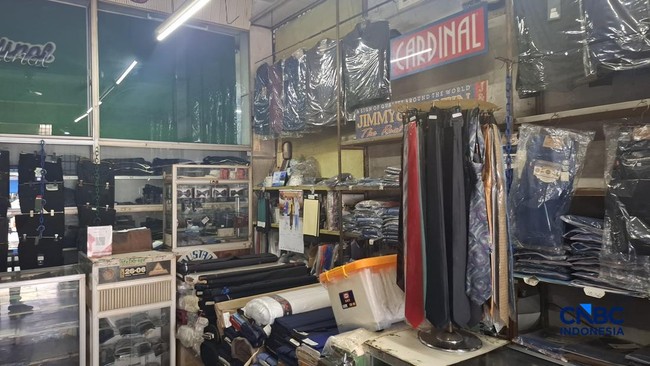
Jakarta, CNBC Indonesia - The slack in Indonesia’s economy is also visible at several traditional markets in Jakarta, where rising prices are making traders uneasy. Based on CNBC Indonesia’s observations at Pasar Jatinegara, also known as Pasar Mester, on Wednesday, 20 May 2026, activity appeared fairly quiet.
Traders began to lament the decreasing number of customers amid rising prices of goods such as fuel and plastics. One of them, Felix, a trader of batik clothing and shirts, said customer lull has actually been happening since the Covid-19 pandemic. However, in the past year, the situation has worsened.
‘It’s indeed quiet; actually since Covid-19, when it eased a bit, it briefly picked up again, but after that it became quieter, and it’s most noticeable in the last year,’ Felix told CNBC Indonesia on Wednesday.
He also complains about the price of plastics and other packing items rising; plastics are used to wrap the shirts or batiks on display.
In his shop, batik is mostly locally made. However, some batik is imported from China. The prices vary. For local batik, prices range from Rp130,000 to Rp170,000. For Chinese-made batik, there are only two pieces available at Rp135,000.
‘Most here are locally made; some have good brands, some have ordinary materials, some are mid-range,’ he explained.
Another trader, Salman, a bottle seller, said buyers are more selective about buying drinking bottles since prices rose, although he has not raised bottle prices.
‘Since prices started rising, people are more selective about shopping; now bottle buyers are fewer, perhaps because the money is needed for other needs,’ Salman said.
The price of drinking bottles at his shop ranges from Rp20,000 to Rp65,000. Those prices are still normal and have not risen.
‘Prices haven’t increased, it’s just that the number of buyers is smaller; perhaps money is being spent on other necessities,’ he added.
The same goes for home furniture, where rising plastics costs burden traders. Saidi said furniture prices have risen due to plastic costs: ‘Plastic prices are the thing that make us grimace; they’re getting more expensive, so we have to raise prices here.’
For example, mop cloth now costs Rp25,000, up from Rp20,000. Melamine plates have risen to Rp72,000 per dozen from Rp66,000. ‘Even Gayung? which used to be Rp10,000 for 2 items, now Rp15,000,’ Saidi noted.