
Messages and Hopes of Ordinary NU Members for the 35th NU Congress in Jombang
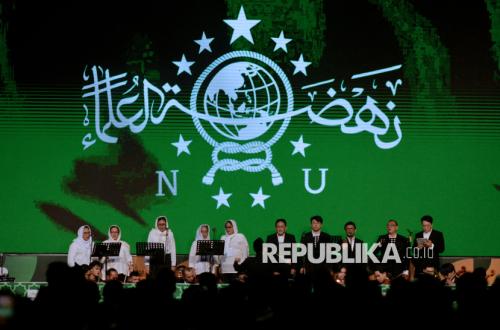
Nahdlatul Ulama has entered its second century of service. This long journey is not merely a story about the age of an organisation, but about the effort to preserve and nurture the teachings of Ahlussunnah wal Jamaah (Aswaja), while presenting it as a force that brings benefit to communal life.
In my view, NU’s struggle and service rest on at least five fundamental pillars: nurturing humanity, upholding justice, improving the quality of education, health, economy, and social life for the welfare of society, preserving culture and the environment, and safeguarding a democratic national life.
These five areas of service become increasingly important as NU prepares to hold its 35th Congress in Jombang. The congress is, of course, the organisation’s highest forum for evaluation, programme formulation, and leadership selection. But more than that, the congress should serve as a space to ask again: where does NU intend to take its service in its second century?
There are at least five matters that, in my view, deserve collective attention.
First, NU must always ensure that its organisation and members are not uprooted from the values of Aswaja and NU identity. Changing times certainly demand changes in how we respond to circumstances. The challenges NU faces today differ from those faced by the founders nearly a century ago. However, the ability to adapt to the times should not cause NU to lose the footing that shapes its identity.
Therefore, in every effort to carry out its roles and duties in the current context, NU’s leadership must continue to anchor itself in the organisation’s foundational references: the Preamble to the NU Basic Law, the 1926 NU Statutes, the 1926 NU Khittah, and the 1984 decision to return to the NU Khittah.
These references should not be treated merely as historical documents. Within them lie values, orientations, and perspectives that can serve as a compass for NU when confronting social, political, economic, and cultural change.
Times may change. Challenges may shift. But NU must know from where it departs, so that it does not lose direction towards where it intends to go.
Second, entering its second century, NU’s responsibility is in fact growing larger. Not only in national life, but also in the global arena. NU is required to continue safeguarding the future of Indonesian Islam while contributing to the world. The challenges are not light. Society is becoming increasingly urban, educated, young, digitalised, and globally minded.
The development of digital technology, including artificial intelligence, will change many aspects of human life. The way people work is changing, the way they learn is changing, patterns of social interaction are changing, and even the way people obtain and understand religious knowledge is also changing.
In such a situation, NU certainly cannot simply maintain old methods. What must be preserved are its core values and principles, while the ways of presenting them must always be able to answer the needs of the times.
Dakwah approaches need to be continuously developed. The economic independence of the community must be further strengthened. Cultural resilience must be maintained. Likewise, concern for environmental sustainability must become an important part of NU’s service.
Adaptation does not mean losing identity. Precisely with a firm foundation of values, NU can more freely answer the changes of the times without being swept away by them.
Source: jawawa.id (https://jawawa.id/newsitem/messages-and-hopes-of-ordinary-nu-members-for-the-35th-nu-congress-in-jombang-1787179850)
Originally published by Republika (https://analisis.republika.co.id/berita/tk0w0w451/pesan-dan-harapan-warga-nu-biasa-kepada-muktamar-ke35-nu-di-jombang), translated from Indonesian