
Message from the National Forum of MPR and DPR Leaders 1999-2024 to the Government
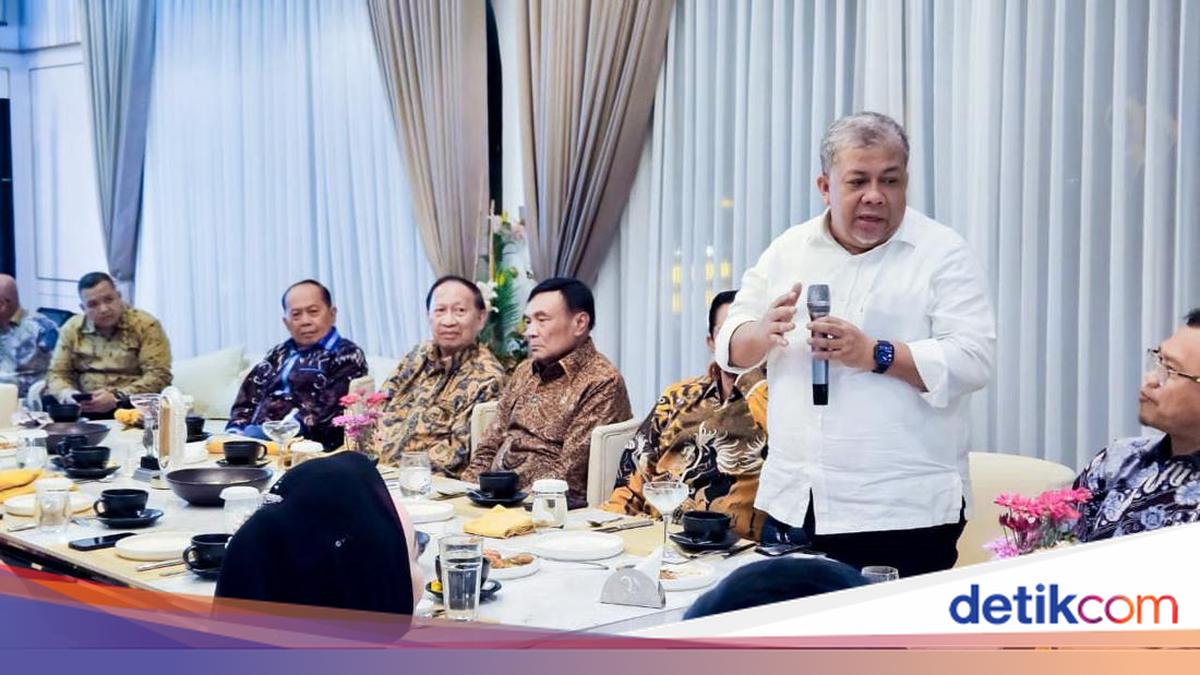
Member of the Indonesian House of Representatives (DPR RI) and 15th Chairman of the People’s Consultative Assembly (MPR RI) as well as 20th Chairman of the DPR RI, Bambang Soesatyo (Bamsoet), revealed that the National Forum of MPR and DPR Leaders for the 1998-2024 period has agreed to collectively create a conducive situation using the strength of their networks, experience, and influence to ensure public calm and support for the government in tackling the domino economic effects (inflationary shock) stemming from the current global situation.
In addition to fiscal resilience issues, domestic industries continue to be eroded by the influx of imported goods. He stated that one measure is to anticipate the rise in fuel prices (BBM), which is always a sensitive issue and often exploited by certain parties. This was expressed by Bamsoet during the Halal Bihalal of the National Forum of MPR and DPR Leaders for the 1999-2024 period with Coordinating Minister for Political and Security Affairs (Menko Polkam) General TNI (Ret.) Djamari Chaniago, at the Parliament Building in Senayan, Jakarta, on Thursday (23/4/26).
Attendees included Oesman Sapta Odang, E.E. Mangindaan, Fadel Muhammad, Setya Novanto, Marzuki Alie, Mahyudin, Agus Hermanto, Azis Syamsuddin, Rahmat Gobel, Sjarifuddin Hasan, Melani Leimena Suharli, Priyo Budi Santoso, Amir Uskara, Dimyati Natakusumah, and Fahri Hamzah.
“Because every increase in BBM prices is immediately felt in people’s daily lives, from transportation costs to the prices of basic necessities. The rise in BBM prices also has the potential to intensify pressure on inflation rates and slow national economic recovery,” said Bamsoet in his statement on Friday (24/4/2026).
The Central Statistics Agency (BPS) recorded Indonesia’s inflation in March 2026 at 3.48%. Previous experience shows that every BBM price adjustment is almost always followed by a short-term inflation spike. For example, in 2022, inflation temporarily exceeded 5 percent after the increase in subsidised BBM prices, before gradually being brought under control.
Bamsoet assessed that the main issues that often arise are not solely in policy itself, but in the governance of that policy and the lack of public communication, which becomes a factor that amplifies public resistance.
“BBM increases always have rapid and widespread chain effects. Once energy prices rise, logistics costs increase, goods prices follow, and ultimately people’s purchasing power declines. This is what we all must anticipate seriously,” said Bamsoet.
Several figures also provided views, inputs, and reinforcement on the importance of more responsive policy governance. Marzuki Alie emphasised the need for improvements in the government’s communication style to be calmer, clearer, and easier for the public to understand.
“The way policies are conveyed greatly determines public acceptance, including in explaining strategic programmes so they are understood fairly across all regions of Indonesia,” said Marzuki Alie.
Meanwhile, Rahmat Gobel and Agus Hermanto added that the government needs to protect domestic industries by restricting imported goods to prevent them from collapsing.
Meanwhile, Amir Uskara assessed that the communication patterns within the cabinet need to be comprehensively improved, especially in responding to rapidly evolving economic and social dynamics.
“Our current fiscal condition is indeed challenging. Therefore, government communication must be solid so that policies can be understood and do not cause unrest,” said Amir Uskara.
From a political perspective, Priyo Budi Santoso reminded of the potential social frictions that could arise if public aspirations are not well channelled. He assessed that the uncertain global situation increases pressure on the national fiscal condition.
“Parliament must be the voice of the people, including critical and moderate groups. Potential social frictions must be anticipated early to avoid impacting national stability,” said Priyo Budi Santoso.
In addition, Azis Syamsuddin highlighted the importance of strengthening checks and balances functions in the democratic system. According to him, weakness in this function can trigger various frictions, including in relations between state institutions.
“The checks and balances function must operate optimally so that government policies remain on the right track and gain public legitimacy,” said Azis Syamsuddin.
Oesman Sapta Odang assessed that the current national condition requires open dialogue spaces so that emerging criticisms can be fully conveyed to the government.
“Our country is facing many challenges. Criticisms must reach the government to serve as material for improvements,” said Oesman Sapta Odang.
On the other hand, Fahri Hamzah assessed that President Prabowo’s current leadership has great potential to address global challenges, as long as it is supported by a strong team and adaptive governance to changes, including social media dynamics.
“The President has his own uniqueness and strengths, but must be supported by the best team in running the government. We also face new challenges from social media algorithms that can massively shape public perceptions. Therefore, one-data regulation and strengthening accurate information become very important,” said Fahri Hamzah.
Closing the discussion, Coordinating Minister for Political and Security Affairs Djamari Chaniago affirmed that the government is open to various inputs and continues to make policy improvements in various sectors, including maintaining people’s purchasing power and social stability.
“The government is very open. In fact, inputs like these are important so that the policies taken are increasingly on target and able to address the existing challenges,” said Djamari Chaniago.
He added that the government continues to refine various strategic programmes such as strengthening village economies, social assistance, and food security programmes involving various elements, including the TNI and Polri in the field to ensure effective implementation.
“Coordination between central and regional governments continues to be strengthened. Regional transfers also receive attention to ensure they truly impact the community. We also continue to m
Source: jawawa.id (https://jawawa.id/newsitem/message-from-the-national-forum-of-mpr-and-dpr-leaders-1999-2024-to-the-government-1777045990)
Originally published by detikcom (https://news.detik.com/berita/d-8460273/pesan-forum-kebangsaan-pimpinan-mpr-dpr-1999-2024-untuk-pemerintah), translated from Indonesian