
MES drafts roadmap to strengthen sharia economy until 2030
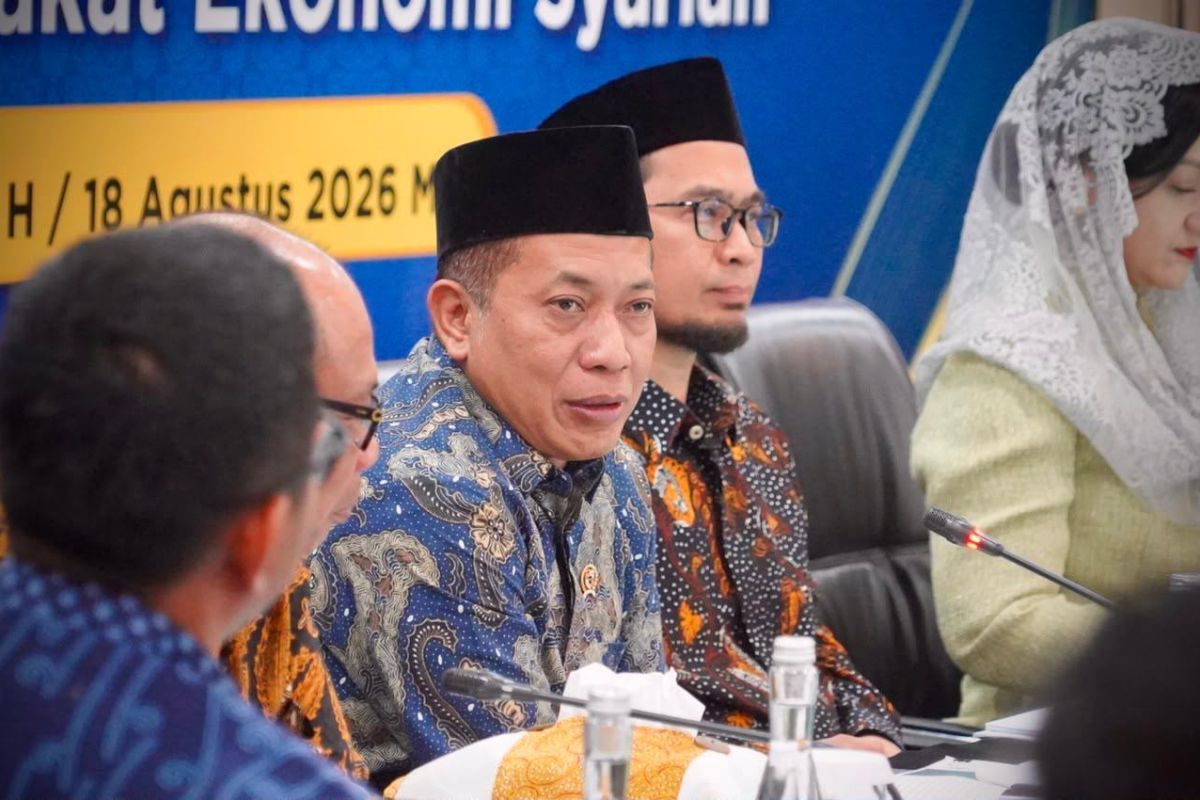
Jakarta (ANTARA) - The Islamic Economic Society (MES) has drafted a roadmap for developing the sharia economy in four stages until 2030 as part of efforts to strengthen Indonesia’s sharia economic ecosystem and enhance its role at the global level.
Ferry Juliantono, Daily Chairman of the MES Central Board who also serves as Minister of Cooperatives, said the roadmap is part of the organisation’s grand vision for the next five years, with development carried out in stages from strengthening foundations to expanding the role of the sharia economy.
“The achievement roadmap has been prepared in stages, starting from the foundation to strengthening the sharia economy in its global role,” Ferry said, quoted from a press release in Jakarta on Wednesday.
During a gathering of the MES Central Board Expert Council in Jakarta on Tuesday (18/8), it was determined that in 2026, MES will enter the foundation and consolidation stage, focusing on solidifying the organisational structure, institutions, and programme foundations.
Furthermore, in 2027, MES targets entering the acceleration and expansion phase through broadening its reach, accelerating programme implementation, and increasing the impact of sharia economic activities.
The next stage from 2028 to 2029 will be carried out through strengthening and scalability. During this period, MES will consolidate the achievements that have been attained while expanding the scope of programmes and partnerships to the global level.
Meanwhile, in 2030, Ferry explained, MES targets a consolidation and refinement phase to solidify all achievements and strengthen Indonesia’s position on the world sharia economy map.
Meanwhile, Adi Hidayat, Chairman of the MES Central Board Expert Council, assessed that developing the sharia economy cannot rely solely on systems and programmes, but must also be accompanied by building public awareness and readiness as the main actors.
According to him, sharia economic programmes so far have focused more on technical aspects and implementation activities.
“MES’s vision is extraordinary. However, a good system and programme are not yet complete if it is not clear who will implement them,” Adi said.
According to him, there needs to be an effort to build public awareness first that prioritising the sharia economy is part of the values of faith and worship.
Meanwhile, Friderica Widyasari Dewi, Deputy Chairman of the MES Expert Council and Chairman of the Board of Commissioners of the Financial Services Authority, expressed hope that collaboration between MES and the MES Expert Council can serve as a space for thought to address various challenges in developing the sharia economy.
According to her, Indonesia’s great potential needs to be translated into a sharia economic ecosystem that is strong, inclusive, and competitive at the global level.