
Meritocracy and 3T Are Key for Chinese Party to Support National Development
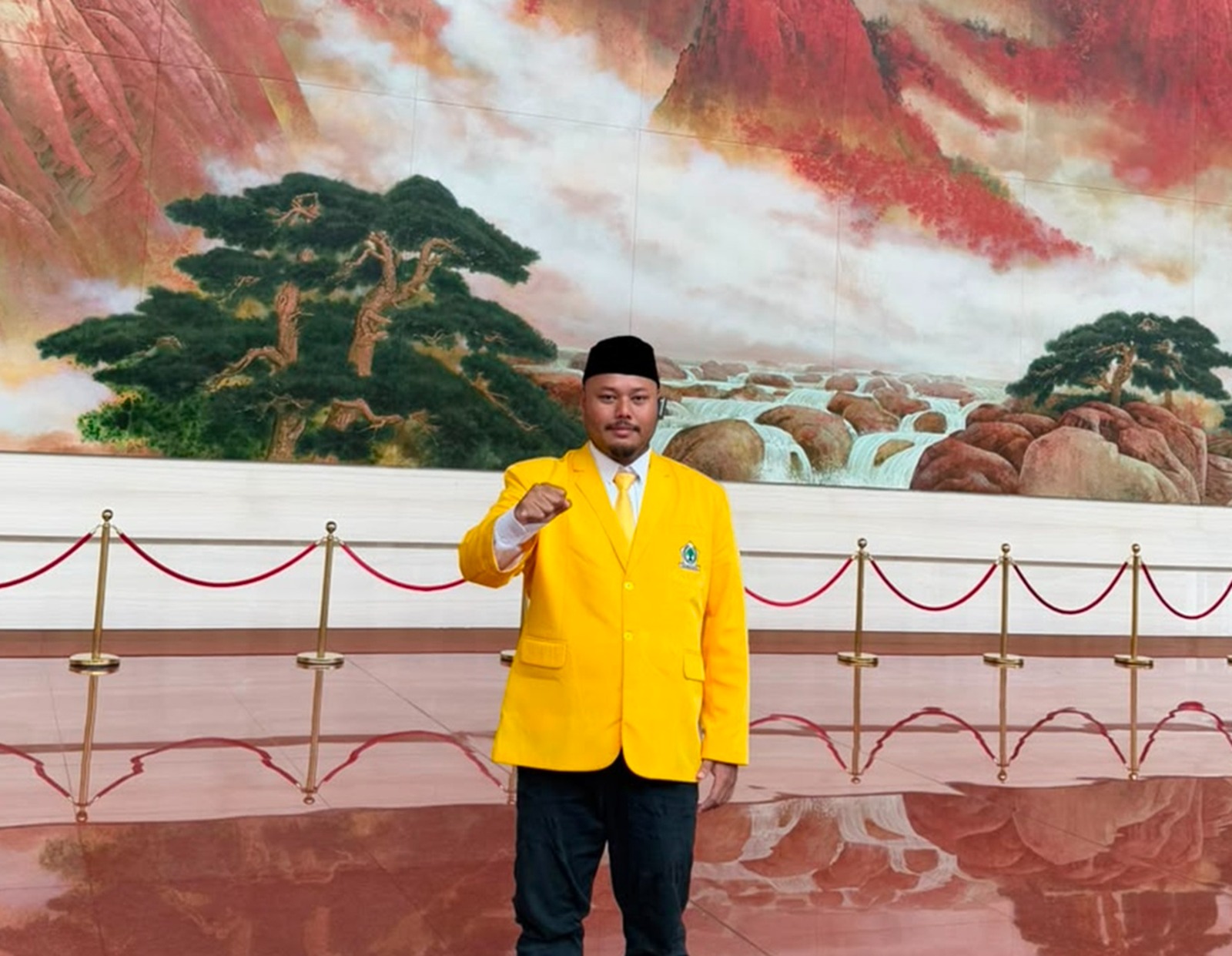
Adhe Nuansa Wibisono, from the Foreign Relations Working Group of the Golkar Party Central Executive Board, recently represented Golkar during a visit to China. He attended a lecture on ‘Xi Jinping Thought on Party Building’ delivered by Professor Ma Li from the Party Building Department of the Central Party School (National Academy of Governance) in Beijing. Adhe, who is also a lecturer in international relations at Paramadina University, explained that the lecture provided a comprehensive picture of how the Chinese Communist Party (CCP) builds a strong political organisation through a combination of institutionalised leadership, systematic cadre education, and political meritocracy as the foundation for elite regeneration. This experience shows that strengthening party institutions plays an important role in state governance.
He explained that Xi Jinping’s thought on party building is an integral part of Xi Jinping Thought on Socialism with Chinese Characteristics for a New Era. The concept encompasses economic, political, legal, cultural, ecological, and national defence development as a unified whole to strengthen the party’s leadership capacity in governing the country. One of its main implementations is comprehensive party governance through strict organisational discipline and the eradication of corruption. The CCP applies the ‘Three No’s’ philosophy: not daring to be corrupt, not able to be corrupt, and not wanting to be corrupt. Through this philosophy, anti-corruption efforts rely not only on law enforcement but are also supported by institutional reform and the moral development of cadres.
The CCP’s leadership structure is tiered and collective. The decision-making process starts from the national congress with around 2,000 delegates, then the central committee with about 370 members, the politburo with 24 members, the politburo standing committee with seven top leaders, and finally the party’s general secretary as the supreme leader. This tiered mechanism allows for a gradual leadership selection and evaluation process, ensuring cadres gain governing experience before assuming national office. This meritocratic culture is clearly reflected in President Xi Jinping’s career. Before becoming General Secretary in 2012, Xi underwent around four decades of government experience at various leadership levels, from county party secretary in Hebei Province to strategic positions in Fujian, Zhejiang, and Shanghai, accumulating experience leading regions with a combined population of around 150 million people before leading the country.
Adhe noted that this process demonstrates how national leadership in China is built through long bureaucratic and organisational experience, not merely political popularity. Out of more than 100 million CCP members, only about 8 million become public and government officials. The extremely strict selection process means only about one in every 140,000 cadres reaches the provincial leadership level. This meritocratic mechanism serves as an internal instrument to maintain the quality of elite political regeneration. The system is reinforced by the Central Party School, the highest cadre education institution, which oversees approximately 2,700 party schools across China. Since merging with the National Academy of Governance in 2018, the institution teaches not only party ideology but also leadership, public administration, governance, and policy research. Under the leadership of Politburo Standing Committee member Cai Qi since June 2026, the Central Party School remains the primary instrument for building uniformity in values, competence, and leadership capacity among cadres. Thus, the CCP’s party system is supported by three main pillars: selective cadre recruitment, tiered leadership assignments, and political education through party schools. These three elements form a regeneration cycle that produces leaders with mature administrative experience, managerial capacity, and ideological understanding.