
MERIT Conference Promotes Strengthening of Methane Emission MRV from Waste Sector
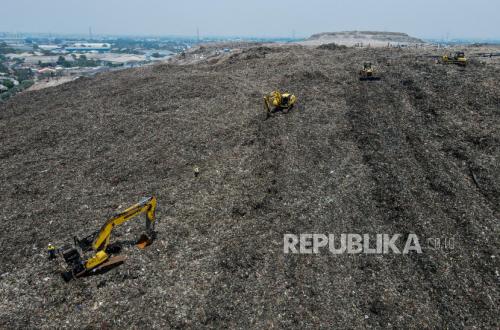
Reducing methane emissions from the waste sector requires a measurement system capable of identifying the sources, magnitude, and changes in emissions following interventions. Strengthening the Monitoring, Reporting, and Verification (MRV) system is considered a vital component to ensure that methane reduction policies are based on actual waste management conditions in the field.
This was one of the key discussions at the MERIT Conference 2026, titled “From Measurement to Mitigation: Building a Methane Reduction System from the Waste Sector,” held in Jakarta on Tuesday (22/09/2026). The conference was organised by Dietplastik Indonesia, the Centre for Environmental Education (PPLH) Bali, and YPBB Bandung. The forum brought together central and local governments, the scientific community, international partners, donors, media, and waste management stakeholders to discuss the development of an MRV system for methane emissions from the waste sector in Indonesia.
Catur Yudha Hariani, Executive Director of PPLting Bali, stated that the issue of reducing methane emissions from waste cannot be separated from how waste is managed from the source to the final disposal site (TPA). According to him, disposing of waste in landfills can no longer be viewed as the ultimate solution for all types of waste. Waste management methods must also be assessed based on their climate impact, particularly because organic waste buried in landfills can generate methane emissions.
“Disposing of waste in landfills can no longer be regarded as a routine or the final solution for all types of waste. At the same time, we also need to understand the climate impact of our waste management methods,” said Catur.
He added that reducing methane emissions must begin with an understanding of the magnitude of the emissions produced. Therefore, credible measurement is a crucial part of the MERIT Project’s journey. “Organic waste entering and buried in landfills can produce methane emissions. To reduce these emissions, we first need to know the scale of the emissions through credible measurement. This is a vital part of the MERIT Project’s journey up to the current phase,” he said.
During the conference, one of the discussions focused on approaches to measuring methane emissions at landfills. Measurements are conducted using various data sources, including satellite data, waste composition data, and Closed Flux Chamber (CFC) sensors across three project regions. The measurements also examine emission differences based on seasonal conditions. Dr Eng Didin Agustian Permadi, an expert for the MERIT Project, stated that measurements show differences in methane flux under different seasonal conditions.
“The anaerobic process in landfills during the dry season produces higher methane flux in the measurements conducted,” said Didin. He noted that these findings need to be further developed by local governments through risk mapping. Such mapping is necessary to support efforts in preventing issues at landfills, including the risk of recurring fires.
However, emission measurement is not limited to landfill sites. The MERIT Conference also discussed emissions that may arise from organic waste processing outside of landfills. The second session of the conference addressed interventions for organic waste processing outside landfills, emission measurement methods at processing facilities, and the need for information systems capable of connecting data from various stages of waste management.
Source: jawawa.id (https://jawawa.id/newsitem/merit-conference-promotes-strengthening-of-methane-emission-mrv-from-waste-sector-1790124981)
Originally published by Republika (https://esgnow.republika.co.id/berita/tlsk29423/merit-conference-dorong-penguatan-mrv-emisi-metana-dari-sektor-sampah), translated from Indonesian