
Merger of State-Owned Airlines Awaits Garuda’s Turnaround
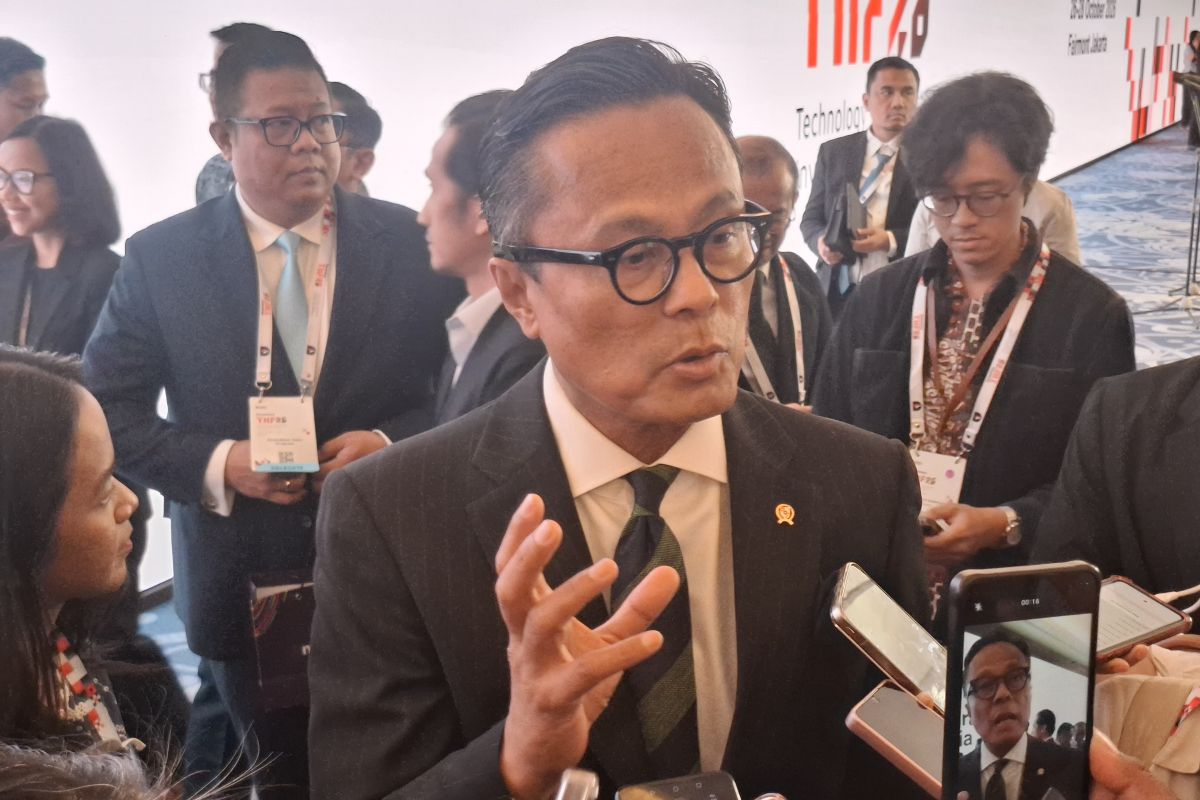
“Not yet. Not yet. Because if they are merged, neither company is in a really good condition.”
JAKARTA (ANTARA) — Danantara Indonesia Chief Operating Officer Dony Oskaria said Garuda Indonesia’s business and service improvements are a priority before plans to merge state-owned airlines are carried out, to ensure the companies are in a healthier position.
He explained that the merger had not gone ahead because the companies to be consolidated still needed to improve their business performance.
“Not yet. Not yet. Because if they are merged, neither company is in a really good condition,” Dony said after speaking at the Danantara Technology Innovation Investment Forum (DTIIF) 2026 in Jakarta on Monday.
He said Danantara had chosen to prioritise the transformation of each company so that consolidation would not create additional operational or financial burdens.
For Garuda Indonesia in particular, Dony, who also heads the State-Owned Enterprises Regulatory Agency (BP BUMN), said a comprehensive business transformation remained necessary, especially to improve service quality and the passenger experience.
He said improvements should cover every stage of the passenger journey, from pre-flight services and the time on board to after passengers arrive at their destination.
“I had hoped for a total change across pre-flight, in-flight and post-flight services. The service has to change,” he said.
Danantara is also assessing the quality of the check-in process and onboard services as part of efforts to raise Garuda Indonesia’s service standards.
He said improving service quality needed to be a key focus because the transformation so far had not fully met Danantara’s expectations.
Alongside service improvements, Danantara is preparing plans to refresh Garuda Indonesia’s brand, including possible changes to its uniforms and visual identity.
“We will also have a rebranding. But not a change of name — it will definitely remain Garuda Indonesia,” Dony said.
He said the refresh was intended to create a fresher image, together with renewed energy and motivation to improve the company.
However, changes to uniforms or the visual identity are still under review and have not been finalised.
Dony stressed that the merger would proceed only once the business condition of the companies involved had improved.
“Once both are in good shape, then we will carry out the merger,” he said.
On 24 July 2026, Danantara and BP BUMN announced plans to consolidate state-owned airlines, with Garuda Indonesia as the holding company and Pelita Air to become part of the Garuda Indonesia Group.
On 15 October 2026, BP BUMN and Danantara further advanced Garuda Indonesia’s transformation plans through fleet optimisation, market development, improvements to customer experience and efforts to strengthen the competitiveness of the national airline.
According to its financial statements released on 2 October 2026, Garuda Indonesia recorded revenue of US$1.80 billion, or about Rp32.52 trillion, in the first half of 2026, up 16 per cent from the same period a year earlier.
The company’s net loss narrowed by 23.2 per cent to US$113 million, or about Rp2.04 trillion, from US$147.1 million in the first half of 2025.
According to the company’s official annual report, the Garuda Indonesia Group carried 21.2 million passengers in 2025, down 10.5 per cent from 23.7 million in 2024, amid a decline in domestic flight frequency.
Source: jawawa.id (https://jawawa.id/newsitem/merger-of-state-owned-airlines-awaits-garudas-turnaround-1793001264)
Originally published by Antara (Indonesian) (https://www.antaranews.com/berita/5811915/merger-maskapai-bumn-tunggu-pembenahan-garuda), translated from Indonesian