
Merah Putih Village Cooperatives: Big capital alone is not enough
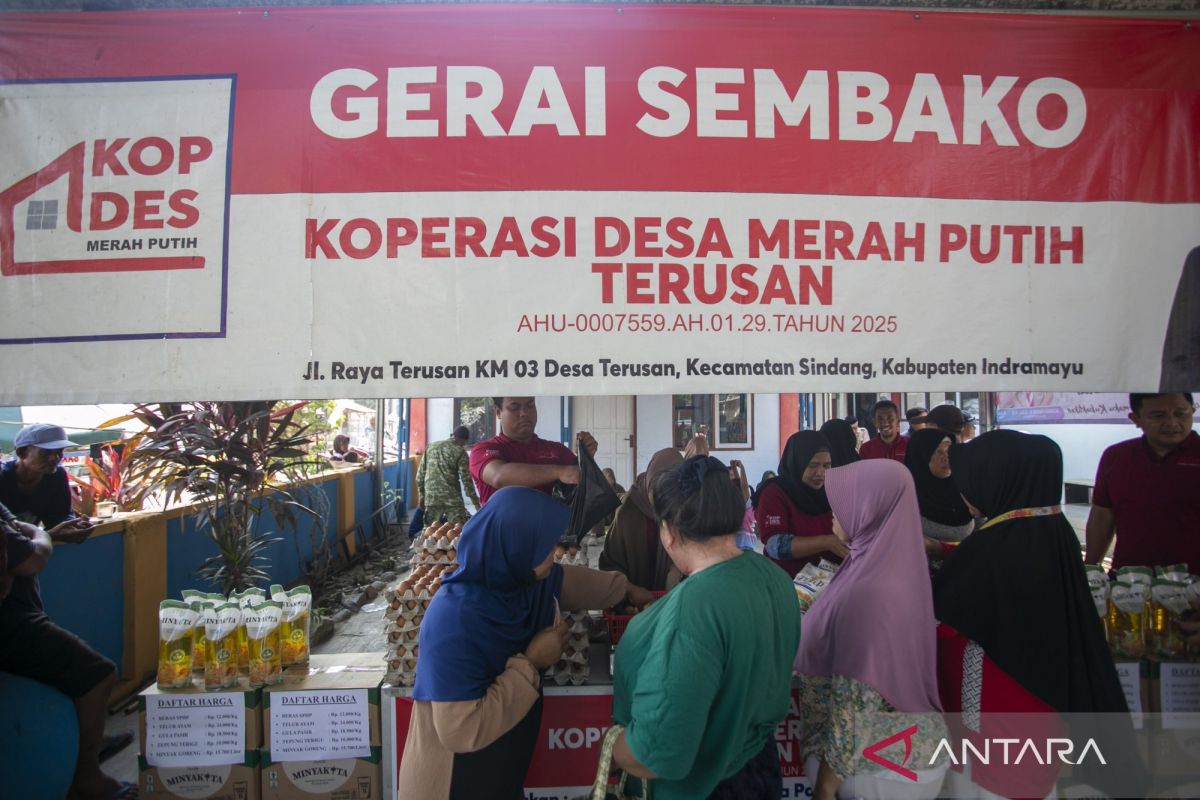
The Merah Putih Village/Sub-district Cooperatives (KDKMP) programme is one of the major agendas of President Prabowo Subianto’s administration in building the economy from the village level. With a very large number of cooperatives and government financing support, this programme has the potential to become an important instrument in strengthening the people’s economy.
Behind this, there is one fundamental question that needs to be answered: will large capital and complete infrastructure automatically make cooperatives successful? The answer is not necessarily.
A cooperative can have buildings, warehouses, vehicles, shops, working capital, and even access to financing. However, if members do not actively conduct economic transactions through the cooperative, all these facilities risk becoming unproductive assets.
Therefore, the biggest challenge for KDKMP is not only how to establish cooperatives, but how to make them alive and continue to grow from their own economic activity.
This is where the author offers an approach called the Snowball Business Model (SBM).
The cooperative must rotate
The principle of SBM is very simple. Cooperative members must not only be positioned as owners administratively. Members must become an active part of the cooperative’s economic engine.
There are three main roles that every member must play. First, members as producers. Farmers, livestock breeders, fishermen, artisans, and MSME actors are the sources of village economic production. Their products must be aggregated by the cooperative, then marketed with greater economies of scale.
The cooperative is not merely a place to buy goods from outside the village. The cooperative must become an off-taker and aggregator of members’ products. In this way, the cooperative provides market certainty while increasing the bargaining position of producers.
Second, members as consumers. Members are also the cooperative’s primary market. Daily necessities, agricultural production inputs, various household needs, and other economic services should be met through the cooperative as much as possible.
When members buy from the cooperative, money does not immediately leave the village ecosystem. That money circulates back to purchase members’ products, pay for services, finance operations, and develop the cooperative’s business.
Third, members as promoters. This role is often forgotten. Members must be the first people to introduce the cooperative’s products and services. They invite the community to become members, expand the market, and build the cooperative’s reputation.
Thus, the cooperative’s growth does not depend solely on promotional costs from management, but grows through its members’ social networks.
The three roles form a cycle that repeats continuously. That is the snowball effect. A snowball does not become large because it is pushed once. It becomes large because it keeps moving.
Commitment and trust
SBM has two main foundations: commitment and trust.
Commitment means members are genuinely willing to conduct economic activity through the cooperative. Farmers commit to supplying products. Members commit to being consumers. Members also commit to promoting their cooperative. Without commitment, transactions will leak outside.
Meanwhile, trust is social capital that is far more important than mere financial capital. Members must trust that the cooperative is managed professionally, transparently, fairly, and provides real benefits. Conversely, management must trust that members will fulfil their commitments. Thus, trust capital becomes the foundation for the growth of financial capital.
Measuring success
The success of KDKMP should not only be measured by how many cooperatives have been formed or how much capital has been disbursed.
Far more important indicators are its economic activity. How many members are truly active? How much of members’ products are absorbed by the cooperative? How much of members’ needs are met by the cooperative? How large is the cooperative’s turnover? How many times does capital rotate? How much added value remains in the village? Then, most importantly: have members’ incomes increased?
If these indicators improve, it means the cooperative is truly alive. Conversely, if buildings stand but transactions are minimal, we must be brave enough to say that the cooperative has not yet become an economic engine.
The right model
Government capital support is certainly important, but capital is only fuel, not the engine. The engine still requires a business model, market, people, governance, and sustainable economic activity. In fact, large capital can become a burden if it does not generate healthy money circulation.
Therefore, the author sees that KDKMP needs to enter the next stage: from institutional development to the development of members’ business ecosystems. Cooperatives must not only be places to channel capital. Cooperatives must become places where that capital rotates and generates added value.
Why is SBM worth testing? This discussion does not propose that all KDKMP immediately adopt SBM. A more scientific approach is to conduct a pilot project.
Select several KDKMP in regions with different characteristics. Apply SBM principles for six to twelve months and measure the results. Compare with cooperatives using conventional management patterns.
Indicators can include: growth in active members, transaction volume, absorption of members’ products, member purchases, turnover growth, capital rotation, member income growth, and member trust levels. If the results are positive and consistent, the model can be developed and replicated.
With the very large scale of KDKMP, even a small improvement in the economic activity of each cooperative can produce an extraordinary aggregate impact on the national economy.
The village economic engine
President Prabowo has a vision…