
Merah Putih Chip Design Sandbox Launched to Strengthen Technological Independence
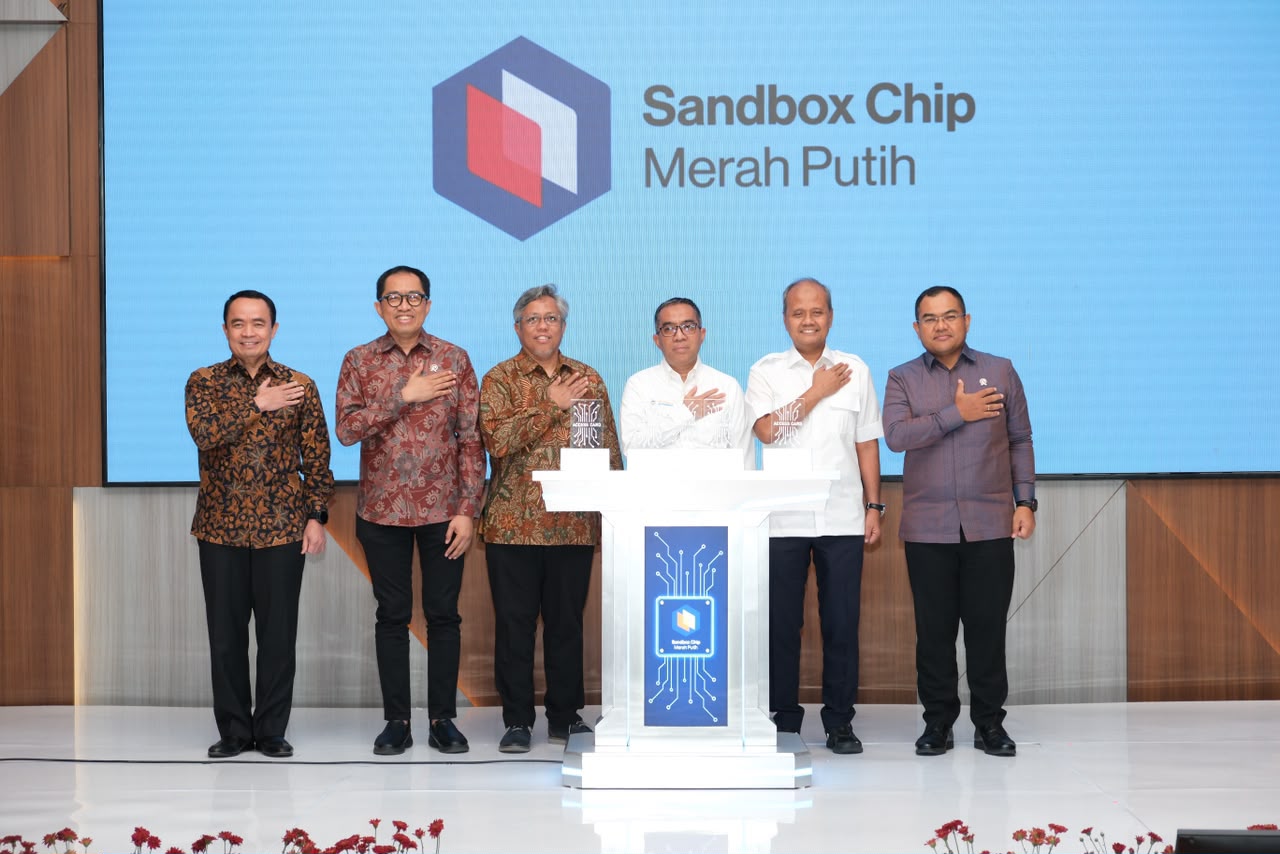
Perum Percetakan Uang Republik Indonesia (Peruri) has launched the Merah Putih Chip Design Sandbox as an effort to strengthen semiconductor technology independence and accelerate the development of national talent in the field of chip design. The digital platform was inaugurated at the Subono Mantofani Building, Peruri Office, in Jakarta.
The launch was attended by Peruri President Director Teguh Arief Indratmio, Minister of Higher Education, Science, and Technology Brian Yuliarto, Chief Technology Officer of BPI Danantara Sigit Puji Santosa, Deputy Head of the SOE Regulatory Agency Tedi Bharata, Deputy Minister of Industry Faisol Riza, and the Rector of the Bandung Institute of Technology Tatacipta Dirgantara.
The Merah Putih Chip Design Sandbox serves as a digital testing space that allows students, researchers, industry players, and startups to study and design chips online via web browsers, eliminating the need for high costs associated with physical hardware and laboratory facilities.
Peruri considers the presence of this platform vital, given that various digital services—such as electronic passports, identity cards, and payment systems—rely on chip technology to ensure data security. Conversely, the number of chip design talents in Indonesia remains limited due to minimal access to learning facilities and high development costs.
National Digital Sovereignty
Peruri President Director Teguh Arief Indratmoko stated that the launch of the Merah Putih Chip Design Sandbox is part of the company’s commitment to supporting digital sovereignty and strengthening national security. “The launch of the Merah Putih Chip Design Sandbox is a strategic step to strengthen digital sovereignty and national security. Through independent chip design, Peruri is committed to providing the highest security standards to protect the nation’s strategic documents and data from cyber threats, while also promoting foreign exchange efficiency and strengthening Indonesia’s position in the global semiconductor ecosystem,” Teguh said in a statement on Friday.
Minister of Higher Education, Science, and Technology Brian Yuliarto stated that mastering semiconductor technology is an essential foundation for economic growth and national independence. He noted that collaboration between the government, universities, and industry is necessary to accelerate the emergence of talent in this field. “Mastering semiconductor technology is an essential foundation for driving economic growth and maintaining national sovereignty. This Sandbox initiative must be executed swiftly and collaboratively. We hope this digital testing space can spark enthusiasm among students and the younger generation to experiment diligently, towards achieving national semiconductor sovereignty in the future,” said Brian.
Strategic Sector
Deputy Minister of Industry Faisol Riza stated that the semiconductor industry has become a strategic sector that determines a country’s competitiveness. He mentioned that the government is currently drafting a roadmap for the development of the semiconductor ecosystem, including the construction of Artificial Intelligence (AI) Data Centres, which is projected to increase domestic chip demand. “Chips are no longer just industrial products, but strategic commodities that determine global dominance. We hope this platform can boost the competitiveness of the Indonesian electronics industry on the global stage,” said Faisol.
Meanwhile, Deputy Head of the SOE Regulatory Agency Tedi Bharata noted that the sandbox facility could serve as a proof of concept for various technological innovations. He emphasised that good governance is a crucial factor in ensuring such strategic projects run sustainably.
Collaboration Opportunities
Chief Technology Officer of BPI Danantara Sigit Puji Santosa added that the presence of the Merah Putih Chip Design Sandbox opens opportunities for collaboration with global technology companies while accelerating the development of the national chip industry. However, he noted that the success of this initiative requires policy and regulatory support that encourages the growth of the semiconductor ecosystem.
Through this platform, Peruri hopes that more young talents, academics, researchers, industry players, and startups will be involved in the development of semiconductor technology. The company believes that collaboration between State-Owned Enterprises (SOEs), the government, universities, and industry is the key to strengthening technological sovereignty and increasing Indonesia’s competitiveness in the global semiconductor sector.