
Mentorship Drives MSME Recovery and Adaptation
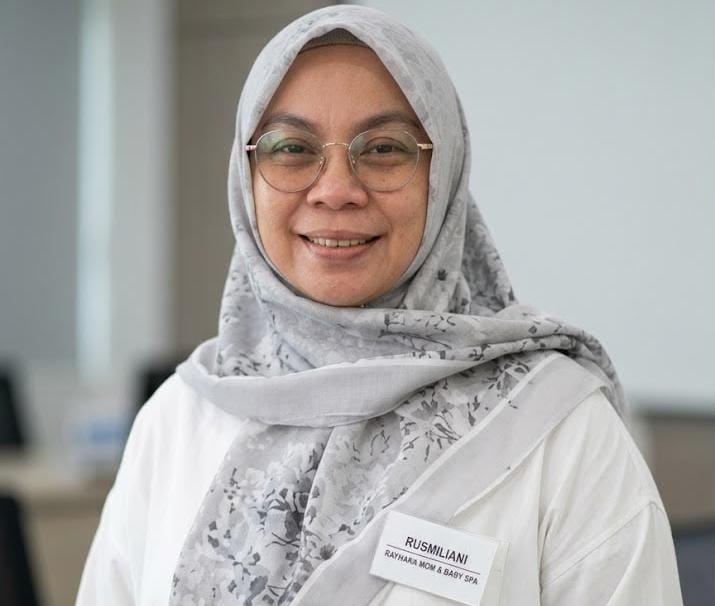
The Covid-19 pandemic forced the closure of Rayhana Mom & Baby Spa, a business founded by Rusmiliani in 2009. Beyond losing her business, she also lost savings accumulated over many years.
Rather than giving up, Rusmiliani chose to rebuild her business after moving to Jakarta. This time, she developed Rayhana using a homecare service model to reduce operational costs and adapt to market conditions.
Rusmiliani’s journey as an entrepreneur began with her desire to utilise her parents’ unused salon equipment. She identified an opportunity for baby care services in Makassar, which was not widely available at the time.
To strengthen her skills, Rusmiliani studied various baby treatments for two years at Martha Tilaar in Jakarta. In 2009, she opened Rayhana Baby Spa, which received a positive response from the community.
“Rayhana’s services subsequently expanded, not only serving babies but also including care for mothers, children, and even adults,” Rusmiliani stated on Friday (11/9).
The pandemic served as a turning point for the business. Operations had to be halted, which significantly impacted her personal finances. Savings intended for a house purchase were depleted, and the property was eventually auctioned by the bank, leaving Rusmiliani facing severe financial hardship.
This experience led her to restart the business with a different approach. In Jakarta, Rayhana was developed through homecare services, allowing treatments to be conducted directly at the customer’s home.
According to Rusmiliani, the experience taught her that maintaining a business requires adaptability, especially when market conditions and financial capabilities change. She also began changing her approach to business decision-making; whereas previously decisions were based more on intuition, she now strives to use data and facts to determine business strategies.
This transformation was further strengthened after she participated in the Tomang Incubation Batch 1 programme, alongside Mirai, an incubator partner of the Indonesia Setara Foundation (YIS).
Through this programme, Rusmiliani received guidance on business management, the use of technology and social media, changing consumer behaviour, and the importance of separating personal and business finances.
One measurement taken during the four-week programme showed that Rayhana recorded a revenue of Rp6.96 million from 69 transactions. In weeks 1 and 2, sales reached Rp2.8 million, while in weeks 3 and 4, figures were recorded at Rp2.08 million respectively.
For Rusmiliani, this recording is not merely about looking at the amount of income. Data is used to read the business condition and serve as a basis for determining future business development strategies.
Sandiaga Salahuddin Uno, Founder of the Indonesia Setara Foundation (YIS), stated that MSME development requires continuous mentorship, not just training. According to Sandiaga, entrepreneurs need the ability to change their mindset, improve business management, utilise technology, and adapt to market changes.
“Mentorship must produce a real impact. When entrepreneurs acquire new skills, are able to utilise digital technology, and expand their markets, then their businesses will grow and the benefits can be felt by the surrounding community,” said Sandiaga.
He added that MSME development should not be measured solely by increases in turnover. The ability of a business to create jobs and provide benefits to the surrounding environment is also a vital indicator.
Rusmiliani’s story demonstrates that business sustainability is not always determined by the ability to maintain an old business model. When conditions change, MSME players are required to identify new opportunities, manage finances more disciplinedly, and use data to determine the business direction.