
MenPAN-RB Emphasises Importance of Digital Government for Optimal Services
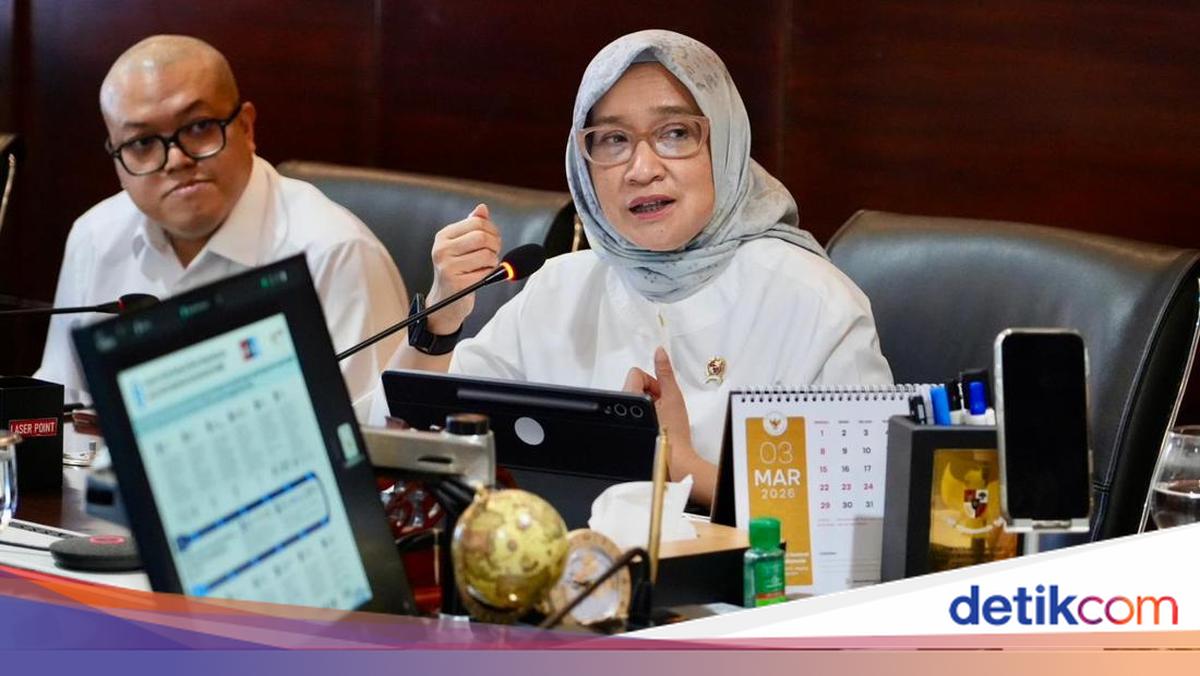
Minister for State Apparatus Utilisation and Bureaucratic Reform (MenPAN-RB), Rini Widyantini, stated that the government is continuously striving to provide optimal services to the public. One of the ways to achieve this is through digital government transformation.
Rini explained that Digital Government is not merely the use of technology in bureaucracy. This effort represents a fundamental change in governance, including how policies are formulated, how services are delivered, and how the state interacts with society.
She revealed that achieving public welfare is the highest target of government performance (Human-Centered Design in Government).
“Through digital government, the state is present in a simpler, faster, and more trustworthy manner. It is not just system modernisation, but a transformation of the public service experience,” Rini said in her statement on Monday (6/4/2026).
She made these remarks during a coordination meeting with the Chairman of the National Economic Council (DEN) and Presidential Special Advisor on Digitalisation and Government Technology, Luhut Binsar Pandjaitan, at the DEN office on Monday (6/4).
Furthermore, Rini stated that there are three main components for accelerating digital government. First, strengthening institutional consolidation for handling government digital transformation. This requires organising the roles of relevant ministries and agencies to support President Prabowo Subianto’s priority programmes.
Second, Rini explained, an integrated digital service portal, Digital Public Infrastructure (DPI), and priority thematic digital services are needed. Orchestration and collaboration of cross-Coordinating Ministry thematic digital services are required.
Interoperability of services from birth to death is necessary through public service portals or government administration using Digital ID, Data Exchange, and Digital Payment.
Third, Rini continued, the digital government presidential regulation as a form of regulatory strengthening to address various challenges, through a strong legal basis oriented towards public interests.
Through the digital government presidential regulation, there is consolidation of budgets for priority digital services and portals, as well as achieving policy synchronisation.
In addition, Rini conveyed that digital government is an instrument of state efficiency that has the potential to reduce system duplication and IT spending, as well as curb systemic budget leakages.
On the other hand, digital government is used as an instrument for equitable distribution of social aid and subsidies that must be on target. Data-based interventions, not assumptions.
According to her, the implementation of digital government can change people’s lives and a country’s economy, exemplified by the Philippines, which was able to cut business licensing processes by up to 80 percent. This reduction was achieved after integrating Digital ID into various government services.
Government digital transformation, Rini said, does not only focus on creating applications or advanced technology, but also on accelerating structural reforms that are often unseen behind every service, application, or priority programme.
On that occasion, Luhut also stated that through digital government, efficiency can be increased and various bureaucratic processes accelerated. However, collaborative work among ministries and agencies is needed to realise priority programmes.
“The use of technology will greatly help the government in providing services to the public. The President’s directive is that digitalisation is a necessity in government governance to provide ease of service to the public,” he said.