
Menkopolkam Warns of Internet-Based Terror Recruitment as RAN PE Phase II Launches
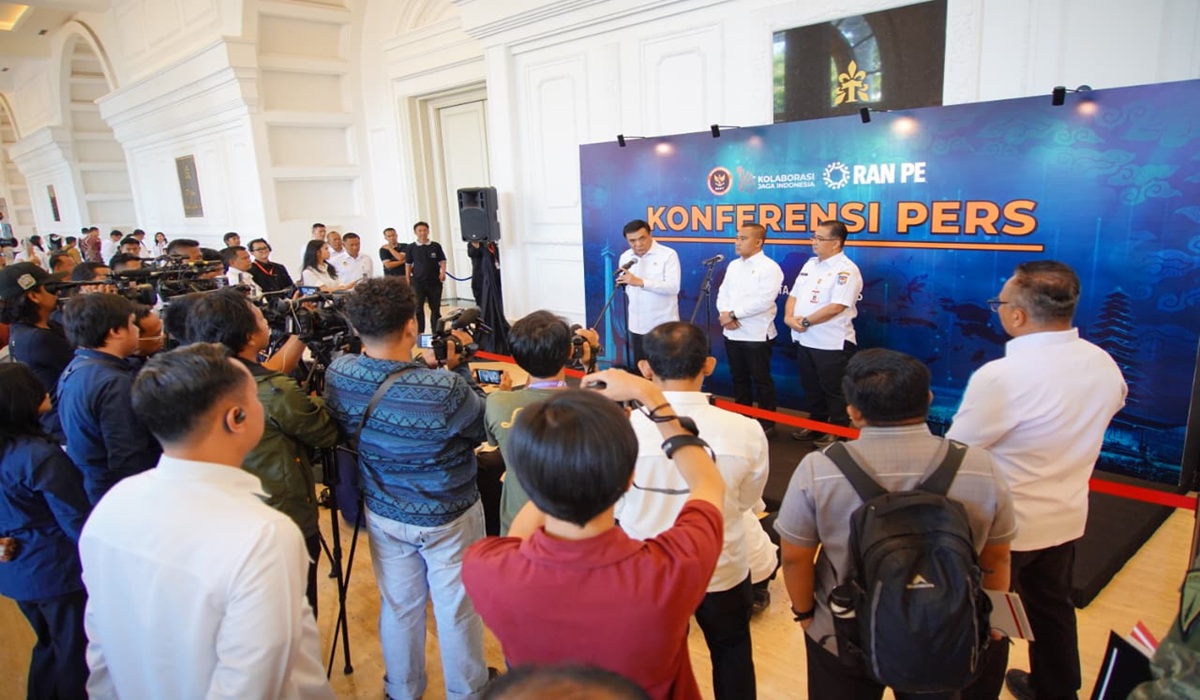
Coordinating Minister for Political and Security Affairs (Menkopolkam) General (Ret.) Djamari Chaniago has issued a stark warning regarding the shifting recruitment patterns of terrorist networks. The internet has now become the primary medium for radical groups to enlist new members, with an increasingly alarming target demographic. “The internet is used as a recruitment tool. Ironically, many children and women are being involved,” Djamari stated at the Collaboration Strengthening Forum for the Implementation of RAN PE Phase II in Jakarta on Monday. In response to this threat, the government has officially commenced the implementation of Presidential Regulation Number 8 of 2026 concerning the National Action Plan for the Prevention and Countering of Violent Extremism Leading to Terrorism (RAN PE) Phase II for the 2026–2029 period. Djamari emphasised that the success of this programme heavily relies on the active role of local governments as the front line in prevention efforts within their respective regions. Eddy Hartono, Head of the National Counter-Terrorism Agency (BNPT), explained that RAN PE Phase II is the result of an in-depth evaluation of threats observed between 2023 and 2025. Data indicates a trend of spreading nihilistic radical ideologies and global recruitment efforts through digital spaces, specifically targeting the younger generation. The programme integrates 111 action targets summarised into nine strategic themes. The main strategy is directed at strengthening the resilience of families, communities, and educational institutions, as well as securing digital spaces as a bulwark of societal defence. To ensure comprehensive handling, RAN PE Phase II encompasses nine main pillars involving cross-sector collaboration. Eddy Hartono stressed that RAN PE Phase II is not merely a policy document, but a collective guideline for building national resilience. The launch forum was attended by representatives from 70 ministries and agencies, local governments, academics, and civil society organisations, demonstrating a collective commitment to breaking the chain of violent extremism in Indonesia.