
Mendiktisaintek: Distance Learning Policy Handed Over to Each University
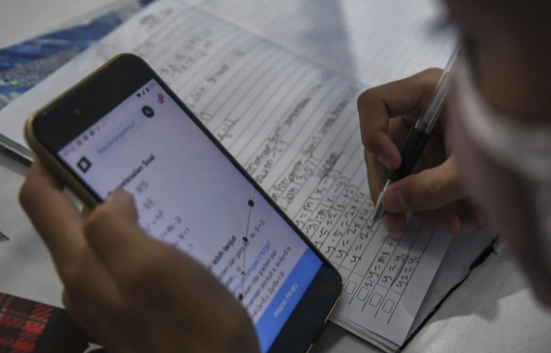
The Ministry of Higher Education, Science, and Technology (Kemdiktisaintek) has fully delegated the policy on implementing distance learning (PJJ) to each respective higher education institution. This step is part of efforts to promote efficiency and cultural transformation in the higher education environment.
Minister of Higher Education, Science, and Technology (Mendiktisaintek) Brian Yuliarto explained that the policy considers the characteristics of each study programme, which is deemed to best understand learning needs.
“Regarding lectures, we are handing it over to each campus and study programme. The study programme knows which courses are theoretical and can be done in a hybrid or PJJ manner. For instance, can veterinary medicine dissect animals via PJJ? So we are leaving it to each campus,” said Brian on Monday (6/4).
He emphasised that this flexibility is important to maintain the quality of learning, especially for courses that require direct practice.
In addition, the government is also promoting the digitalisation of education services as part of efficiency measures. Experiences during the Covid-19 pandemic serve as an important lesson that digital systems can streamline bureaucratic processes and unnecessary mobility.
“When services become digital, transportation becomes far more efficient. For example, lecturers applying for research do not need to go to Jakarta; it can be done through the system. This includes scholarship applications and requesting transcripts from the rectorate. These are the steps we are pushing,” he explained.
According to Brian, the current momentum of global economic uncertainty is being utilised by the government to accelerate the transformation of a more adaptive and efficient work culture.
On the other hand, lecturer work arrangements are also directed to be more flexible. Universities are asked to centrally schedule teaching in a few days, so lecturers can use the other days to work from home.
“Regarding lecturers, we ask campuses to arrange teaching schedules to be concentrated on certain days. For example, a lecturer teaches fully from Monday to Thursday, and on Friday, they can work from home. This is far more efficient. Students also do not need to go back and forth if the system is already good,” he added.
This policy is expected to create a higher education system that is more efficient, flexible, and still maintains learning quality amid global challenges.