
Menarini Indonesia to Plant 1,600 Mangroves Throughout 2026
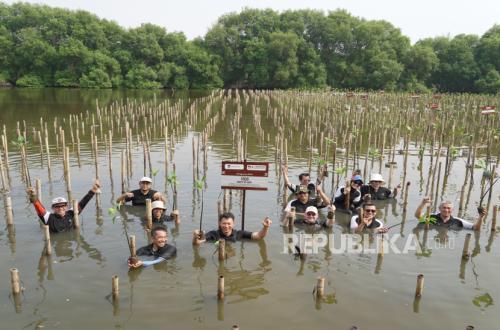
Environmental sustainability is no longer merely a global discourse, but an integral part of the modern lifestyle as society becomes increasingly concerned with the health of the planet. Amidst dense urban activities and high pollution levels, the awareness to maintain the balance of coastal ecosystems has become a crucial step in ensuring a better quality of life for future generations.
In response to the challenges of climate change, Menarini Indonesia is undertaking environmental actions focused on the restoration of coastal areas. Under the theme ‘Roots of Hope’, Menarini Indonesia is realising sustainable green actions by planting a total of 1,600 mangrove trees along the coastal regions of West Java and Jakarta throughout 2026.
This step reinforces the company’s commitment to its Corporate Social Responsibility (CSR) pillars while supporting the achievement of environmental conservation targets within the Environmental, Social, and Governance (ESG) framework. This initiative serves as a reminder that concern for human health must proceed in harmony with the restoration of the natural environment.
The series of green initiatives began with a large-scale planting of 1,500 mangrove seedlings along the coastline of Hurip Jaya Village, Babelan District, Bekasi Regency. This activity was organised as a mitigation measure for the northern coastal ecosystem of Java, and was also designed to commemorate the 81st Anniversary of the Independence of the Republic of Indonesia. The Bekasi coastal area was chosen as a focal point because the region requires extra protection from the threats of erosion and changes to the coastline.
As the climax of the event and to conclude this year’s series of green initiatives, Menarini Indonesia finalised its commitment through the symbolic planting of 100 mangrove seedlings at the Angke Kapuk Nature Tourism Park in North Jakarta. This green location, which often serves as an oasis amidst the Jakarta megacity, was selected to demonstrate the consistency of inclusive environmental actions that are closely connected to urban areas.