
Melchias Mekeng Highlights Rising Cost Recovery Amid Declining Oil and Gas Lifting
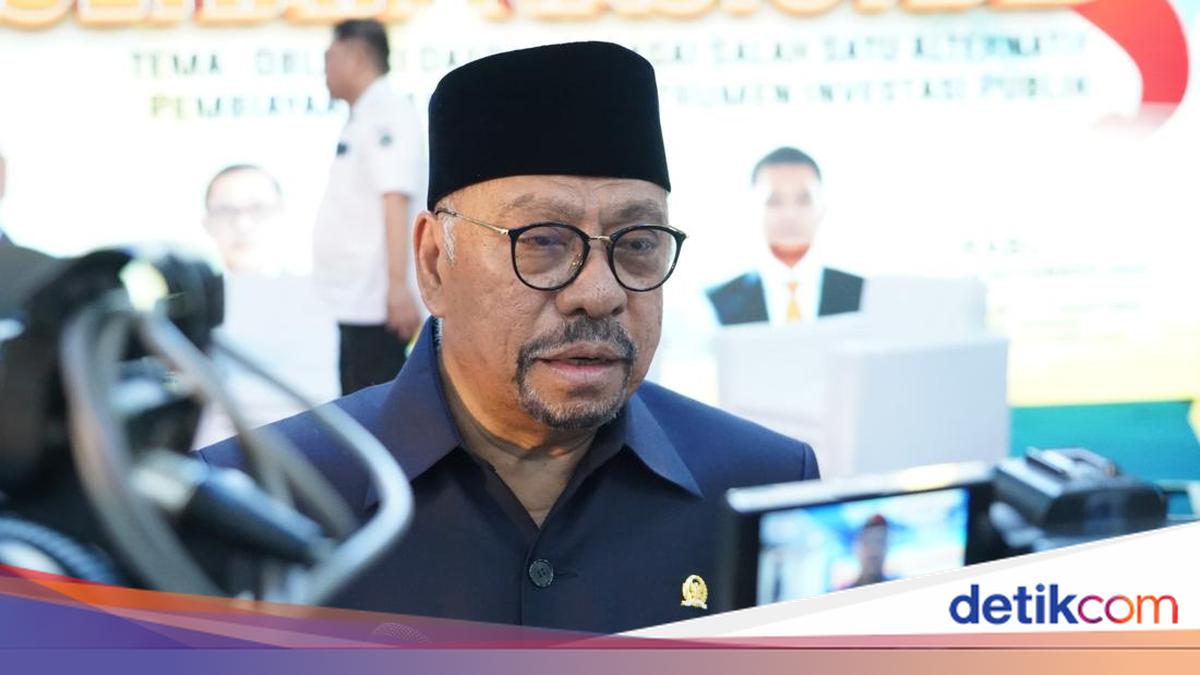
The Chairman of Commission XII of the Indonesian House of Representatives (DPR RI), Melchias Markus Mekeng, who also serves as the Chairman of the Golkar Faction of the MPR RI, has questioned the trend of rising cost recovery that does not align with the performance of national oil and gas lifting.
He believes there are issues that must be explained openly by the Special Task Force for Upstream Oil and Gas Business Activities (SKKS Migas). This is because, on one hand, the state continues to allocate a large budget for cost recovery, but on the other hand, national oil and gas production is still facing a downward trend.
“Our cost recovery is increasing from year to year. However, our lifting is not increasing; instead, it is decreasing. SKK Migas must be able to explain the reason and the logic behind this situation,” Melchias stated in a written statement on Tuesday (8/9/2026).
According to him, this issue cannot be viewed merely as a technical matter within the oil and gas industry. Cost recovery is directly related to state funds, which ultimately originate from the State Budget (APBN).
“This is the people’s money,” he said.
Mekeng highlighted that the cost recovery budget planned for 2027 is expected to reach approximately USD 10.1 billion, or about IDR 175 trillion. With such a significant value, he believes the government and SKKG Migas must clearly demonstrate the benefits received by the state.
“If a budget of that magnitude is spent, yet we still face the problem of declining lifting, the question is: what is that money actually being used for and how much impact does it have on production?” Mekeng remarked.
Consequently, he requested that SKK Migas disclose the entire structure of cost recovery in detail. This includes not just the total figures, but every cost component included within it.
“The components of the cost recovery must be broken down. What are all the expenses being incurred? Who determines whether a cost is appropriate or not? What are the criteria?” he added.
For him, transparency is absolute as it involves public funds. The DPR and the public must be able to know whether every cost charged to the state is truly necessary, accountable, and provides benefits towards increasing national oil and gas production.
“We want clarity. The people must also have clarity. The Rupiah they pay through taxes enters the APBN, and then the APBN pays for cost recovery. We must ensure the public is not left wondering what that money is used for and what the benefits are,” he said.
He emphasised that Commission XII of the DPR RI will demand further explanations from SKK Migas. He even opened the possibility for Commission XII to take firmer measures if the explanations provided fail to answer questions regarding the effectiveness and accountability of cost recovery.
“We will hold follow-up discussions. If a convincing explanation cannot be found, we will take firmer steps to ensure everything is properly transparent,” he added.
He stressed that the magnitude of the budget must not be merely a figure in the APBN. Every Rupiah spent by the state must have an accountable benefit.
“The public must know that the money being spent provides a benefit,” concluded Melchias.