
Megawati Wants Jakarta Residents to Sort Waste at Home to Ease the Burden on Bantargebang
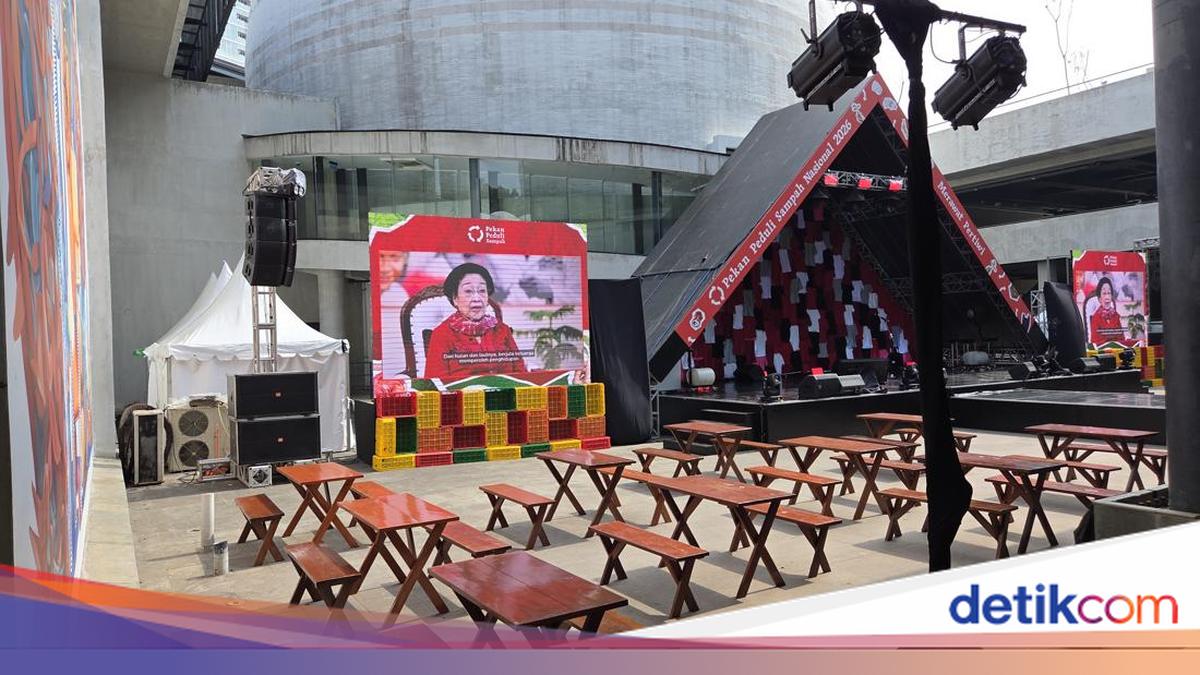
Former Indonesian president Megawati Soekarnoputri wants Jakarta residents to sort their waste at household level before it is sent to the Bantargebang integrated waste-processing site (TPST). She said sorting waste at home would reduce the facility’s burden.
Megawati made the remarks in a speech at the Gerakan Merawat Pertiwi event, delivered in a short video screened at Taman Ismail Marzuki in Central Jakarta on Thursday (12 November 2026). She said she had also raised the issue with Jakarta Governor Pramono Anung and urged him to give it serious attention.
“I have spoken with Governor Pramono Anung. Hopefully, if we start at the source — and we are the source — by sorting waste at home, then, as Mr Pramono said, it should be possible for Bantargebang eventually to become a waste-disposal site where waste has already been sorted,” Megawati said.
She said sorting waste at household level could create a better waste-management chain. Waste arriving at Bantargebang would already be separated by type and could be put to appropriate use.
“The benefits are considerable, including for the welfare of waste pickers. In this way, we create our own chain, which I call from upstream to downstream. Wouldn’t it be wonderful to see Jakarta become a clean and comfortable city?” she said.
Megawati urged residents to get into the habit of separating organic and inorganic waste. Organic waste, such as food scraps and leaves, can be turned into compost, while inorganic waste can be recycled and made into goods with economic value.
“On this occasion, I want to encourage something very simple: if we love our homeland, we should start by clearing up waste, processing organic and inorganic waste, and separating inorganic waste that can be recycled into goods of economic value through what is known as the circular economy,” she added.
Megawati also introduced the teba method for turning organic waste into compost. She said it could be used at home or collectively within a neighbourhood RT or RW.
“I have been making a teba for a long time, one that I built myself at my residence. In my view, the smallest suitable size is three by three metres, with a depth of three metres. The dimensions should be equal. Organic waste is then placed inside the teba,” she said.
“There is a process for doing this. Once the waste reaches one metre, sprinkle it with a layer of lime powder about 10 centimetres thick. Then add more organic waste, repeating the process until the teba is full,” she continued.
She said the waste should then be left for between two weeks and a month. The material at the bottom will begin to decompose and turn black.
“That is what can be used, because it has turned into compost. It can be very useful, and we do not need to spend money,” she said.
Source: jawawa.id (https://jawawa.id/newsitem/megawati-wants-jakarta-residents-to-sort-waste-at-home-to-ease-the-burden-on-bantargebang-1794480810)
Originally published by detikcom (https://news.detik.com/berita/d-8750242/kurangi-beban-bantargebang-megawati-ingin-sampah-jakarta-dipilah-dari-rumah), translated from Indonesian