
Megawati Highlights US Aggression Towards Venezuela and Iran, Urges Holding of Second Asian-African Conference
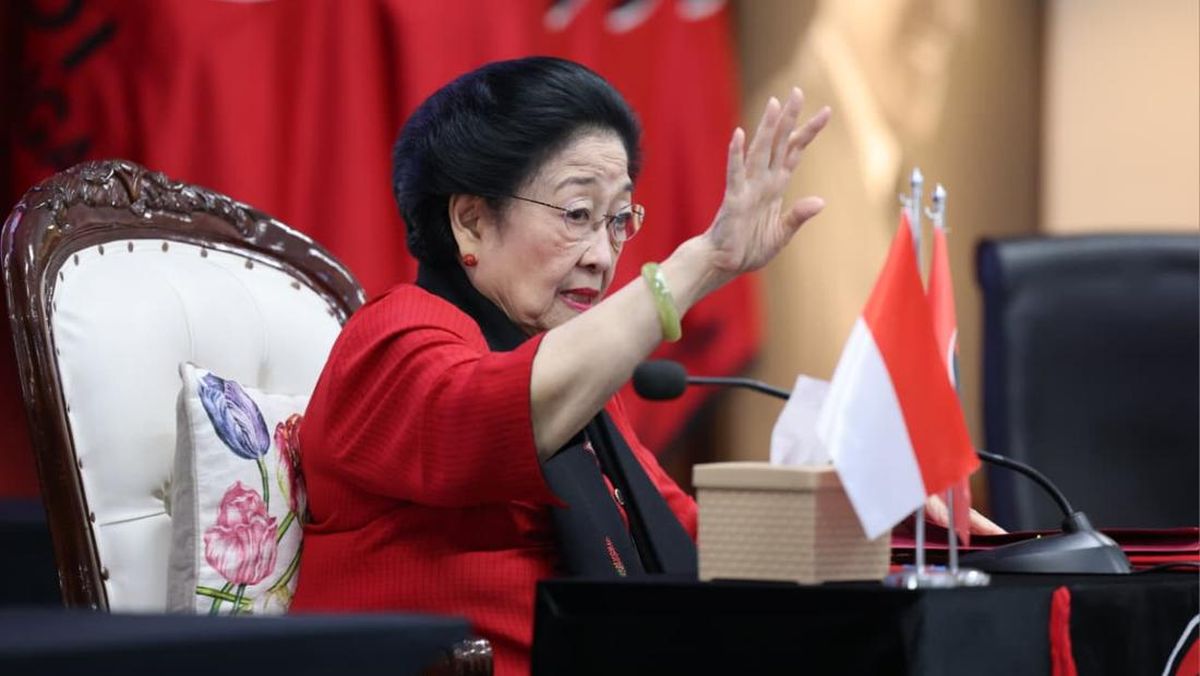
Indonesia’s fifth president, Megawati Soekarnoputri, views the second Asian-African Conference (KAA) as urgently needed in the wake of US military aggression towards Iran and Venezuela.
The PDIP chair assessed that the world is currently in an unstable situation due to various geopolitical conflicts. This condition, she said, proves the relevance of KAA values, particularly the Bandung Principles, in safeguarding the sovereignty of independent nations from foreign interventions.
“When the world today faces issues in Venezuela through the kidnapping of President Maduro, and the US-Israel attacks on Iran, the international system is shaken,” she stated at the seminar ‘Relevance of the Asian-African Movement in the Current Geopolitical Crisis’ at the Party School, Lenteng Agung, on Saturday (18/4).
She said that this situation demands the world to return to foundations that uphold national equality.
Megawati stressed that the spirit of KAA and the Non-Aligned Movement (NAM) is the best answer to erode the influence of neo-colonialism and imperialism (Nekolim).
“The Bandung Principles are an international law initiated by Indonesia as a bulwark for the sovereignty and independence of a nation from interference by other nations,” she said.
On the same occasion, Megawati also highlighted the presence of foreign military bases. She then recalled Indonesia’s progressive step in 1965 through the International Conference Against Foreign Military Bases (KIAPMA) at the Hotel Indonesia.
She affirmed that Indonesia’s defence strength should be built with a mission of world peace and a strong geopolitical perspective.
“Various interventions in the sovereignty of independent and sovereign countries in Latin America and the Middle East recently can occur quickly due to the presence of foreign military bases in a country,” she said.
Finally, Megawati also discussed Bung Karno’s geopolitical thinking, which divides world powers into two: The New Emerging Forces (newly independent countries) and The Old Forces (established countries).
Although different in capacity, she emphasised that both must be driven by the same will, namely to fight for humanity, justice, and world peace.
“In the midst of a global situation that is becoming increasingly complex, the implementation of the second Asian-African Conference becomes highly relevant as a compass for the future of nations and the world,” she concluded.