
Megawati and Ramos Horta initiate meeting of Nobel and Turing laureates
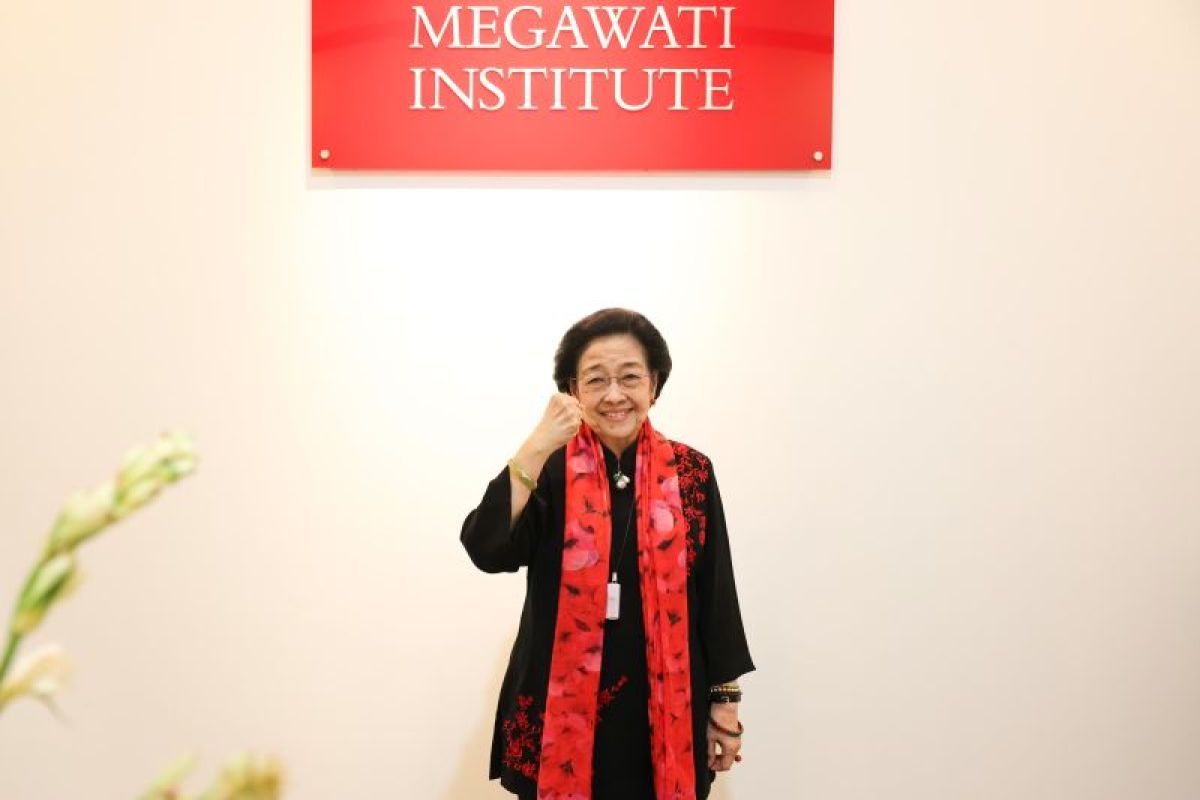
Indonesia’s fifth President and founder of the Megawati Institute, Megawati Soekarnoputri, together with Timor-Leste President José Ramos Horta, has initiated a meeting bringing together Nobel and Turing Award laureates as well as scientists from various fields of study.
Executive Director of the Megawati Institute Hilmar Farid said the meeting stemmed from Megawati and Ramos Horta’s shared concern about the importance of science and technology in addressing the various challenges facing humanity today.
“This meeting essentially seeks to bring science together with the real problems facing the world,” Hilmar said in a written statement in Jakarta on Friday.
“We have extraordinary developments in science and technology, but at the same time we face increasingly complex humanitarian, environmental, economic and political challenges,” he added.
According to Hilmar, the presence of scientists from various disciplines in a single forum also reflects the nature of the problems facing the world today.
Therefore, the meeting is not designed as a scientific conference with discussions separated by academic discipline.
The meeting will take place as a dialogue bringing together various experiences and perspectives on how science and technology can contribute to human life.
“What matters is not merely bringing together people with very high scientific achievements. What we want to build is a conversation among them, and also with political leaders, about how knowledge and technology can be used to address shared problems,” Hilmar said.
In a number of preparatory meetings for the gathering, Megawati stressed the importance of viewing science and technology not as something standing alone, but as part of humanity’s efforts to confront the great problems of its time.
As Chair of the Steering Committee of the National Research and Innovation Agency (BRIN), Megawati has long placed mastery of science and technology as an important matter for Indonesia’s future.
This view also draws on the thinking of Indonesia’s first President Soekarno regarding the relationship between science, a nation’s ability to stand on its own strength, and international cooperation.
In preparing for the meeting, Megawati highlighted, among other things, climate change and environmental degradation, food and health issues, and the very rapid development of artificial intelligence.
She also paid attention to the development of new technologies such as artificial intelligence.
Besides its great potential, these developments raise questions about who controls the technology, in whose interests the technology is used, and how its benefits can be felt more widely.
For developing countries such as Indonesia, these developments also demonstrate the importance of building one’s own scientific and technological capabilities without separating oneself from the global scientific community.
“In the preparatory meetings, Ibu Megawati repeatedly stressed that Indonesia must strengthen its scientific and technological capabilities. But the challenges we now face are global in nature,” Hilmar said.
Therefore, according to Hilmar, building one’s own capabilities must go hand in hand with strengthening international cooperation.
Bringing Together Various Fields of Knowledge
The meeting at the Megawati Institute will be attended by 10 individual Nobel laureates, including President Ramos Horta, as well as one representative of a Nobel Prize-winning organisation.
The Nobel laureates attending are Frances H. Arnold, Nobel Prize in Chemistry 2018; Tim Hunt, Nobel Prize in Physiology or Medicine 2001; Benjamin List, Nobel Prize in Chemistry 2021; Robert C. Merton, Nobel Prize in Economic Sciences 1997; Konstantin Novoselov, Nobel Prize in Physics 2010; Brian P. Schmidt, Nobel Prize in Physics 2011; Kailash Satyarthi, Nobel Peace Prize 2014; James A. Robinson, Nobel Prize in Economic Sciences 2024; José Ramos Horta, Nobel Peace Prize 1996; and Fredrik Jay Ramsdell, Nobel Prize in Physiology or Medicine 2025.
Also present will be David Beasley, who led the World Food Programme (WFP) when the organisation received the Nobel Peace Prize in 2020.
Four Turing Award recipients will also join, namely Jack Dongarra (2021), Whitfield Diffie (2015), Richard S. Sutton (2024), and Gilles Brassard (2025).
The delegation also includes a number of scientists with international recognition, among them Sara Seager, recipient of the Kavli Prize in Astrophysics 2024; Howard-Yana Shapiro, recipient of the World Food Prize 2015; Torsten Hoefler, recipient of the ACM Prize in Computing 2019; and Yannis Ioannidis, ACM Fellow.
This diversity of backgrounds brings together knowledge from physics, chemistry, medicine and immunology, agriculture, economics and social sciences, computing technology, to peace and humanitarian issues.
According to Hilmar, it is precisely this cross-disciplinary encounter that is one of the main objectives of the meeting.
“Real-world problems do not recognise disciplinary boundaries. A change in one field can have consequences for many other fields. Therefore, we need a space where experts from various fields can listen to one another and think about shared problems,” he said.
The meeting with the Science for Development Summit delegation also reflects the Megawati Institute’s desire to provide a space for encounters between scientific knowledge, public policy, political leadership, and the problems faced by society.
Hilmar said the meeting is expected not to end as a single event. The presence of so many scientists from various countries and fields of study opens up the possibility of building longer-term relationships.
“The world needs a scientific community that is not only strong in their respective fields, but also connected to one another and concerned with humanitarian issues. Meetings like this are important for building such a community,” Hilmar said.
The Megawati Institute, according to Hilmar, wants to be one of the spaces that enables such exchanges to take place, including by bringing international scientists together with Indonesian scientists, policymakers, and the younger generation.
These relationships are also expected to be two-way.
“Indonesia has scientists, biodiversity, community knowledge, development experience, and various real problems that can serve as a source of learning for the world. So we are not only receiving knowledge, but also contributing to the global conversation,” he said.
“If lasting relationships and cooperation grow from this meeting, then that is the most important outcome,” Hilmar added.
Source: jawawa.id (https://jawawa.id/newsitem/megawati-and-ramos-horta-initiate-meeting-of-nobel-and-turing-laureates-1787907196)
Originally published by Antara (Indonesian) (https://www.antaranews.com/berita/5715173/megawati-ramos-horta-inisiasi-pertemuan-peraih-nobel-dan-turing), translated from Indonesian