
Megathrust Earthquake Hits Neighbouring Country Unfelt in Indonesia; Tsunami Could Sweep Coastal Areas
Jakarta, CNBC Indonesia — The Philippine government has held a disaster-preparedness exercise simulating an M8.5 earthquake and tsunami. The large-scale periodic drill took place in Cagayan on Thursday (5 November 2026), local time.
The simulation depicted an earthquake triggered by movement along the East Luzon Trough, with its epicentre about 180 kilometres south-east of the coastal area.
The Manila Times reported that the Philippine Office of Civil Defense (OCD) said the exercise would involve emergency responders, local governments and communities. The main simulation was held in Santa Ana, Cagayan.
What effects could Indonesia face if such an earthquake actually occurred?
Daryono, of the Indonesian Disaster Experts Association, said that, in terms of potential threats, major earthquakes in the southern Philippines — particularly around Mindanao, the Philippine Trench and the Celebes Sea — warrant attention because they could affect the Sangihe-Talaud Islands, North Sulawesi and North Maluku.
He said Indonesia therefore needed to strengthen its cross-border tsunami early-warning system promptly by integrating seismic data, sea-level observations and regional tsunami-propagation modelling.
“The M8.5 earthquake simulation in the Santa Ana area of Cagayan, the Philippines, is an important example of preparedness based on an extreme scenario, not a prediction that an earthquake will occur,” Daryono said on Thursday (5 November 2026).
“It must be emphasised that an M8.5 earthquake in the Philippines would not automatically produce a major tsunami in Indonesia, because the source geometry, island barriers and wave-propagation characteristics need to be assessed through numerical modelling,” he added.
However, Daryono said it was possible that Indonesia could face extreme impacts if a major earthquake struck areas in neighbouring countries.
He said Indonesia therefore needed to broaden its approach to earthquake and tsunami preparedness: it should anticipate not only domestic earthquake sources, but also major earthquakes in neighbouring countries.
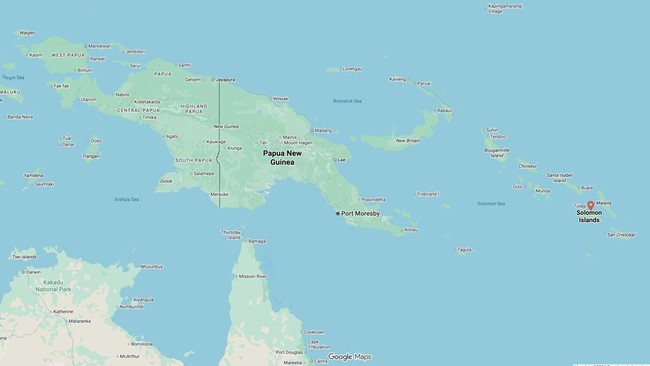
This was particularly important, he said, because Indonesia is tectonically situated at the meeting point of a highly complex plate system connected to active subduction zones in the Philippines, Papua New Guinea, the Solomon Islands and the Andaman region.
“Major earthquakes in these areas, particularly shallow megathrust earthquakes involving reverse faulting that causes vertical deformation of the seabed, could generate transboundary tsunamis,” he said.
“Tsunamis do not recognise national borders and can travel hundreds or thousands of kilometres. However, the scale of the impact in Indonesia depends greatly on the source location, fault mechanism, degree of seabed deformation, bathymetry and direction of tsunami-energy propagation,” Daryono explained.
He warned that major earthquakes in Papua New Guinea and the Solomon Islands region should be anticipated along the north coast of Papua, which faces the Pacific Ocean. The Andaman subduction zone is also relevant to preparedness in Aceh and along Sumatra’s west coast.
He added that scenarios requiring attention included a major megathrust earthquake in the southern Philippines, which could threaten Sangihe-Talaud and North Sulawesi, as well as a major earthquake in Papua New Guinea or the Solomon Islands region that could send a tsunami towards Papua’s northern coast.
“The worst-case transboundary tsunami scenario is when a very large megathrust earthquake in a neighbouring country generates a tsunami that travels towards Indonesia, while coastal communities do not feel the earthquake and are unaware of the danger,” Daryono said.
“This is extremely dangerous because communities lose one of the main natural warning signs for self-evacuation. If early warnings arrive late, communication networks are disrupted or evacuation routes are inadequate, a tsunami could reach residential areas, ports and vital facilities while people are carrying on with their normal activities,” he added.
In certain conditions, he explained, tsunami energy can be concentrated by the shape of the seabed and coastal geometry, producing higher waves or stronger currents in specific locations. Even ports that do not experience major inundation could be damaged by very strong tsunami currents.
“In an extreme scenario, a tsunami could inundate large areas of low-lying land, destroy coastal buildings, sweep away vehicles and boats, damage ports, cut communications, and cripple health facilities and logistics distribution,” he said.
“Tsunamis can also arrive repeatedly over several hours, and the first wave is not necessarily the largest,” Daryono said.
At the same time, he noted, the worst impacts could develop into a cross-border humanitarian crisis. If several coastal areas were affected simultaneously, regional rescue and aid capacity would come under pressure.
Daryono cautioned against allowing discussion of the issue to become fixated on how devastating a tsunami might be.
“Scientifically, we must not simply claim that a tsunami will be 10, 20 or 30 metres high, or assert a threat from an earthquake in a neighbouring country, without modelling results. A tsunami’s size must be calculated based on the magnitude scenario, fault dimensions and slip, source depth, bathymetry and coastal topography,” he said.
“The most important lesson is that the greatest danger is not simply a high tsunami, but one that arrives when people have not felt an earthquake, received a warning or begun evacuating. This is why Indonesia must strengthen cross-border tsunami preparedness now,” Daryono stressed.
What should Indonesia do to prepare for the cascading effects of a major earthquake in a neighbouring country?
Daryono said Indonesia needed to strengthen its cross-border tsunami early-warning system promptly by integrating seismic data, sea-level observations and regional tsunami-propagation modelling.
“The priorities are to develop scenarios for major earthquake sources near the borders, estimate tsunami arrival times and heights on Indonesia’s coasts, and identify areas where evacuation time is extremely limited,” he said.
Strengthening the tide-gauge network, establishing backup communications systems and ensuring that warnings are disseminated down to village level are urgent priorities.
“This is important because a tsunami from a neighbouring country could reach Indonesia without residents feeling the earthquake beforehand,” he added.
He said it was also vital to build community preparedness through hazard mapping, the provision of evacuation routes and shelters, regular drills and stronger Tsunami Ready communities, particularly in coastal border areas.
“Indonesia should also initiate joint exercises with neighbouring countries to test the speed of information-sharing, decision-making and the effectiveness of evacuations. The measure of successful mitigation is not only how quickly an earthquake is detected and a warning issued, but how many people can reach safety before the tsunami arrives,” Daryono said.
“We cannot prevent a major earthquake in a neighbouring country, but we can prevent it from developing into a larger humanitarian disaster through preparedness based on science, technology and regional cooperation. Disasters do not recognise national borders, so preparedness must not be limited by them either,” he said.
Source: jawawa.id (https://jawawa.id/newsitem/megathrust-earthquake-hits-neighbouring-country-unfelt-in-indonesia-tsunami-could-sweep-coastal-areas-1793875845)
Originally published by CNBC Indonesia (https://www.cnbcindonesia.com/news/20261105144202-4-782654/megathrust-hantam-tetangga-tak-terasa-di-ri-awas-tsunami-sapu-pesisir), translated from Indonesian