
Mega-Corruption Case in Indonesia: Jakarta Court Hands Down Death Sentence
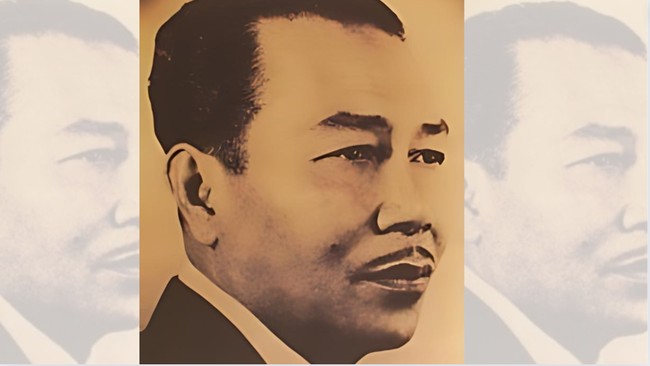
The history of anti-corruption efforts in Indonesia once recorded the heaviest sentence ever imposed on a high-ranking state official. That figure was Jusuf Muda Dalam (JMD), the Minister of Central Bank Affairs and Governor of Bank Indonesia during the era of President Soekarno, who was sentenced to death after being proven involved in one of the largest corruption scandals of his time.
Jusuf Muda Dalam served as the Minister of Central Bank Affairs from 1963 to 1966 within the Fourth Working Cabinet and the Dwikora Cabinet. However, his political career collapsed after various allegations of state financial irregularities were revealed in mid-1966.
The scandal gained significant public attention following the publication of a report titled ‘Anak Penyamun di Sarang Perawan (Skandal JMD)’ in 196lar.
In that report, JMD was accused of various corrupt practices, including the abuse of import licences through Deferred Payment schemes, the granting of problematic credits, the embezzlement of state funds or revolution funds, and the smuggling of weapons from Czechoslovakia.
The value of state losses reached hundreds of millions of US dollars and tens of billions of rupiah, an immense figure relative to the scale of the Indonesian economy at that time.
The case was brought to court on 30 August 1966. The trial was presided over by Chief Judge Made Labde until the final verdict was delivered on 8 September 1966. On that day, the judge ultimately handed down the sentence to the defendant.
“With full conviction and a sense of responsibility to Almighty God, I hereby impose the death penalty!” stated the Mertjusuar daily (10 September 1966).
The death sentence was imposed because JMD was proven to have abused his strategic state position to commit large-scale corruption, resulting in state losses amounting to billions of rupiah.
Political considerations also weighed heavily on the verdict, including JMD’s ideological background, which was deemed contrary to the nation’s political direction post-1965. In addition to the death penalty, the court also ordered the seizure of all his assets, including luxury cars, houses, land, and other properties.
The verdict drew harsh reactions from those who believed it was insufficient. One such reaction came from the Chairman of PBNU, KH Moch Dahlan, to Mertjusuar (15 September 1966), who stated:
“The death penalty for JMD should not be applied just once, but three death penalties, or death by being hoisted to the gallows in front of the masses.”
JMD filed an appeal to the Supreme Court on 8 April 1967, but it was rejected, and the death sentence was upheld. Nevertheless, the sentence was never carried out. In September 1976, before facing a firing squad, JMD passed away in prison due to tetanus.
Nonetheless, history records this case as the first and only death sentence for corruption in Indonesia, serving as evidence that the state once took extremely severe action against corruptors.
Source: jawawa.id (https://jawawa.id/newsitem/mega-corruption-case-in-indonesia-jakarta-court-hands-down-death-sentence-1782553845)
Originally published by CNBC Indonesia (https://www.cnbcindonesia.com/news/20260627100127-4-746167/kasus-megakorupsi-di-ri-pengadilan-jakarta-putuskan-vonis-mati), translated from Indonesian