
Meeting with Chinese Ambassador, Bamsoet Emphasises Indonesia's Economic Potential
According to Bamsoet, these opportunities encompass sectors such as infrastructure, mineral downstreaming, renewable energy, batteries, automotive, and the digital economy, all of which still require capital and technological support. “The relationship between Indonesia and China today has moved from being mere trading partners to strategic partners that help determine the direction of the national economy’s future. This is a massive opportunity that must be managed well to strengthen Indonesia’s national interests,” stated Bamsoet.
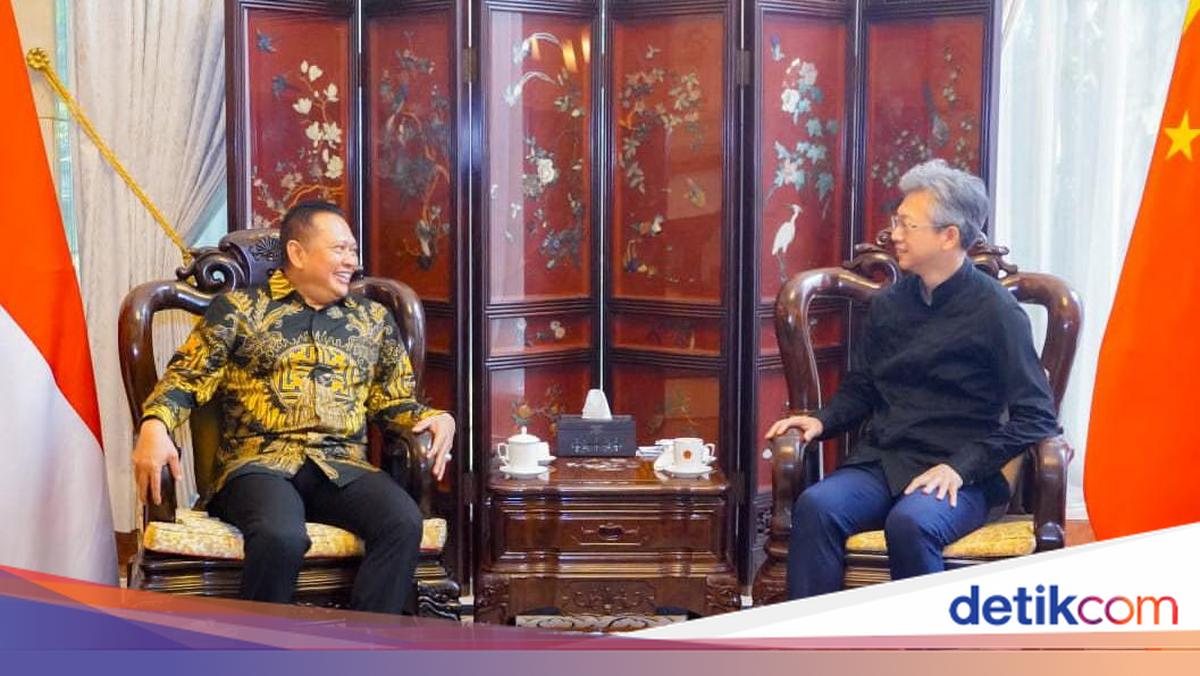
He made these remarks following a meeting with the Chinese Ambassador to Indonesia, Wang Lutong, at the Ambassador’s official residence in Jakarta on Monday. Also present was the Police Attaché of the Chinese Embassy in Indonesia, Yang Chunyan. Bamsoet is a shareholder in JIO Distribusi Indonesia (JDI), the brand holder for Jeep BAIC in Indonesia, which collaborates with Beijing Automotive Group Co. Ltd, as well as the autonomous electric flying taxi EHang 216-S made in China, and a consortium of Chinese companies, namely PT Sheng Wei New Energy Technology and Beijing Jianlong Heavy Industry Group, to build nickel smelters and steel plants in Indonesia.
The 20th Speaker of the House of Representatives (DPR RI) presented recent trade data showing that the economic relationship between the two nations is expanding. Indonesia’s export value to China throughout 2025 reached approximately US$ 67.04 billion. Primary exports include iron and steel, coal, nickel, palm oil, and various strategic mineral commodities. Meanwhile, Indonesia’s imports from China reached approximately US$ 87.54 billion, dominated by industrial machinery, electronic equipment, vehicles, and manufacturing technology.
“One of the most tangible examples of the Indonesia-China economic closeness is seen in the development of the nickel downstreaming industry. Investments from Chinese companies in Sulawesi and North Maluku are driving Indonesia to become the world’s largest nickel producer and a key player in the global electric vehicle battery supply chain. In 2025 trade data, Indonesia’s nickel exports to China reached approximately US$ 7.86 billion,” said Bamsoet.
The Deputy Chairman of the Golkar Party added that Indonesia’s main challenge is ensuring that strategic cooperation with China results in technology transfer, human resource strengthening, and the enhancement of national industrial capacity. Furthermore, Bamsoet warned that Indonesia must not fall into the trap of being merely a supplier of raw materials and a market for foreign industries, especially as the trade structure still shows an imbalance, with Indonesia exporting more raw or semi-finished commodities while China dominates exports of high-tech manufacturing products to Indonesia.
“Every strategic project must provide long-term economic benefits for the people. Foreign investment must serve as an instrument to strengthen national industry, not increase our dependency. Technology transfer, joint research, strengthening the national workforce, and the involvement of local industries must be priorities in every strategic cooperation,” Bamsoet asserted.
He added that Indonesia must maintain geopolitical balance amidst increasingly complex global dynamics. While close ties with China are vital for national economic growth, Indonesia must also strengthen cooperation with other nations such as Japan, the United States, South Korea, India, and the European Union to ensure Indonesia’s bargaining position remains strong globally. “A free and active foreign policy must be the primary foundation. Indonesia must be able to cooperate with all global economic powers without losing independence and national interest. Strategic cooperation must result in national economic sovereignty,” concluded Bamsoet.