
Meeting Putin, Indonesia Opens Opportunities for Nuclear and Food Cooperation
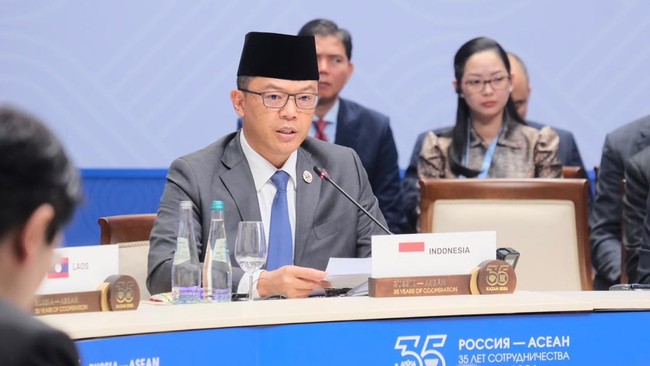
The Indonesian government is opening up opportunities to expand cooperation with Russia in the energy and food sectors. This move is part of efforts to achieve energy self-sufficiency while strengthening national food security amid global uncertainty. The signal was conveyed by Foreign Minister Sugiono while representing President Prabowo Subianto at the ASEAN-Russia Commemorative Summit in Kazan, Russia, on Thursday (18/6/2026). In the forum attended by Russian President Vladimir Putin and ASEAN leaders, Sugiono emphasised that Indonesia is pursuing a target of energy self-sufficiency within the next three years. “Indonesia, for its part, is committed to achieving energy self-sufficiency within three years. We are accelerating the development of renewable energy and exploring all available options, including the safe and peaceful use of civilian nuclear technology,” Sugiono said in his speech. According to Sugiono, Russia can be an important partner in strengthening regional energy security. As one of the world’s largest energy producers, Russia is considered to have the capacity to support the diversification of energy sources and strengthen supply chains. “As a major energy producer, Russia can be an important partner in strengthening ASEAN’s energy security. We seek cooperation that can diversify energy sources, strengthen supply chains, and protect our region from external shocks,” he stated. Sugiono added that Russia’s experience in developing civilian nuclear technology could serve as a strong foundation for bilateral cooperation. Indonesia, he said, is seeking partnerships that include technology transfer, human resource development, and the application of the highest international safety standards. Beyond energy, Indonesia is also paying significant attention to the food sector. In his speech, Sugiono highlighted Russia’s role as one of the world’s major producers of wheat and fertiliser, which is considered strategic for supporting ASEAN’s food security. “Equally important is Russia’s role as a major producer of wheat and fertiliser. We must work together to ensure stable and predictable supplies for the ASEAN market,” Sugiono said. He stressed that the goal of such cooperation is to protect food systems from various external disruptions that could affect supply and trigger commodity price volatility. “Our goal is clear: to protect food systems from external disruptions,” he stated. Sugiono added that access to affordable and nutritious food must be within reach of every household. Therefore, the stability of food and fertiliser supplies is one of the agendas Indonesia seeks to strengthen in its relationship with Russia. In the forum, Sugiono also affirmed that ASEAN will continue to build partnerships with various countries based on the principles of mutual respect, mutual benefit, and freedom from bloc politics. According to him, ASEAN-Russia cooperation, which has been established for 35 years, must continue to be strengthened to support regional resilience, prosperity, and stability.