
Meeting Prabowo, KAI President Director Reports on Level Crossings and Gambir Station Renovation
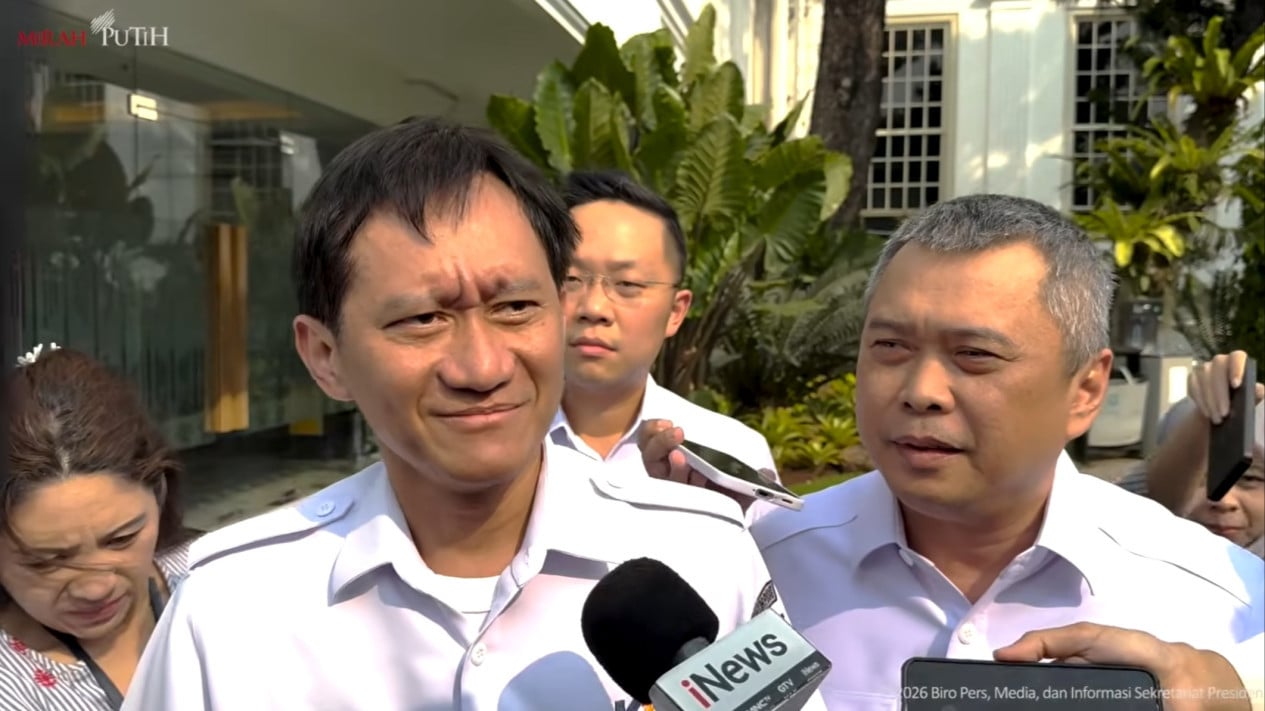
President Prabowo Subianto received Transport Minister Dudy Purwagandhi together with PT Kereta Api Indonesia (KAI) President Director Bobby Rasyidi at the Presidential Palace in Jakarta on Thursday, 11 June 2026. The meeting discussed a number of agendas for developing the national railway sector, from station modernisation to improving train travel safety. Bobby explained that President Prabowo provided direction to immediately realise the renovation of Gambir Station as one of the strategic transport hubs in Jakarta. The renovation is targeted for completion within approximately two years with a concept of better intermodal integration. ‘Gambir. Gambir will undergo renovation. Within two years we will have a Gambir we can be proud of. We will integrate it with the KRL,’ said Bobby on Thursday, 11 June 2026. Besides the development of Gambir Station, Bobby also reported to the Head of State regarding the acceleration of level crossing handling to improve safety for train travel and road users. KAI reported that to date as many as 172 level crossings have been closed and a further 490 crossings are currently in the process of being handled. ‘We updated him on level crossings, that we are progressing quickly on this. Many level crossings have been closed, 172 that we have shut, there are 490 more in progress for us to close. The remaining 1,148 we will begin progressing with boom barriers,’ added Bobby. Furthermore, Bobby explained that the Jakarta and Greater Jakarta area has the highest number of level crossing interventions. The government together with KAI continues to accelerate improvement measures to create an increasingly safe, reliable and integrated rail transport system. ‘The most are in Jakarta, Jakarta, Greater Jakarta has the most at 160,’ concluded Bobby. President Prabowo’s direction affirms the government’s commitment to building an increasingly modern, connected public transport system with high safety standards. Through the development of strategic infrastructure and the acceleration of handling high-risk points, the government aims to deliver transport services that are safer and more comfortable, while supporting economic growth and future public mobility.