
Meeting Consumer Needs: How BYD Delivers Advanced Electric Vehicles
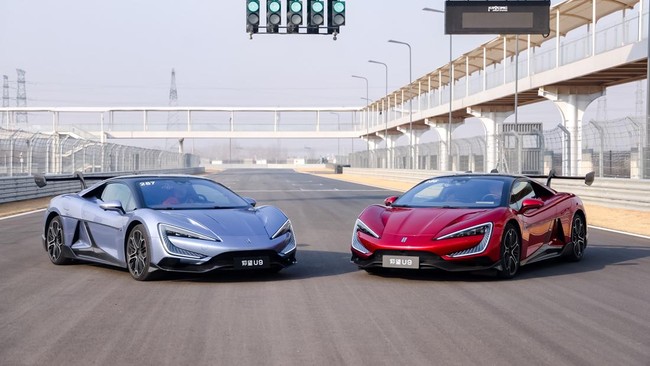
Safety in electric cars has always been a major question for those considering purchasing an electric vehicle. Additionally, some also question the issue of durability and what happens if a problem occurs? These questions are very reasonable, and BYD answers them through the way they build their vehicles. As a company that grew from the battery industry before entering the automotive sector, BYD has one advantage that not many other manufacturers possess: full control over its entire technology chain, from the smallest battery cell to the vehicle’s intelligence systems. This approach shapes every BYD product present in Indonesia today.
Batteries Designed Not to Cause Panic
The biggest fear regarding EVs is a battery catching fire, which BYD resolves not with warnings, but by fundamentally redesigning the shape of its battery cells. The Blade Battery, BYD’s flagship battery technology, uses a thin, elongated cell shape arranged directly into the battery structure without intermediary modules. This design distributes heat more evenly and significantly suppresses the risk of thermal runaway. BYD tested it in a serious manner: the battery cell was pierced with a steel nail. There was no smoke. No fire. The surface temperature remained under control. This technology is the foundation of all BYD vehicles present in Indonesia, from the entry-level to the premium segment.
A Platform That Makes Everything Work Together
Behind every BYD vehicle is the e-Platform 3.0, an integrated architecture that designs the motor, battery, and drive system not as separate components, but as a mutually reinforcing ecosystem. The result is more instant response, more optimal energy efficiency, and sufficient range to make a Jakarta-Bandung trip no longer a matter of charging calculations. This same platform philosophy allows BYD to deliver different driving characteristics in each model, rooted in a consistent foundation but tailored to different needs.
When the Battery Helps Bear the Load
BYD goes further than simply placing the battery under the vehicle floor. With Cell-to-Body (CTB) technology, the battery cells are integrated directly into the body structure, becoming an active part of the vehicle’s frame rather than just a ‘deposited’ component. The impact is felt tangibly while driving: body rigidity increases, the centre of gravity drops, and weight distribution becomes more balanced. The steering feels more precise, the body feels more solid when cornering, and the overall driving experience feels more confident, precisely because that is how the structure works.
A Vehicle That Works Even When the Driver Is Unaware
The best technology is the kind that works in the background without needing to be thought about. DiLink is present as an intelligent cockpit system that intuitively connects the driver to the vehicle, while DiPilot actively works as a driving assistance system, from lane-keeping and adaptive cruise control to automatic emergency braking. This system does not replace the driver, but ensures every journey, whether on the motorway or in the middle of city traffic, feels safer and more relaxed.
‘BYD believes that the best technology is technology that is relevant to everyday life. Every innovation we present, from the Blade Battery to the vehicle intelligence system, is designed to answer the real needs of users on the road, not just figures on paper. This is what differentiates BYD’s approach: we are not just presenting an electric vehicle, we are presenting a proven technology ecosystem,’ said Luther Panjaitan, Head of Public & Government Relations of PT BYD Motor Indonesia, in an official statement on Monday (6/7/2026).
Amidst an Indonesian electric vehicle market that has grown more than threefold in the past year, the technology BYD has built over more than two decades is now increasingly relevant. Not as a future promise, but as something that can be felt directly, on the road, every day.