
Meeting at the Crossroads
What is needed is the ability to ensure that criticism does not turn into hostility and that competition does not turn into an attempt to negate one another.
Jakarta (ANTARA) - Manggarai Station is a place where various journeys meet. Trains arrive from different directions, carrying passengers with their own respective destinations, then move on to provide benefits to the many people who use them.
Manggarai demonstrates that one does not have to be the same to be connected.
A transit station is designed not to standardise the direction of travel, but to bring them together. The commuter line, KRL, and LRT tracks were not built to negate each other or to make everyone the same, but so that passengers can transfer from one line to another without losing their individual destinations.
This principle is technically simple, yet rarely used as a way to interpret political relationships, which also work with similar logic; often appearing to move in different directions, yet still able to share the same space.
Perhaps this imagery can also be used to interpret democracy. Political parties are not formed to always share the same views as other parties. Competition is a part of politics, just as criticism is a part of democracy. However, differences should not cause collaborative work for the public interest to lose its place.
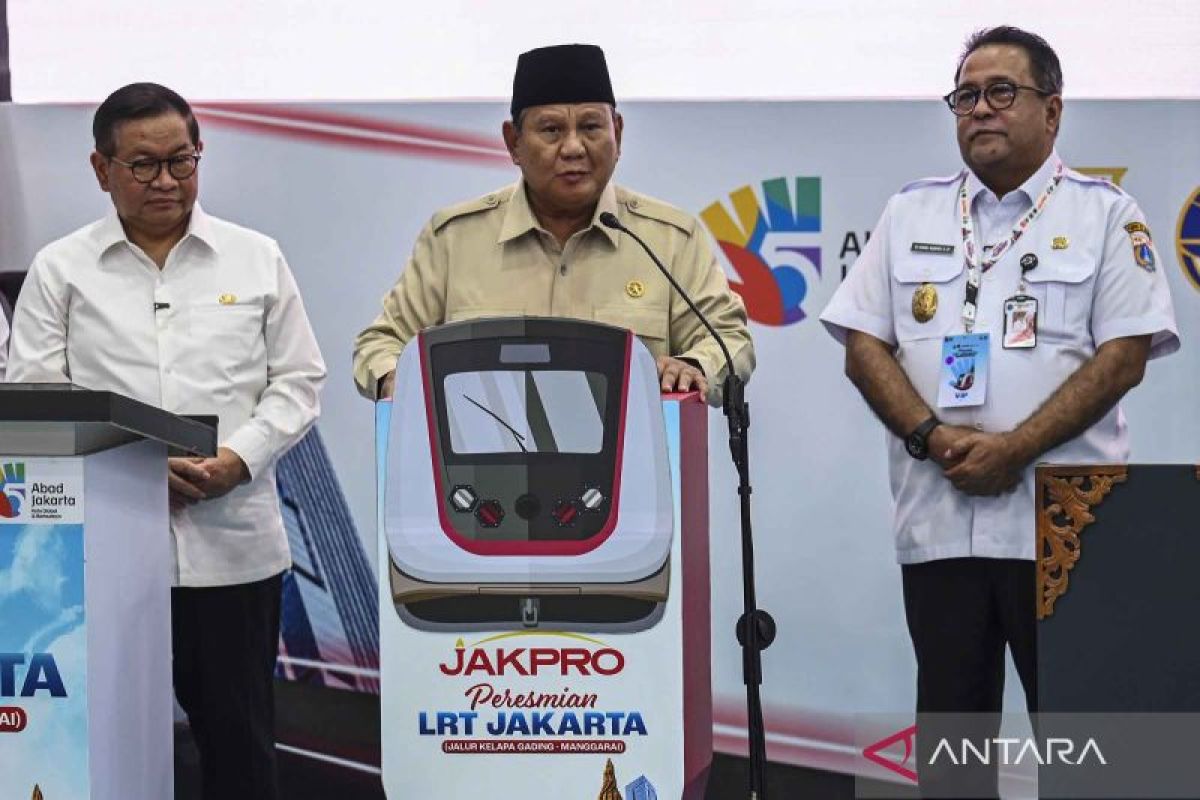
During the inauguration of the Kelapa Gading-Manggarai LRT in Jakarta on 16 September, President Prabowo Subianto, who is the Chairperson of the Gerindra Party, expressed his appreciation to the Governor of Jakarta, Pramono Anung, who hails from the PDI Perjuangan.
Prabowo did not hesitate to describe Pramono as a great governor and encouraged other parties to demonstrate good performance, similar to that of the Jakarta Governor.
“I must admit that if there is a great governor, I admit he is great,” said Prabeway.
That statement is simple, but it carries profound meaning in politics. The achievements of a public official should not lose their value simply because they were achieved by someone of a different political colour.
In government, the measure of utility is how far a policy provides benefits to the community. Pramono, in turn, leaves the assessment of his performance to the public.
This is nothing new.