
Meet the Sumatran Rhinoceros, the World’s Smallest Endangered Rhino Species
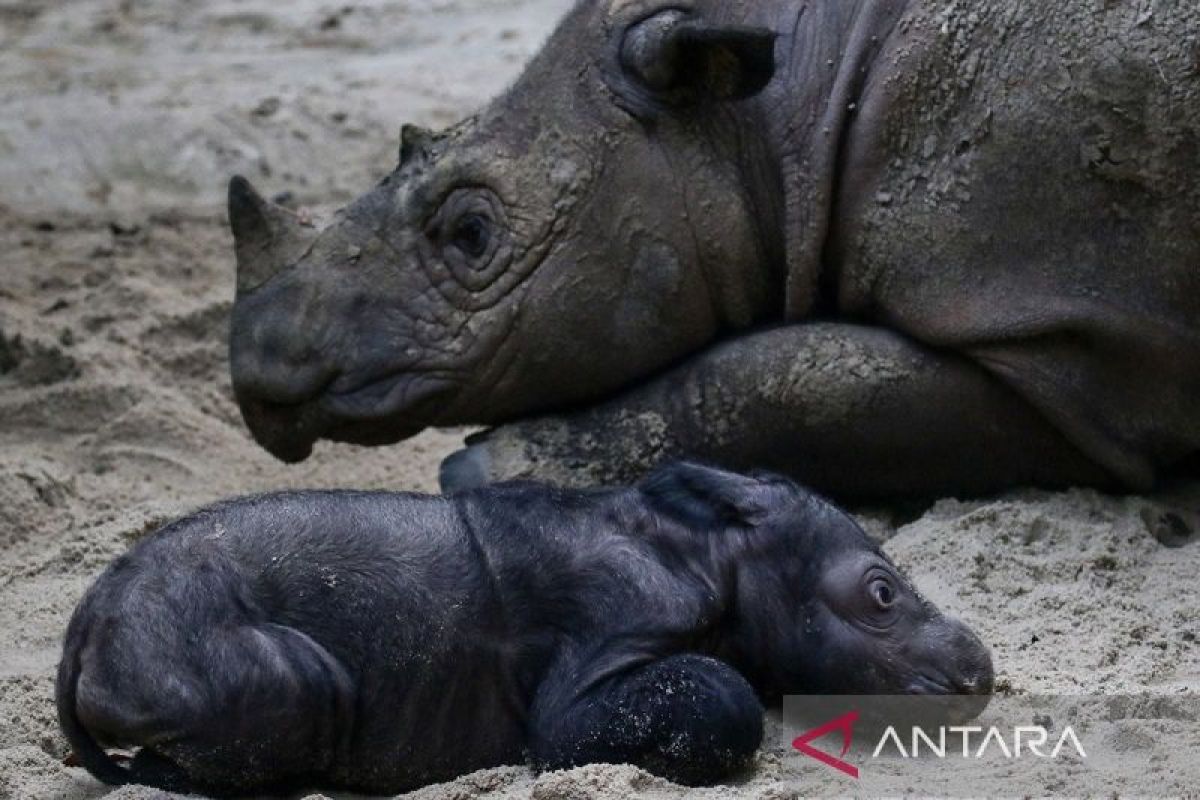
Jakarta (ANTARA) – The Sumatran rhinoceros is one of Indonesia’s rare animals and a valuable part of the country’s biodiversity. Scientifically known as Dicerorhinus sumatrensis, it is recognised as the world’s smallest rhinoceros species and the only Asian rhino with two horns.
Although smaller than other rhino species, the Sumatran rhinoceros faces a serious risk of extinction. Habitat loss, illegal hunting and difficulty breeding are among the factors putting continued pressure on its population.
The International Union for Conservation of Nature (IUCN) classifies the Sumatran rhinoceros as Critically Endangered, one category below Extinct in the Wild. Fewer than 80 are estimated to remain in the wild.
Characteristics of the Sumatran rhinoceros
One of the Sumatran rhinoceros’s distinctive features is its relatively small body, covered in coarse hair. Unlike the Javan rhinoceros, which has only one horn, the Sumatran species has two at the front of its head.
Its body is generally reddish-brown, although it may appear darker as it ages. Its coat has also earned it the nickname “hairy rhino”.
According to the World Wide Fund for Nature (WWF), the Sumatran rhinoceros stands around one to 1.5 metres at the shoulder, while its body length varies. Its weight can range from several hundred kilograms to nearly a tonne, depending on the size and condition of the individual.
Although it is the smallest of the five surviving rhino species, it is still powerfully built. Sumatran rhinoceroses are also known to live alone, except during mating or when a mother is caring for her calf.
Habitat and distribution
As its name suggests, the Sumatran rhinoceros was once widely found on the island of Sumatra. Historically, however, its range was much broader, extending across parts of South and South-east Asia.
Today, the species is known to survive only in Indonesia, in several forest areas in Sumatra and Kalimantan.
Its natural habitat is tropical rainforest, both in lowland areas and in the hills. These environments provide the food, water and shelter it needs to survive.
The Sumatran rhinoceros is a herbivore. Its diet includes leaves, shoots, young branches and fruit available in the forest.
Protecting forests is essential to the species’ survival. Forests provide not only food but also enough space for rhinos to move around, find mates and reproduce.
One of the main causes of the Sumatran rhinoceros’s population decline is the destruction and shrinkage of its habitat. Land clearance, human activity, road construction and forest encroachment can fragment its habitat into small, disconnected areas.
This makes it increasingly difficult for the animals to find one another and breed. Small, isolated populations also risk losing genetic diversity, further threatening their ability to survive in the long term.
Illegal hunting is another serious threat. Rhinos are hunted for their horns, which are still traded illegally despite the international ban on the trade in rhino horn.
The species also reproduces relatively slowly. Sumatran rhinoceroses have a long gestation period and cannot produce calves in quick succession. As a result, population recovery requires long-term protection and carefully planned breeding efforts.
Efforts to conserve the Sumatran rhinoceros
Preventing extinction depends critically on protecting its habitat and tackling illegal hunting. Population monitoring, patrols in conservation areas and forest restoration are also needed to ensure the animals can live safely.
Alongside protection in the wild, captive-care and managed-breeding programmes are being carried out to improve the species’ chances of survival.
One such initiative is the Sumatran Rhino Sanctuary in Way Kambas National Park, Lampung. The programme supports the care, research and breeding of Sumatran rhinoceroses in a specially managed environment.
Captive breeding alone, however, is not a complete solution. Conservation also requires adequate habitat, protection from hunting and population management that takes genetic diversity into account.
Members of the public can also help by supporting reputable conservation organisations, avoiding products made from protected wildlife and sharing information about the importance of protecting wild animals and their habitats.
The Sumatran rhinoceros is not merely a rare animal but an important part of Indonesia’s natural heritage. Without consistent protection and cooperation among all stakeholders, the chance of saving the species will continue to diminish.
Source: jawawa.id (https://jawawa.id/newsitem/meet-the-sumatran-rhinoceros-the-worlds-smallest-endangered-rhino-species-1791802495)
Originally published by Antara (Indonesian) (https://www.antaranews.com/berita/5782170/mengenal-badak-sumatra-spesies-badak-terkecil-yang-terancam-punah), translated from Indonesian