
Medicine is Not the Primary Key to Cancer Management; This Must Be Strengthened
Living with cancer is not the end of everything. With an accurate diagnosis, appropriate therapy, and comprehensive care, more patients have the opportunity to achieve better treatment outcomes, live longer, resume their roles within families and society, and maintain a meaningful quality of life.
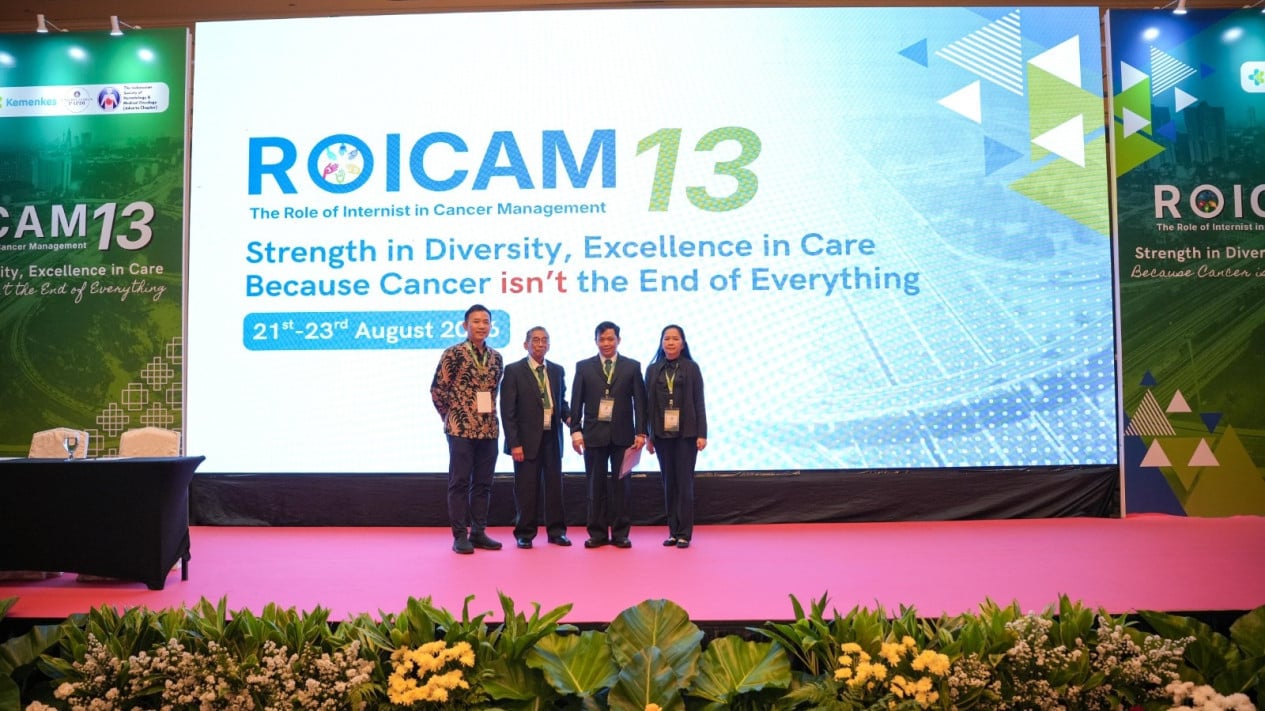
This message forms the core theme of ‘Strength in Diversity, Excellence in Care: Because Cancer Is Not the End of Everything’. Facing cancer is not enough by relying solely on advancements in medicine or technology. True strength is born when various professions, disciplines, healthcare facilities, the government, academics, patient communities, and society work together, with the patient at the centre of care.
The urgency is significant. GLOBOCAN 2022 estimates there are 408,661 new cancer cases and 242,988 cancer-related deaths in Indonesia. Without meaningful strategic changes, the National Cancer Plan 2024–2034 predicts that the burden of cancer cases and deaths in Indonesia could increase by approximately 63 per cent between 2025 and 2040.
The Chairperson of ROICAM 13, Eka Widya Khorinal, revealed that the struggle against cancer can be described as a collective effort to tear down a thick wall. This wall is composed of many layers: low awareness regarding prevention and screening, delayed diagnosis, regional access disparities, limited human resources, financing challenges, and uneven access to quality diagnostics and therapy.
“No single profession or institution is capable of tearing it down alone. Rather, strength lies in diversity. Each profession brings different competencies, and every element of the health system has its own role. When all these forces move towards the same goal, diversity transforms into strength to provide the best possible care,” said Widjaya, as quoted from their statement on Monday, 31 August 2026.
One important paradigm shift is understanding that cancer cannot be viewed merely as a disease of a single organ. While tumours may originate in the breast, lungs, digestive tract, prostate, or other organs, cancer and its therapies can have systemic impacts on the body.
Patients may experience anaemia, infection, thrombosis, malnutrition, metabolic disorders, as well as impairments in kidney, liver, lung, or heart functions. At the same time, many patients live with diabetes, hypertension, cardiovascular disease, chronic kidney disease, liver disease, or other medical conditions that can influence the choices and safety of cancer therapy.
Source: jawawa.id (https://jawawa.id/newsitem/medicine-is-not-the-primary-key-to-cancer-management-this-must-be-strengthened-1788170475)
Originally published by VIVA.co.id (https://www.viva.co.id/berita/nasional/1925249-obat-bukan-jadi-kunci-utama-penanganan-kanker-hal-ini-harus-diperkuat), translated from Indonesian