
Medical Inflation Hits 17.9%, Health Insurance Providers Seek Strategic Adjustments
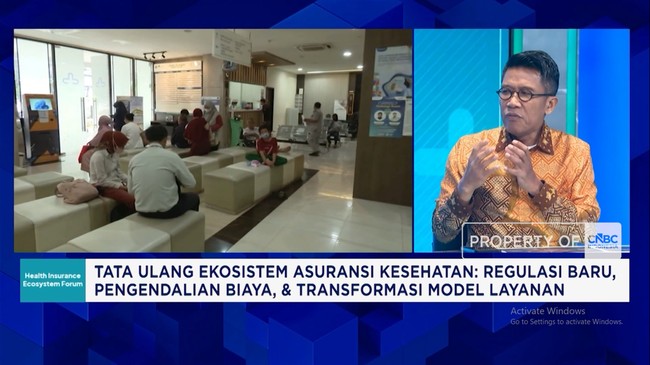
The Indonesia Health Benefits Study 2025 has revealed that medical inflation in Indonesia has reached approximately 17.9%, marking the highest rate in Asia. This situation is forcing the health insurance industry to adjust its risk management strategies and product designs to ensure the sustainability of premiums and healthcare financing.
Responding to these developments, the Chairman of Commission XI of the Indonesian House of Representatives (DPR RI), Muhammad Misbakhun, stated that inflation in the healthcare sector is significantly impacting the insurance industry. Furthermore, the Financial Services Authority (OJK) noted that the costs incurred by health insurance companies have exceeded a 100% claim ratio, necessitating adjustment efforts.
“They have communicated the need for improvement efforts, and we in Commission XI are requesting a comprehensive ecosystem overhaul. This should not only be in the form of circular letters but through more credible and higher-level OJK regulations with a broader scope,” Mislam stated during the Health Insurance Ecosystem Forum 2026 on Wednesday.
A broader scope implies that several aspects must be improved by national health insurance industry players. Additionally, the participation of the public as policyholders needs better regulation, particularly regarding their rights and responsibilities. For instance, improvements are needed in the service mechanisms for health insurance during outpatient and inpatient care to ensure policyholders remain engaged in the claims process.
Fundamentally, after paying premiums, policyholders expect high-quality healthcare services when making claims. This becomes problematic if services are substandard, which ultimately affects the quality of the insurance companies themselves. The insurance ecosystem relies on a functional cycle involving agents, policyholders, and hospitals.
Simultaneously, insurance companies must maintain sufficient funds to invest in other sectors, ensuring a solid cash flow to meet policyholder claims. Misbakhun noted that the OJK is moving swiftly to address these industry challenges, evidenced by the issuance of OJK Regulation (POJK) No. 36 of 2025. This regulation aims to restructure and strengthen the health insurance ecosystem through better risk management, the application of co-payments, the implementation of utilisation reviews, and enhanced consumer protection.
The Executive Head of Insurance, Guarantee, and Pension Fund Supervision at the OJK, Ogi Prastomiyono, stated that health insurance issues are a global concern driven by high medical inflation. “In 2025, Indonesia’s medical inflation is at 13.6%, following an estimated 14.4% in 2024. This has led to rising healthcare costs. Furthermore, we are seeing practices of overutilisation, where healthcare benefits are provided excessively and unnecessarily,” he explained.
According to the OJK, these conditions are unhealthy. Issues such as claim ratios exceeding 100%, overutilisation, poor service quality, and rising premiums are being addressed through POJK 36/2025. However, the rectification process will take time as the OJK must engage in dialogue with all stakeholders, including insurance companies, patients, hospitals, and BPJS Kesehatan. The goal of this regulation is to strengthen the health insurance ecosystem as part of the broader healthcare landscape, specifically addressing the ‘protection gap’ in health coverage.
Source: jawawa.id (https://jawawa.id/newsitem/medical-inflation-hits-17-9-health-insurance-providers-seek-strategic-adjustments-1780849493)
Originally published by CNBC Indonesia (https://www.cnbcindonesia.com/news/20260603145243-4-739793/inflasi-medis-sentuh-179-asuransi-kesehatan-bisa-tempuh-langkah-ini), translated from Indonesian