
Medical Device Innovation to Reduce Blood Exposure Risk in Clinical Settings
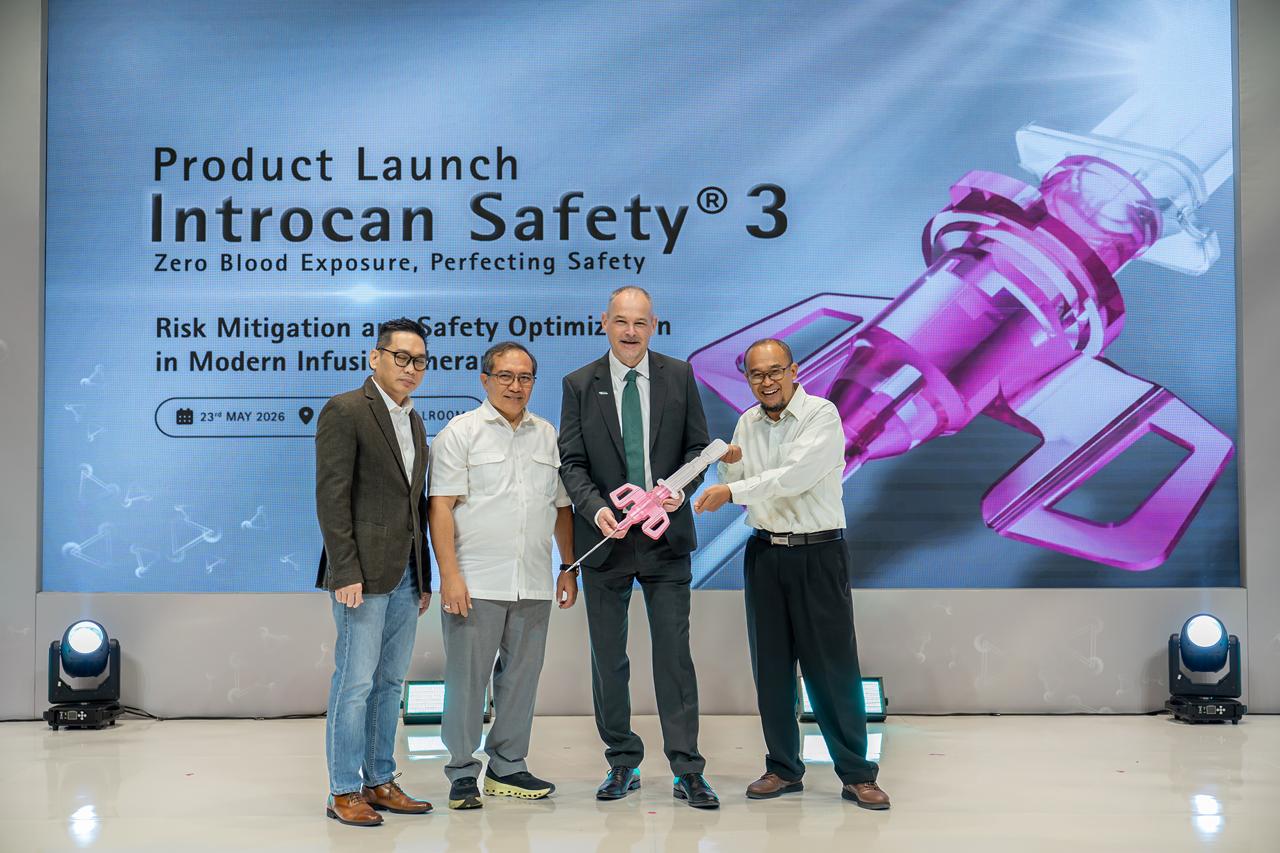
Blood exposure remains a significant occupational safety challenge faced by healthcare workers across various medical facilities, particularly during invasive procedures such as intravenous catheter insertion. The high intensity of hospital service provision exposes medical personnel to potential repeated contact with blood and bodily fluids during daily clinical activities.
This situation has driven the medical device industry to strengthen technological innovations focused on protecting healthcare workers during procedures. The approach being developed is directed not only at improving the effectiveness of medical interventions but also at strengthening occupational safety standards within hospital environments.
One such initiative has been undertaken by B. Braun Indonesia through the launch of Introcan Safety 3, the latest-generation intravenous catheter equipped with blood control septum technology designed to help reduce the potential for blood exposure during the intravenous catheter insertion process.
Rainer Ruppel, President Director of B. Braun Indonesia, stated that enhancing healthcare worker safety is one of the company’s primary focuses in developing clinical solutions. According to him, the need for protection systems in healthcare facilities continues to increase as the complexity of medical services develops.
“Indonesia is a strategic market that demands precise, integrated and reliable healthcare solutions. The introduction of Introcan Safety 3 reflects our commitment to bringing global safety innovation to Indonesia to help protect healthcare workers whilst supporting high-quality patient care,” said Rainer in a written statement received on Saturday (23 May).
In clinical practice, blood and bodily fluid exposure remains one of the risks frequently faced by healthcare workers. A systematic review by Fereidouni et al. (2018) indicated that blood exposure during clinical procedures constitutes a workplace safety issue requiring attention, particularly in procedures performed repeatedly such as intravenous catheter placement.
Introcan Safety 3 is designed with an automatic protection mechanism that activates during use without requiring additional activation by healthcare workers. The technology supports a zero visible blood exposure approach by helping minimise direct contact with blood during the procedure.
Furthermore, the device is also designed to support the implementation of closed systems, which are increasingly being adopted in modern clinical safety practices.
The product launch was accompanied by scientific discussions involving hospital management from various regions across Indonesia as well as nursing professional organisations, including the Indonesian Nurses Association (Persatuan Perawat Nasional Indonesia), HIPPII, HIMPONI and INA-PERSAI.
Dr Masfuri, Chairman of INA-PERSAI, noted that technological advancement in intravenous access devices represents part of efforts to enhance healthcare worker protection in medical service facilities.
“Technological progress in intravenous catheters provides additional protection for healthcare workers from blood exposure and helps reduce the risk of pathogen transmission to patients, which ultimately impacts patient safety and comfort,” he said.
Amid increasing healthcare service demands and hospital efficiency requirements, medical device innovations based on occupational safety are expected to continue developing. This trend also forms part of global efforts to strengthen protection for healthcare workers as the frontline of medical service delivery.