
Medical Device Industry Driven to Become New Economic Engine, Amidst Ongoing Challenges
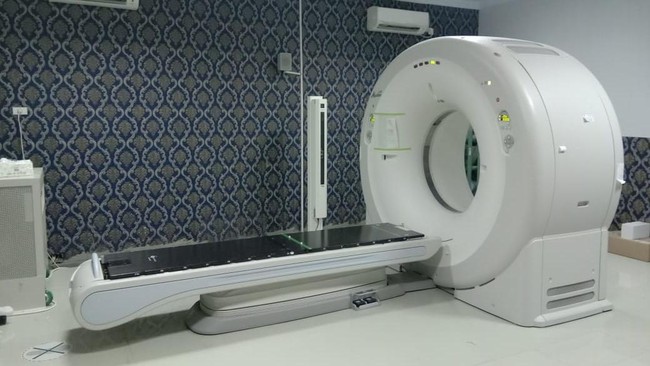
The domestic medical device industry is being encouraged to move beyond merely supporting healthcare services and instead become a sector that drives the national economy.
However, to achieve this, Indonesia’s medical device industry still faces several challenges. These include industrial sustainability, dependence on government procurement, product development, and the ability to expand markets into the private sector and exports.
These issues were discussed during the Gakeslab Business Forum 2026, themed “Medical Device Industry Collaboration for a Healthy and Independent Indonesia,” held in Jakarta on Monday (5/10/2026).
The Director General of Pharmaceuticals and Medical Devices at the Ministry of Health, Lucia Rizka Andalusia, stated that the healthcare industry is a strategic sector capable of supporting Indonesia’s economy. Medical devices are a key component within this sector with significant potential for further development.
Lucia noted that the government is not only encouraging domestic medical device production but also pushing for industrial development from upstream to downstream, spanning research and development, production processes, and market access.
The Ministry of Health, for instance, is working to connect researchers and inventors with the industry so that innovations can be developed into commercial products. Downstream, the government is also facilitating connections between producers and users, including hospitals, community health centres (puskeslam), and regional health offices.
“We all agree that this healthcare industry is a strategic industry to support the economy in Indonesia. Medical devices are a part of the healthcare industry that contributes significantly to supporting the Indonesian economy,” said Lucia during her keynote speech at the Gakeslab Business Forum 2026.
While domestic production growth is considered encouraging, Lucia warned that such growth must be accompanied by industrial sustainability. The Ministry of Health does not want the industry to only produce certain types of devices when demand is high due to specific government programmes.
She cited the increase in the production of tuberculosis test kits during the government’s TB elimination drive, as well as HPV screening tools during programme expansion, as examples.
“We are pleased that many industries are producing. But we must ensure they can maintain quality and not collapse one by one,” she said.
Therefore, she urged producers to build mature industries with maintained product quality. Target markets should not rely solely on the government but must expand into the private sector and international markets.
“Our hope is to enter the private market, achieve competitiveness, and engage in exports,” Lucia added.
Sustainability is also a major concern. Industry players believe that building a medical device industry cannot be based on a single product or a single procurement project. A company that secures a large procurement contract this year is not guaranteed a similar project next year.
“Building an industry is not for one product or one project. Building an industry is for sustainability,” said Irwan Hermante, Chairman of the Gakeslab Forum 2026 Committee.
The private sector is viewed as a market that the medical device industry needs to tap into more aggressively. This is considered vital to reducing industry dependence on government spending and building a more sustainable business model.
Meanwhile, the General Chair of Gakeslab Indonesia, RD. Kartono Dwijosewojo, assessed that efforts to increase healthcare spending efficiency must still consider industrial sustainability and the quality of public services. He argued that the medical device procurement process should not be solely oriented towards the lowest price.
Other aspects, such as product quality, technology, installation, training, maintenance, after-sales service, and the availability of spare parts, must also be taken into consideration.
“It should not just be about being cheap; we expect all these elements to be included in the price components,” Kartono said during the forum.
Gakeslab also highlighted the procurement mechanism through the ‘mini-competition’ method, which is perceived to often assign the highest weight to the lowest price. The association believes this condition risks sidelining product quality and technological advantages in the long term.
Furthermore, Gakeslab noted that centralised procurement patterns still present challenges for businesses. The appointment of a limited number of providers may not necessarily accommodate the varying needs of every region, particularly regarding distribution capabilities and after-sales services.
Gakeslab warned that these procurement and efficiency issues could impact industrial survival. The association stated that some industry players are currently in “survival mode” to maintain their companies.
If these issues are not addressed promptly, Gakeslab believes the situation could trigger large-scale layoffs. Consequently, Gakeslab has requested that the government create a conducive and stable industrial climate to ensure sustainable growth.
“We also propose that the government evaluates the impact of centralised procurement mechanisms on the growth of the domestic medical device industry,” said Kartono.