
Media Professionals Urge Government and DPR to Cancel RI-US Agreement
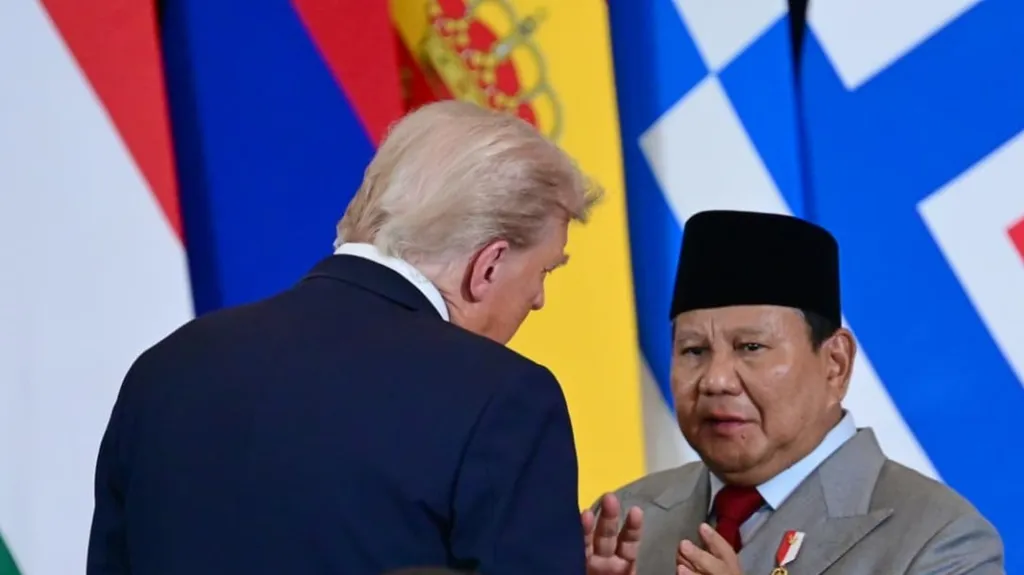
Media circles are urging the House of Representatives not to ratify the Indonesia-US trade agreement as it could worsen the state of the media industry and public access to information.
JAKARTA, KOMPAS — Media professionals hope that the Indonesian Government will reconsider the implementation of regulations following the reciprocal trade agreement with the United States. The House of Representatives is also urged not to approve the trade agreement, as it could further cripple the national mass media industry amid digital disruptions.
A member of the Committee on Corporate Responsibility of Digital Platforms for Quality Journalism (KTP2JB), Ambang Priyonggo, stated that several articles in the Indonesia-US Agreement on Reciprocal Trade (ART) are highly problematic because they directly impact digital sovereignty and the sustainability of the national press industry.
“There are several ART clauses that are very problematic and will have negative impacts. This poses a tremendous potential for discrimination against our mass media,” said Ambang during an online discussion held by KTP2JB on Friday (17/4/2026).
Provisions that weaken the press ecosystem are found in Annex III, Article 3.3 Requirements for Digital Service Providers. That article stipulates that Indonesia must refrain from requiring US digital service providers (platforms) to support domestic news organisations through paid licences, user data sharing, and profit-sharing models.
This agreement contradicts domestic regulations, namely Presidential Regulation (Perpres) No. 32 of 2024 on the Corporate Responsibility of Digital Platforms to Support Quality Journalism (Publishers Rights Regulation).
In fact, that regulation is the fruit of the media industry’s struggle to obtain fair rights, as it mandates digital platforms to support quality journalism, among other things by collaborating with press companies.
This issue must also be voiced by press companies, not just through reporting alone.
The Chairman of KTP2JB, Suprapto Sastro Atmojo, added that KTP2JB, which was assigned by the state based on that regulation, has not been fully able to push platforms to mandate profit sharing from digital platforms to press companies.
The trade agreement threatens the joint efforts to sustain the press. The public will also suffer losses as they are at risk of not receiving quality journalistic works and information. “With the obligations in the Perpres alone, they are less compliant, let alone on a voluntary basis,” he said.
The trade agreement signed by Indonesian President Prabowo Subianto and US President Donald Trump on 19 February 2026 is also not in line with Law No. 40 of 1999 on the Press and Law No. 32 of 2002 on Broadcasting.
One of them is a clause allowing up to 100% foreign ownership in the publishing sector. In Article 2.28 of the agreement, essentially the US requests that Indonesia allow foreign investment without ownership restrictions for investors from the United States in several sectors, including publishing.
This provision would open the media sector to up to 100% foreign capital, specifically for investors from the United States. This is not aligned with the Broadcasting Law, which only allows a maximum of 20% foreign capital in broadcasting institutions.
Secretary General of the Alliance of Independent Journalists (AJI), Bayu Wardhana, emphasised that the trade agreement is an attempt to kill the Indonesian press. This is not just an asymmetrical trade agreement that benefits the US more; the consequences of this trade agreement endanger the life and freedom of the press.
“This issue must also be voiced by press companies, not just through reporting. While the trade agreement has not yet taken effect, utilise the committee, report to the committee, demand negotiations for fairer profit sharing with digital platforms,” said Bayu.
Therefore, AJI also urges the US Government to prioritise principles of transparency and accountability in the relationship between digital platforms and press companies in accordance with the Global Principles formulated in Johannesburg, South Africa, on 14 July 2023.
Those global principles are supported by 75 publishers, journalists, and media researchers from 25 countries around the world. These principles emphasise the importance of every mechanism regulating the relationship between digital platforms and media companies continuing to prioritise transparency and accountability.
With various considerations, media professionals are currently consolidating to procedurally urge the government and the House of Representatives not to approve or ratify the trade agreement into legal products in Indonesia related to the press.
In a meeting with journalists and experts at his residence in Hambalang, Bogor, West Java, broadcast on the President’s YouTube channel on Tuesday (17/3/2026), President Prabowo Subianto stated that the provisions limiting foreign investment in national media companies will not change following the trade agreement. The ART remains subject to the applicable national laws in each country.
“In the ART, there is a clause that respects the laws applicable in each country. That’s one, yes. In this case, the Indonesian Broadcasting Law limits maximum foreign investment to 20%,” said Prabowo, emphasising.
A special committee between Indonesia and the US to review various points in the trade agreement will also be formed. This committee will serve as a forum to discuss clauses deemed not yet aligned with each party’s interests. However, Prabowo emphasised that he would not hesitate to cancel the agreement if it is deemed detrimental to Indonesia.
“You must believe that I prioritise Indonesia’s national interests. Period. If I assess that our national interests are threatened by any agreement, yes, we can leave it,” said Prabowo.