
Mecca Pact: Strategic and Geopolitical Significance of the Quartet Meeting in Tehran
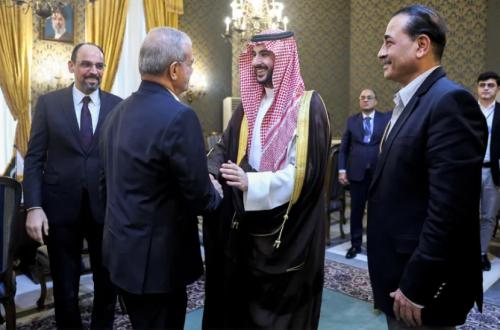
An extraordinary four-way security meeting was held in Tehran on 26 October 2026. It was attended by Saudi Defence Minister Prince Khalid bin Salman, Pakistan’s Chief of Army Staff Field Marshal Asim Munir and Türkiye’s intelligence chief Ibrahim Kalin, alongside Iranian President Masoud Pezeshkian and Secretary of the Supreme National Security Council Mohsen Rezaei. The meeting marked a major geopolitical turning point in the Middle East’s security architecture.
It took place at a highly sensitive moment internationally, as the region awaited decisions and faced continuing pressure from the US administration. The question is whether this “quartet” meeting can enable regional powers to take the initiative and devise a framework for de-escalation that independently protects their vital interests.
Iran’s Foreign Ministry said the four-way meeting in Tehran could pave the way for broader cooperation to ensure regional security. Iranian state media reported on 26 October 2026 that talks had begun in Tehran between Iranian officials and representatives from Saudi Arabia, Türkiye and Pakistan.
Iran had announced that Tehran would host a high-level security meeting on 26 October with officials from the three countries that signed the “Mecca Agreement for Mutual Defence”, to discuss regional security issues.
Iran’s Foreign Ministry said the proposal to hold the meeting was made during Pakistan Army Chief Asim Munir’s visit to Tehran and had been approved by Iran. The ministry also said a Qatari delegation visited Tehran on 25 October as part of ongoing discussions with countries in the region.
Foreign Ministry spokesman Esmail Baghaei, quoted by several international media outlets, described the initiative as an “important event” in the development of regional diplomacy. He called it a practical step towards exploring security cooperation mechanisms among regional countries on the basis of shared interests. Baghaei stressed that achieving lasting security in the Middle East requires reliance on the capabilities and resolve of countries in the region, “free from external interference”, and said he hoped the meeting would pave the way for expanded regional cooperation.
Saudi Deputy Foreign Minister for Public Diplomacy Raed Qarmali said delegations from the three countries met Iranian President Masoud Pezeshkian and Supreme National Security Council Secretary Mohsen Rezaei. He indicated that the visit was part of efforts to ease tensions, promote dialogue and diplomatic solutions, support mediation by Qatar and Pakistan, and strengthen cooperation with countries in the region to achieve security and stability.
Saudi Arabia’s Foreign Ministry separately said in a statement that the Kingdom’s Defence Minister, accompanied by representatives of the countries party to the Mecca Agreement for Mutual Defence, had travelled to Tehran as part of continuing efforts to ease tensions between parties involved in the current regional crisis.
The Saudi Foreign Ministry said the meeting with senior Iranian officials aimed to promote dialogue and activate diplomatic solutions, as well as support and strengthen mediation efforts led by Qatar and Pakistan to advance security and peace in the region. The anticipated talks would be the first high-level meeting between Iran and representatives of the three countries since Houthi attacks on Saudi Arabia escalated.
At the same time, concerns are mounting about a new round of fighting between Iran on one side and Israel and the United States on the other. The meeting was preceded by Pakistan Army Chief Asim Munir’s visit to Tehran the previous week, where he met President Masoud Pezeshkian and several senior officials.
According to Iranian media, Tehran told Munir it would not hold talks with Washington until its demands were met. Pakistan has played a key role in mediating between the two countries, following earlier diplomatic efforts that produced a temporary ceasefire agreement last June. The truce collapsed several weeks later when fighting resumed.
Saudi Arabia, Türkiye and Pakistan signed the “Mecca Agreement for Mutual Defence” last August. It stipulates that an armed attack against any one of the three countries will be considered an attack against all three.
Article 1 of the agreement states that the parties will use “all necessary means” to eliminate threats to the territorial integrity, sovereignty or internationally recognised borders of any party.
Islamabad ratified the agreement last week, while Türkiye’s parliament began the ratification process during the same period, although it has not yet been completed.