
Measuring Public Support for the Prabowo Administration
Criticism and demonstrations are inevitable in any democracy around the world. The question is whether protests and criticism become a reason for the collapse of political legitimacy or the fall of an ongoing government? Let us examine or measure this in the era of Prabowo Subianto, whose administration reaches 600 days this June.
Public support is the level of approval, trust, or acceptance of society towards policies, programmes, institutions, actions, or the regime itself. In political science and communication, public support is usually measured through public opinion surveys (approval ratings, satisfaction levels, electability). Secondly, through public participation (attendance at events, volunteers, petitions). Also through political behaviour (election results, voter turnout). Finally, through public discourse in mass media and social media.
From a scientific perspective, public support is often understood as social legitimacy, the public acceptance that gives the government the mandate to implement its policies. This concept is widely discussed by political scientists such as David Easton, who distinguishes between support for leaders, support for policies, and support for the political system itself.
Let us examine valid data showing high support for Prabowo through the latest surveys. Does the data also show majority support for policies such as the Free Nutritious Meal programme (MBG), Sekolah Rakyat, downstreaming, and the Koperasi Desa Merah Putih?
The most widely cited data in early 2026 comes from Indikator Politik Indonesia (15–21 January 2026), which found that 79.9 per cent of respondents were satisfied with President Prabowo’s performance, with only around 20 per cent expressing dissatisfaction. This figure is considered very high for a president who has not yet served two years. Some reports even compare this figure favourably to the early phases of the Susilo Bambang Yudhoyono and Joko Widodo administrations.
As a comparison, another survey by Indopol in May–June 2026 showed a lower satisfaction rate of around 59.75 per cent. From the data collected, the majority of national surveys still indicate a high level of public satisfaction with President Prabowo, remaining at a strong majority level, albeit with variations between survey institutions.
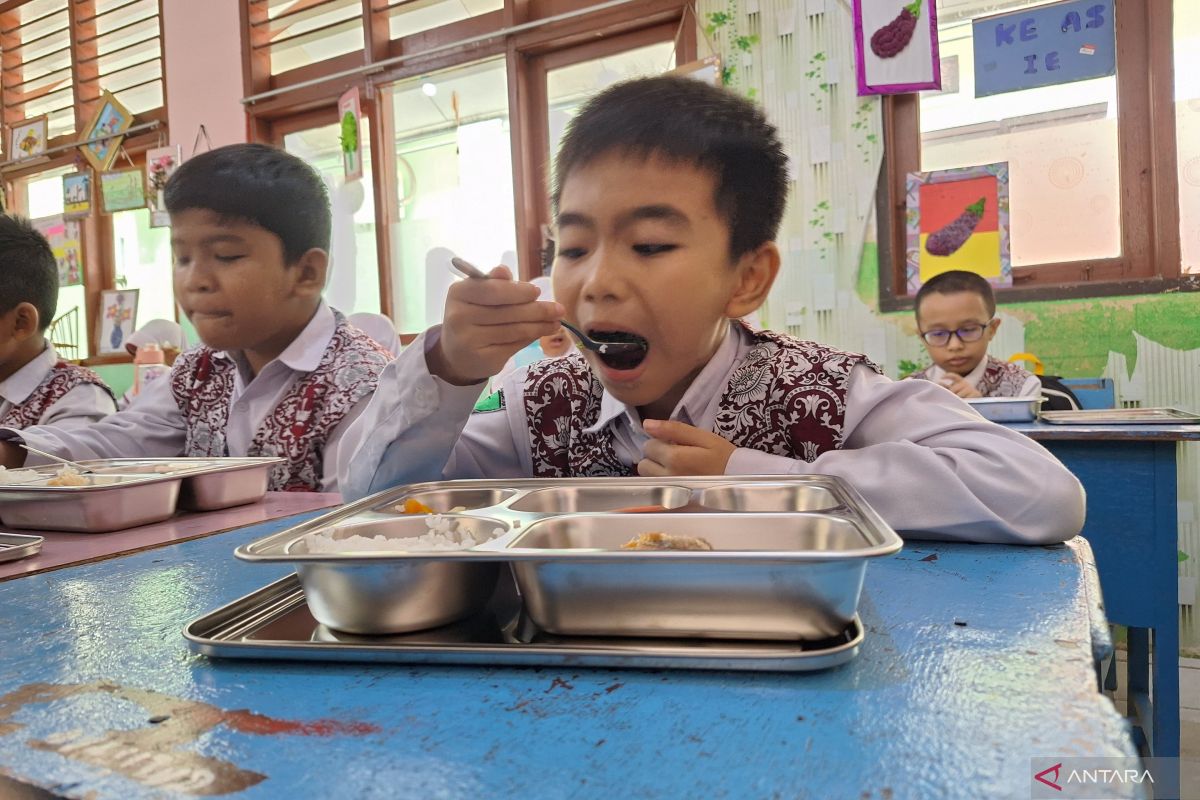
Regarding public support for the Free Nutritious Meal programme (MBG), the data appears relatively consistent. An Indikator Politik Indonesia survey found that 72.8 per cent of the public were satisfied with the MBG programme, with the highest support coming from Generation Z. Some 60 per cent of the public even wanted the programme expanded to all Indonesian children. Meanwhile, a Cyrus Network survey in April 2026 showed 65.4 per cent public support for MBG. This means the majority consider the programme helpful for child nutrition and reducing the economic burden on families. According to a Poltracking survey, MBG is considered the government programme whose benefits are most directly felt by the public. Academically, it can be said that MBG has generated relatively strong policy legitimacy because its benefits are directly felt by the target groups.
Other government policies frequently highlighted include Sekolah Rakyat (categorised as a redistributive policy), downstreaming (developmental), and village cooperatives (community empowerment policy). These three policies target different groups: Sekolah Rakyat aims for social mobility, downstreaming for national industrialisation, and village cooperatives for grassroots economy. Because the impact of these three policies is long-term, public support tends to form more slowly compared to MBG, whose benefits are felt daily.
Seymour Martin Lipset of Harvard University and Stanford University proposed the theory of Performance Legitimacy, where a government gains legitimacy through the results felt by the people. In Prabowo’s context, this is obtained from the MBG policy, social programmes, downstreaming, and security stability.
Max Weber’s theory of Charismatic Authority explains that public support for a leader can also stem from decisiveness, leadership symbols, and personal trust. This phenomenon may explain why a president’s approval rating remains high despite criticism and demonstrations against some policies.
From the perspective of Amartya Sen (Harvard University and University of Cambridge), the Capability Approach assesses a state not only by economic growth but also by the ability of citizens to live healthier, more educated, and more productive lives. In this view, MBG enhances nutritional capacity, while Sekolah Rakyat enhances educational capacity. Both are investments in human development. Sen views poverty not merely as a lack of money, but as a lack of capability to develop. Sekolah Rakyat expands access to education, social mobility, and future job opportunities. In Sen’s theory, a state that funds education for poor children is enlarging citizens’ capabilities.
Thus, the high level of public satisfaction with President Prabowo and the majority support for programmes like MBG and Sekolah Rakyat indicate that the current administration not only possesses electoral legitimacy from the 2024 Presidential Election but is also beginning to build performance legitimacy. The government is gaining social acceptance through the tangible benefits of its policies felt directly by the public.
So, is public support for Prabowo still high at this point? The answer is yes, the majority of surveys still show a high level of support. Previously, a Kompas survey on the first 100 days of the Prabowo administration showed a public satisfaction rate of 80.9 per cent, even higher than the early days of the previous administration.