
Measles Vaccine for Adults Approved, Prioritising Healthcare Workers
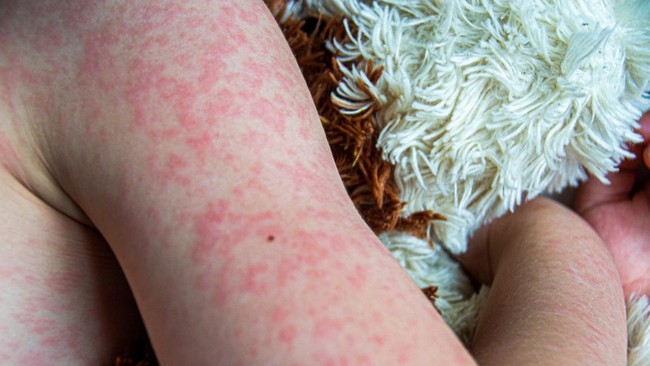
Jakarta, CNBC Indonesia - The Ministry of Health (Kemenkes) has begun prioritising measles vaccinations for healthcare workers (nakes), after the official issuance of expanded indication permits for the Measles-Rubella (MR) vaccine for adults by the National Agency of Drug and Food Control (BPOM).
Director General of Pharmacy and Medical Devices L. Rizka Andalusia stated that this step is taken to protect high-risk groups, particularly healthcare workers who directly face patients amid the extraordinary measles event (KLB).
“Of course, with this KLB, there is a high potential for transmission to high-risk individuals, in this case, healthcare workers who work directly with patients, facing high risks,” Rizka said in her statement quoted on Thursday (8/4/2026).
Kemenkes records that the priority vaccination targets include 39,212 medical personnel and 223,150 healthcare workers in 14 provinces with the highest cases. In addition, the vaccine will also be given to 28,321 general practitioners and dentists currently undergoing internships across Indonesia.
Thus, the total vaccine needs for the priority adult group are estimated to reach around 290,000 doses.
Rizka assured that the national vaccine stock is in a safe condition. Up to week 13 of 2026, the availability of MR vaccine is recorded at 9.8 million doses, sufficient to meet needs for about 5.5 months ahead.
“We ensure that stocks in all regions remain maintained but not excessive, so as not to risk spoilage. We have a vaccine monitoring mechanism called SMILE through Satu Sehat Logistik, so vaccine availability can be monitored in real-time up to health service facilities,” she explained.
Meanwhile, the Head of the National Agency of Drug and Food Control, Taruna Ikrar, emphasised that the approval for expanded indications is given for the MR vaccine, MMR, and single measles vaccine. These vaccines are produced by several companies, including Bio Farma together with the Serum Institute of India, GlaxoSmithKline (GSK), and Merck Sharp & Dohme (MSD).
“This approval is the result of rigorous studies based on scientific data, as well as BPOM’s commitment to ensuring that every health intervention meets safety and efficacy standards,” Taruna said.
On the other hand, Kemenkes also urges the public, especially parents, to promptly complete their children’s basic immunisation according to the schedule, namely at 9 months, 18 months, and boosters in primary school, without needing to wait for an outbreak.