
MBS’s Big Gamble Fails as Saudi Arabia Enters a Dark Year
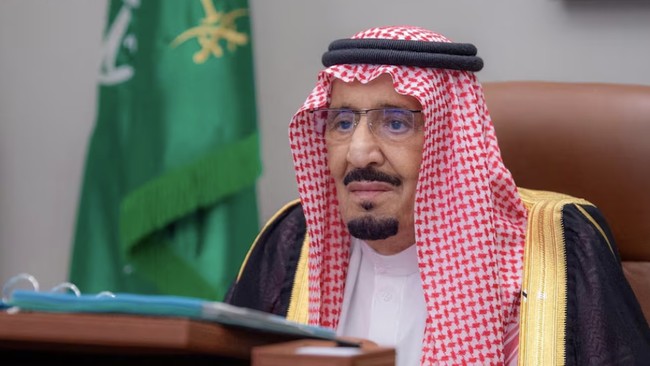
Jakarta, CNBC Indonesia — Saudi Crown Prince and Prime Minister Mohammed bin Salman (MBS) is facing one of the most difficult years since coming to power.
His ambition to turn Saudi Arabia into a global investment hub has been hampered by Houthi attacks, a deteriorating economic outlook and uncertainty over US support under Donald Trump.
The postponement of the Future Investment Initiative (FII) forum has become a symbol of the pressure facing the kingdom, amid stalled mega-projects and foreign investment that remains well below target.
Although MBS’s political position is considered secure, the crisis has highlighted Saudi Arabia’s fundamental weaknesses: its dependence on oil, limited military capabilities and need for protection from Washington.
MBS’s challenge is now not simply to maintain stability, but to build a more independent economic and security foundation so that Saudi Arabia’s transformation ambitions are not continually shaken by regional conflicts and other countries’ decisions.
The forum, dubbed “Davos in the Desert”, has ultimately been postponed until 2027.
Originally scheduled to begin on 26 October 2026, it usually brings together world leaders, investors and executives from global companies to discuss business opportunities in Saudi Arabia. But an escalation in Houthi attacks has made security risks a primary concern.
Houthi attacks unsettle Saudi security
Attacks on airports in Riyadh and Abha marked an escalation that disrupted civilian activity in Saudi Arabia.
On 6 and 7 October 2026, attacks on the two airports killed three people and injured 36. A strike at King Khalid International Airport in Riyadh on 10 October then killed 13 people and injured more than 300, according to Reuters.
The impact has gone beyond the loss of life. Flight disruptions, travel warnings from several Western governments and the postponement of international events have shown how security threats can damage Saudi Arabia’s image as a destination for business and investment.
An attack on Saudi Aramco’s headquarters in Dhahran on 13 October also heightened concerns about the security of strategic infrastructure.
For MBS, the challenge is how to convince investors that Saudi Arabia remains a safe place to put their money while regional conflict continues.
Saudi economy faces a severe test
The International Monetary Fund (IMF) had previously forecast Saudi economic growth of 4% in 2026, but cut its projection to a contraction of 3.3%.
Saudi Arabia’s economic recovery in 2027 depends on peace being achieved in the Middle East, an outcome largely determined by Donald Trump.
Riyadh had hoped that major investments and business deals with the Trump family would strengthen its influence, but those efforts did not stop the war. One Saudi figure described Trump as someone who could not be expected to remain loyal to anyone for long.
Security pressures have arrived as Saudi Arabia’s economic transformation agenda has yet to fully meet its targets.
The diversification programme known as Saudi Vision 2030 aims to reduce dependence on oil by expanding the private sector’s role and attracting foreign investment.
The shortfall illustrates how much larger an inflow of capital Saudi Arabia still needs to finance its economic transformation.
Riyadh had initially thought it could influence Trump by pledging enormous investments in the United States.
Saudi Arabia also struck business deals with the Trump family, including paying for a golf course owned by Trump to host a Saudi-funded tournament, and investing US$2 billion alongside Trump’s son-in-law, Jared Kushner.
But these efforts did not prevent Trump from starting a war that is considered to have had damaging consequences. One Saudi figure described him as someone who never remains loyal to anyone for long.
New crisis, but MBS’s grip on power is stronger
Although no reliable public opinion polls are available, most Saudis are considered to continue trusting the government. But the war in Yemen has disrupted people’s lives, while MBS has been relatively out of sight since Houthi missiles killed 13 people at Riyadh airport on 10 October.
While some Western observers have questioned whether the crisis threatens MBS’s rule, diplomats in Riyadh believe his position is now stronger than it was seven or eight years ago.
At that time, he was still trying to consolidate power amid the war in Yemen, the Qatar blockade—which fuelled tensions with the US—and international condemnation over the killing of Saudi journalist Jamal Khashoggi at the Saudi consulate in Istanbul.
MBS has since sidelined rivals and centralised power. Even some long-standing critics of the war in Yemen acknowledge that Saudi Arabia now has few options other than to fight the Houthis.
But this crisis is more complicated because major decisions rest with Donald Trump. If Trump attacks Iran again after the November midterm elections, Saudi Arabia could face the Houthis from the south, Iraqi militias from the north and Iran from the east, while its stockpile of air-defence interceptors is limited for protecting a territory four times the size of France.
Previously, MBS pursued a more pragmatic foreign policy, ending the Qatar blockade and seeking an agreement with the Houthis.
The Joe Biden administration, which had initially vowed to isolate MBS internationally, eventually recognised the shift towards a more pragmatic Saudi foreign policy.
Over the past decade, MBS has relaxed social restrictions: women are now allowed to drive, female labour-force participation has almost doubled, concerts and cinemas have become more common, and some wealthy foreign residents may legally consume alcohol.
But the country’s foundations have changed little. The economy remains dependent on oil, the military is designed more to protect the regime than to fight wars, and national security still relies on the US.
Defence pacts with Pakistan and Turkey are an effort to find alternative allies, but such a shift will take time. MBS’s challenge in his second decade is to change the country’s foundations, not merely its appearance.
Source: jawawa.id (https://jawawa.id/newsitem/mbss-big-gamble-fails-as-saudi-arabia-enters-a-dark-year-1792507834)
Originally published by CNBC Indonesia (https://www.cnbcindonesia.com/research/20261020183424-128-777967/pertaruhan-besar-mbs-gagal-arab-saudi-masuk-tahun-kelam), translated from Indonesian