
MBG Programme Resumes, Chicken Meat Prices in Medan Soar
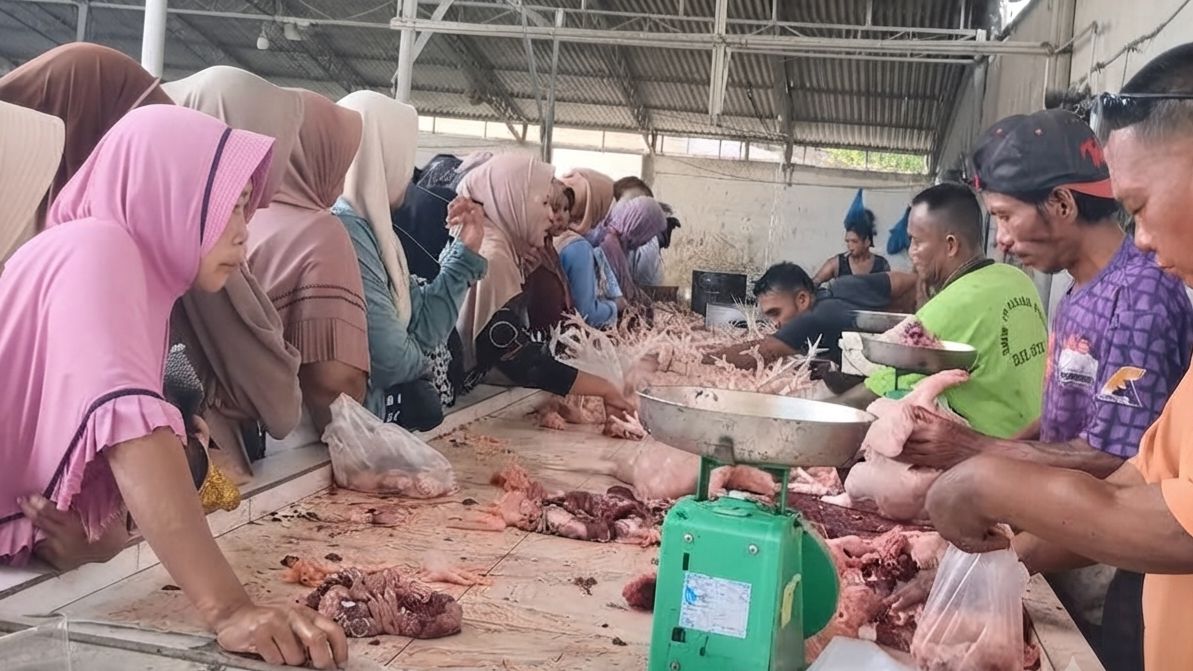
Fresh chicken meat prices have been observed rising significantly in a number of traditional markets in Medan city and its surroundings. The price surge coincides with the resumption of the MBG (Free Nutritious Meal) programme following the long school holiday.
In Deli Serdang, the price of chicken meat, which previously stood at Rp30,000 per kilogram, has now risen to Rp32,000 per kilogram. A similar trend has occurred in Medan city.
Data from the Strategic Food Price Information Centre (PIHPS) shows that the price of chicken meat at Sukaramai Market jumped from Rp31,500 on 10 July to Rp33,500 per kilogram on Monday, 13 July 2026.
Gunawan Benjamin, an economist at the Islamic University of North Sumatra (UISU), believes the rise in chicken prices is driven purely by a surge in market demand, not by supply constraints.
“In terms of supply or stock, essentially I see no change. Live chicken stocks have been stable over the past month,” he said on Monday (13/7).
He therefore asserted that the increase in chicken prices is a result of rising demand following the resumption of the MBG programme.
According to Gunawan, chicken meat still dominates the MBG menu, particularly at the start of the new school year. While this burdens consumers, on the other hand he sees the price increase as positive for poultry farmers, who have been squeezed by high global feed prices following the Iran-US conflict.
He projects that price pressure will continue in the near term, as the month of Muharram ends on 15 July, which is typically followed by increased community social activity that drives demand.
Beyond chicken meat, bird’s eye chilli has also recorded a sharp price increase. In Deli Serdang, bird’s eye chilli prices have reached Rp80,000 per kilogram.
Based on PIHPS monitoring at Sukaramai Market in Medan, green bird’s eye chilli is trading at around Rp65,000 per kilogram.
However, unlike chicken, Gunawan believes the rise in bird’s eye chilli prices is mainly due to supply constraints rather than simply high demand.
“I see that bird’s eye chilli supply is not as plentiful as on normal days,” he said.
Regarding the rise in rice prices over the past week, which has even triggered purchase limits at several modern retailers, Gunawan sees the main problem as lying on the supply side.
“For rice, supply has indeed declined, while demand tends to be easing,” he concluded.
The National Food Agency (Bapanas) recorded that the rice food price index remains under control, supported by a government rice reserve stock of 5.2 million tonnes. The rice food assistance programme will continue from July 2026 to maintain stability.
Statistics Indonesia (BPS) reported that Indonesia’s annual inflation in June 2026 reached 3.34% year on year (yoy).
Stocks of basic necessities in a number of regions are confirmed to be sufficient, and price stability remains under control.
Entering the Islamic New Year of 1448 Hijriah, staple food prices have been fluctuating at Gedhe Market in Klaten. The government is carrying out periodic market interventions to ensure price stability.
Vegetable prices at a number of traditional markets in Batam remain high as of mid-June 2026.