
MBG Programme Budget Realisation Reaches Rp139 Trillion, How Many Beneficiaries Are There?
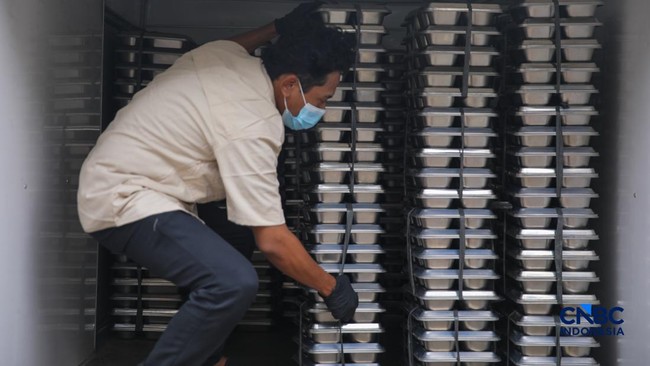
The National Nutrition Agency (BGN) has recorded that the budget realisation for the Free Nutritious Meal (MBG) programme reached Rp139.77 trillion as of 16 September 2026. This figure represents 63.89% of the total MBG budget ceiling of Rp218.77 trillion. Consequently, approximately Rp79 trillion remains unutilised and will be used to oversee programme distribution until the end of 2026.
“The budget absorption for the MBG programme in 2026 as of 16 September reached 63.89%, or Rp139.77 trillion from a total ceiling of Rp21TR, with a remaining unutilised amount of Rp79 trillion,” stated the Head of BGN, Sudaryono, during a working meeting with Commission IX of the Indonesian House of Representatives (DPR RI) on Thursday (17/9/2026).
The implementation of this budget realisation is running alongside the process of improving the MBG distribution system. The BGN explained that there is a discrepancy between the budget absorption data and the number of beneficiaries due to the use of different synchronisation cycles.
“The difference between the budget realisation data as of 16 September and the beneficiary data as of 31 August occurs because of the different monthly synchronisation cycles for beneficiary data,” he said.
Based on data as of 31 August 2026, the total number of MBG programme beneficiaries has reached 56.99 million people, equivalent to 76.45% of the overall target of 74.50 million beneficiaries. This means there is still a gap of approximately 17.56 million recipients compared to the target set for 2026.
“The achievement of beneficiaries so far is still a temporary figure because the BGN is currently undertaking improvements to the MBG programme distribution,” Sudaryono revealed.
This improvement process is focused on sharpening the target recipients to ensure the programme is more precisely targeted. The BGN emphasised its commitment not to merely pursue the quantity of recipients at the expense of service quality.
“We do not want to chase the number of beneficiaries while ignoring the quality of service,” he asserted.
As part of these improvements, the BGN is tightening hygiene standards and certification to ensure that the quality of service in every Nutrition Fulfilment Service Unit (SPPG) is well-maintained.
In addition to improving the quality of SPPG, the BGN is also expanding its scope to be more inclusive. It is noted that 1,653 special education schools (SLB) have been proposed to be included in the MBG beneficiary list. The programme is also prioritised to reach 3T areas (underdeveloped, frontier, and outermost), pesantren (Islamic boarding schools), regions with high and very high stunting prevalence, as well as various regions outside Java.
“Therefore, the gap relative to the beneficiary target does not mean the programme has stopped. This is part of the improvement process to maintain the efficiency of the MBG so that it runs more precisely, effectively, and with high quality,” concluded Sudaryono.