
MBG Programme Bolsters Public Satisfaction with Government Performance
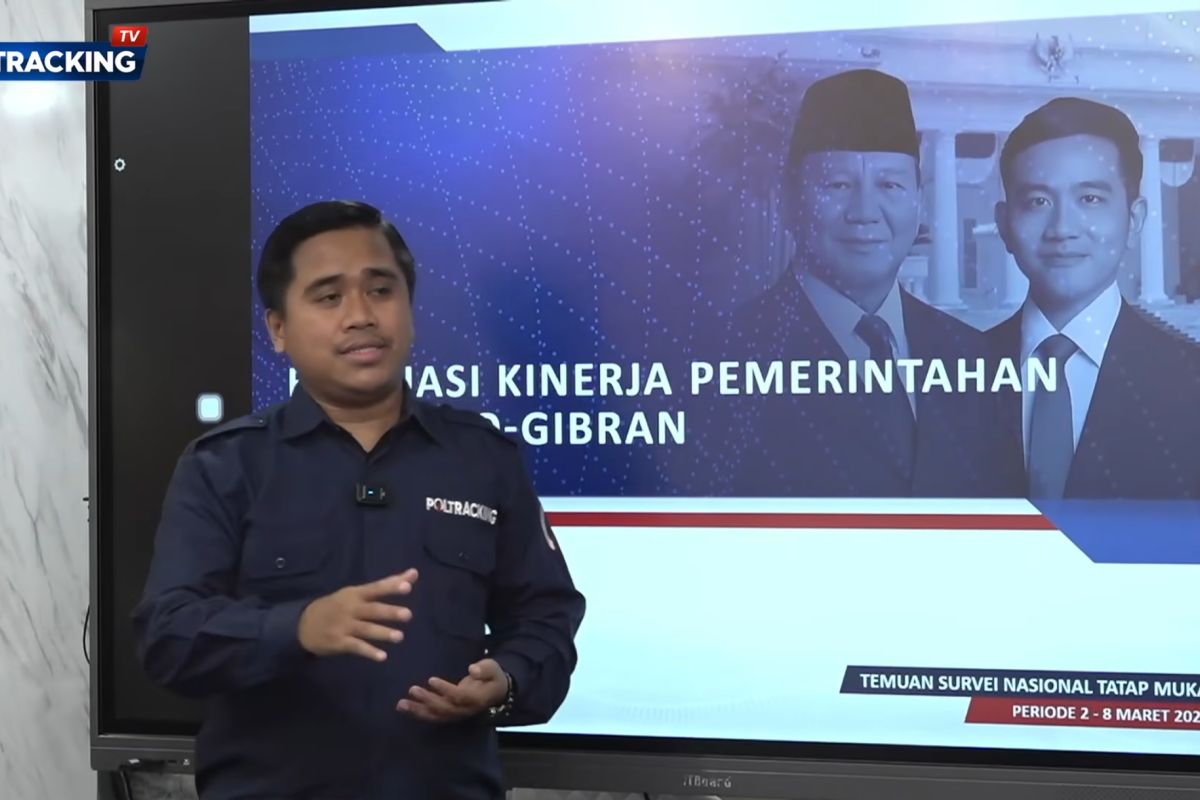
Jakarta (ANTARA) - The free nutritious meals (MBG) programme has emerged as the main pillar supporting public satisfaction with the performance of the government under President Prabowo Subianto and Vice President Gibran Rakabuming Raka, according to a Poltracking Indonesia survey.
“Both among supporters and opponents of the MBG programme. So, if we observe, the reason the public is satisfied with the Prabowo-Gibran administration, 23% is supported by satisfaction with the free nutritious meals,” said Poltracking Indonesia’s Chief Researcher Masduri Amrawi in an online release of the government performance evaluation and national priority programmes in Jakarta on Monday.
He stated that the programme contributes significantly to positive public perceptions, despite differences in societal views.
“So, amid controversies and differing opinions related to this programme, it has generally received quite positive attention from the public,” he said.
In addition to bolstering satisfaction, MBG is the programme whose benefits are most felt by the public, with a recognition rate of 36.5%, surpassing other priority programmes such as wage subsidy assistance (BSU), free health services, the Indonesia Smart Card (KIP), and the Indonesia Health Card (KIS).
Nevertheless, satisfaction levels with MBG are deemed not yet fully optimal compared to its high recognition among the public.
Masduri emphasised the need to strengthen implementation and communication of the programme so that its benefits are more widely felt.
“However, although 88% of the public know about the MBG programme, satisfaction is only at 55.5%, so communication and implementation improvements are needed,” he said.
The survey also recorded other factors supporting public satisfaction, including government assistance deemed on target at 13.8%, as well as perceptions of firm leadership, economic stability, and health service guarantees.
This situation serves as a note for the government to expand the reach of programme distribution and improve execution quality, so that policy benefits can be felt more evenly across all societal layers.
Poltracking Indonesia released the results of the government performance evaluation and national priority programmes, emphasising methodological transparency as the basis for the validity of findings.
The survey was conducted from 2 to 8 March 2026 on 1,220 Indonesian citizen respondents aged at least 17 years or married, using the “stratified multistage random sampling” method with a margin of error of 2.9% and a confidence level of 95%.
Data collection was carried out through face-to-face interviews by trained enumerators, with sampling units from village/sub-district level to individual respondents.