
MBG Programme Becomes a Driving Force for Regional Economies
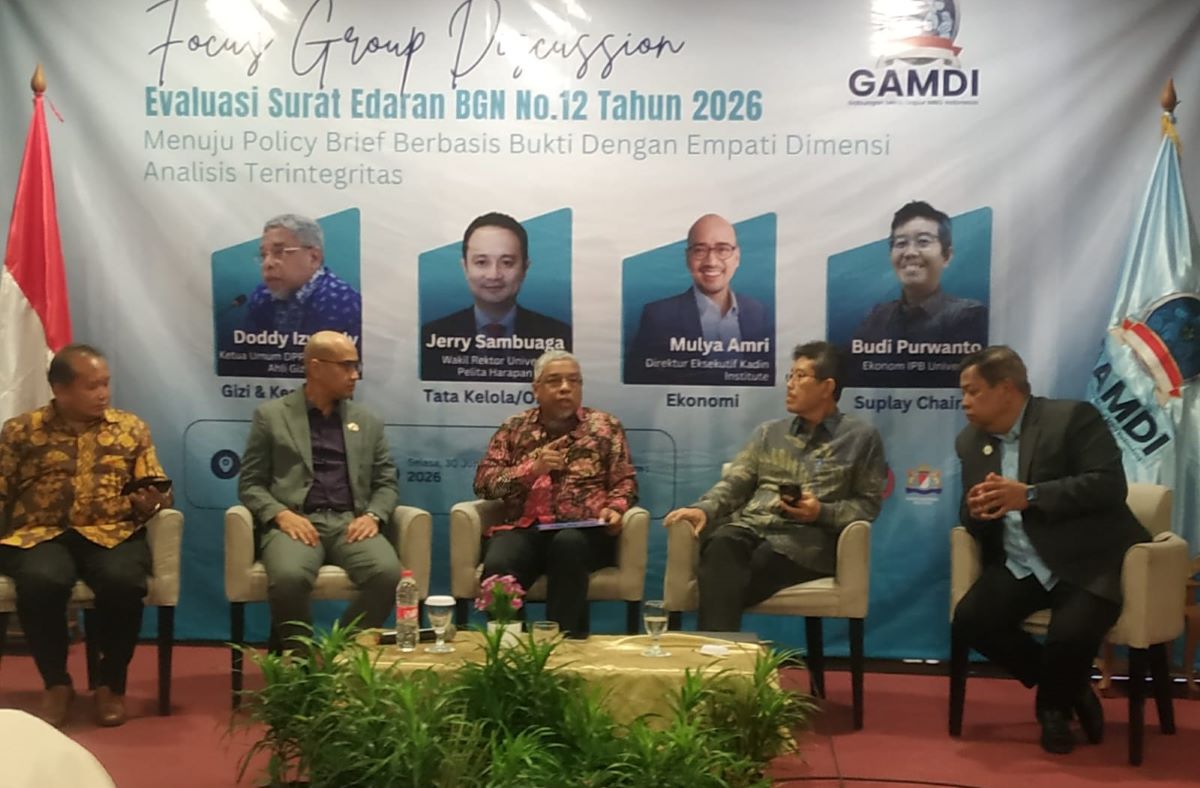
The Free Nutritious Meal Kitchen Partners Association of Indonesia (Gamdi) held a focus group discussion (FGD) titled ‘Evaluation of National Nutrition Agency (BGN) Circular Letter No. 12 of 2026’. The discussion focused on calculating the real impact felt by kitchen partners following the government’s policy to impose a moratorium on new Nutrition Fulfilment Service Units (SPPG).
Gamdi Chairman Riyad stated that the organisation cannot yet announce the total losses experienced by partners. Gamdi is still waiting for the completion of the data collection process from prospective regional administrators who have SPPG or Free Nutritious Meal (MBG) kitchens. ‘We are asking each prospective kitchen that has been verified and is still in process to calculate the impact and losses. However, we are still waiting for further policy from BGN,’ Riyad said at the event in Senayan, Jakarta, on Tuesday (30/6).
Riyad explained that Gamdi chose to give BGN space to complete its internal evaluation before submitting formal recommendations. The organisation is committed to not disrupting the ongoing evaluation process. ‘We are giving BGN the opportunity to conduct an internal evaluation. In the meantime, we are preparing various recommendations as input to improve the governance system comprehensively going forward,’ he stated. The recommendations being prepared cover strategic aspects, ranging from institutional governance and kitchen operational systems to strengthening the supply chain to ensure the MBG programme is more effective and sustainable.
Regarding the emerging discourse on changing the MBG scheme to focus more on school canteens, Riyad assessed that such a move would be difficult to implement thoroughly. Given that thousands of MBG kitchens are already operating in various regions, a total system change could potentially trigger new problems. ‘If everything is transferred to school canteens, I don’t think it’s possible. The number of kitchens already running is very large. Changing everything will create new issues, while canteen readiness is also uneven, especially concerning cleanliness and hygiene standards,’ he said.
On the same occasion, Universitas Pelita Harapan Vice Rector Jerry Sambuaga assessed that the government’s evaluation step is appropriate to ensure the national programme runs more solidly. He noted that President Prabowo Subianto has shown great commitment to the success of this flagship programme. ‘I see the President is very concerned and responsive to ensuring the MBG programme runs well. We appreciate the government’s step to evaluate and hope the results truly help the community,’ Jerry added.
The former Deputy Minister of Trade emphasised that the evaluation process must absorb aspirations from all stakeholders, including associations, business actors, academics, regulators, and the wider community, so that the resulting policies are more comprehensive. Jerry further stressed that the MBG programme does not only fulfil the nutritional needs of students but has successfully created a new, multi-sectoral economic ecosystem. ‘This programme provides broad benefits. Not only for the students as beneficiaries, but also for traders, service providers, distributors, canteens, and local farmers who supply food ingredients. Therefore, the sustainability of this programme is very important for the regional and national economy,’ he explained. He underlined that any national-scale programme inevitably faces its own challenges, making periodic evaluation and refinement a normal process to mature and strengthen the programme’s governance in the future.